
Canada Launches $81M Supply Chain Workforce Alliance
Canada launched an $81 million supply chain alliance on August 24 to train, recruit, and retain rail, road, and marine freight workers over five years.
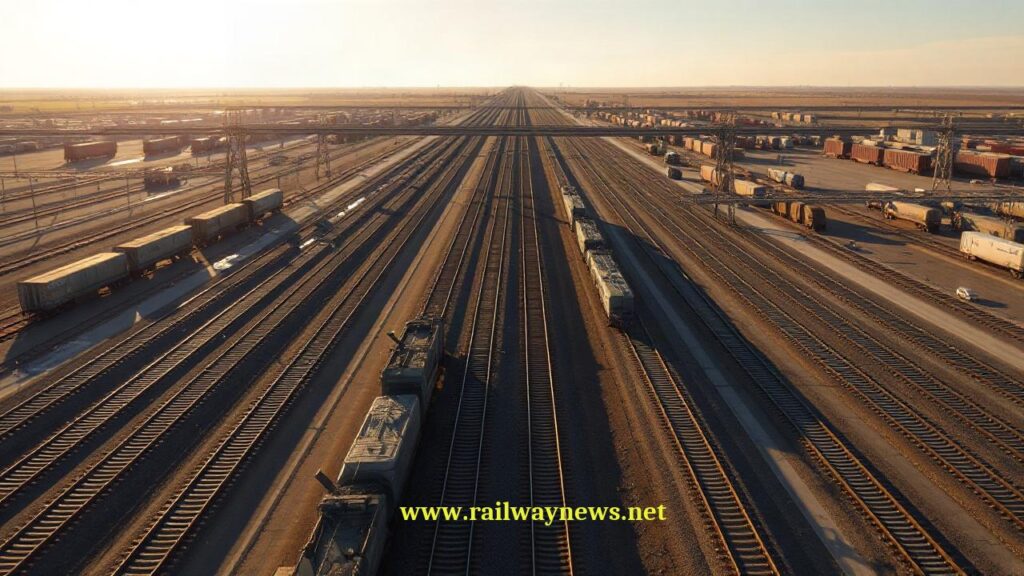
⚡ In Brief: The Government of Canada launched the Transportation and Supply Chain Workforce Alliance on August 24, committing part of an $81 million five-year multi-sector workforce funding package to resolve labor shortages across Canadian rail, road, marine, air, and warehousing operations.
OTTAWA, Canada – The Government of Canada launched the Transportation and Supply Chain Workforce Alliance on August 24, deploying portions of an $81 million five-year federal investment envelope to address severe labor shortages across national logistics corridors. The initiative represents Ottawa’s third sectoral alliance and targets persistent vacancies across rail, trucking, aviation, marine, and warehousing facilities. Specific individual budget allocations dedicated strictly to the transportation alliance were not disclosed by federal authorities.
What Is the Full Scope of This Development?
The Transportation and Supply Chain Workforce Alliance establishes a multi-stakeholder body to recruit, train, and retain personnel across Canadian freight networks. Led by Trucking HR Canada in partnership with the Canadian International Freight Forwarders Association (CIFFA), the coalition brings together freight rail operators, motor carriers, labor unions, educators, and Indigenous groups. The alliance focuses on standardized technical training, accelerating digital technology adoption, and building structured recruitment pathways to counter an aging domestic transport workforce. Although the alliance operates alongside the Advanced Manufacturing Workforce Alliance under an aggregate $81 million federal commitment over five years, individual sub-allocations for freight transport components were not disclosed.
Key Development Data
| Parameter | Value |
|---|---|
| Company / Organisation | Government of Canada, Trucking HR Canada, CIFFA |
| Total Value | $81 million CAD (shared five-year commitment with Advanced Manufacturing Alliance; transport share not disclosed) |
| Parties Involved | Employment and Social Development Canada, Trucking HR Canada, CIFFA, freight rail carriers, logistics providers, labor unions, Indigenous partners |
| Timeline / Completion | Five-year implementation period (2026–2031) |
| Country / Corridor | Canada (National freight and intermodal network) |
How Does This Compare to Industry Trends?
Canada’s supply chain labor initiative coincides with mounting personnel demands driven by sustained expansion across international rail freight corridors. The global rail freight market reached a valuation of USD 370 billion in 2025 and is projected to expand to USD 388.5 billion in 2026 before reaching USD 602.7 billion by 2036 at a 4.5% compound annual growth rate (Source: Future Market Insights, 2025). Identical market research independently projects the sector will achieve USD 602.7 billion by 2036 at a 4.5% CAGR (Source: Fact.MR, 2025), while alternative econometric projections estimate the market will reach USD 534.6 billion by 2034 based on a 5.5% CAGR (Source: Market.us, 2024). Within Canada, this transport initiative mirrors the structure of the Advanced Manufacturing Workforce Alliance announced on August 17, 2026, which draws from the same $81 million five-year federal funding pool (Source: Government of Canada, 2026). Target headcount metrics and specific vacancy fill rates for Class I railway crews under this program were not available at time of publication.
Editor’s Analysis
Canadian freight operators face compounding network friction as growing bulk and intermodal volumes collide with structural demographic attrition among train conductors, engineers, and maintenance crews. Cross-border trade channels remain highly sensitive to domestic rail labor availability, particularly as North American trade partners negotiate bilateral tariff frameworks and import benchmarks (Source: Reuters, 2026). The success of this alliance will depend on whether federal training pipelines can certify skilled rail technicians fast enough to prevent regional supply chain bottlenecks from disrupting transcontinental traffic.
FAQ
Q: What is the primary role of the Transportation and Supply Chain Workforce Alliance?
A: The alliance unites industry groups, educators, labor unions, and Indigenous partners to coordinate training, recruitment, and workforce retention across Canadian transport modes. It is co-led by Trucking HR Canada and CIFFA to address structural labor deficits in rail, trucking, aviation, and maritime operations.
Q: How much funding is allocated to the new supply chain workforce program?
A: The initiative is supported by a combined $81 million five-year federal grant shared directly with the Advanced Manufacturing Workforce Alliance. The specific standalone financial breakdown for the transportation alliance was not publicly disclosed.
Q: How will this alliance affect Canadian freight rail network performance?
A: The alliance seeks to expand the talent pool for locomotive crews, signal technicians, and yard operations as trade demand continues to escalate. Official network-wide hiring quotas for specific rail carriers have not been officially confirmed.

Railway infrastructure, rolling stock and transport technologies specialist focused on global rail industry developments, high-speed rail systems, signaling technologies and freight transportation. Covering railway investments, public transport modernization, rail operations and international mobility projects across Europe, Asia and North America.
RELATED POSTS
September 6, 2026 5:19 am
Hitachi delivered Taiwan's first N700ST high-speed train from Japan in...
September 6, 2026 6:17 am
Hungary ordered a national ban on most freight trains from...
September 6, 2026 1:17 am
Hitachi Toshiba Supreme Consortium confirmed the first of 12 N700ST...

September 5, 2026 4:19 pm
CPK launched formal tender talks with four consortia to design...

September 6, 2026 4:12 am
Alstom delivered the first of 100 new G Class trams...
September 7, 2026 8:16 am
Midea, Gree and TCL shipped air conditioners via China Railway...