
UITP Completes Autonomous Tram Shunting Tests in Oslo
UITP confirmed autonomous tram shunting tests in Oslo with operator Sporveien, using yard data to guide future light rail automation across the EU by 2026.
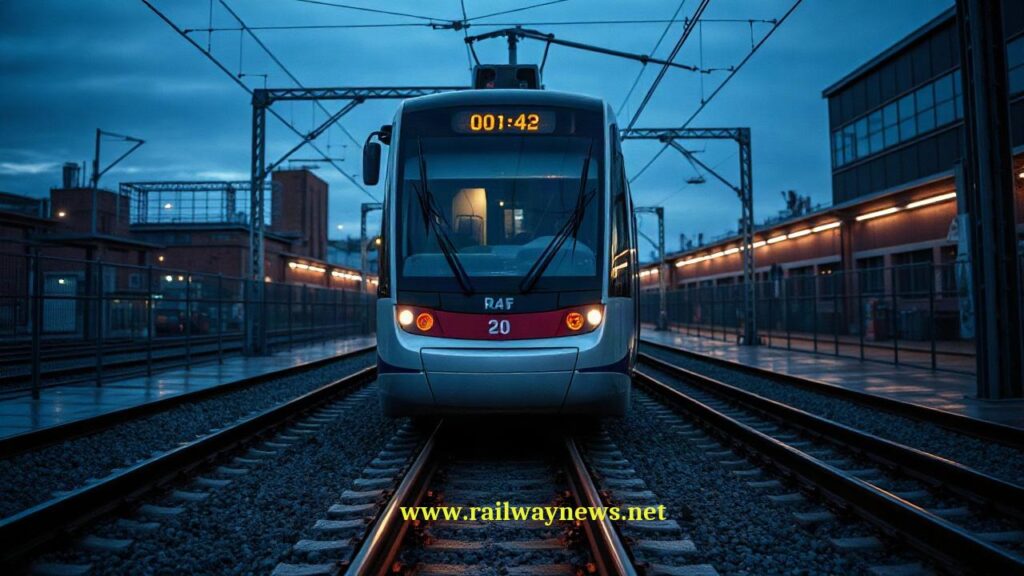
⚡ In Brief: The International Association of Public Transport and European research partners demonstrated autonomous depot shunting in Oslo while outlining a phased deployment model that targets full light rail automation across mixed-traffic corridors by 2026 and beyond.
OSLO, NORWAY – The International Association of Public Transport (UITP), in partnership with municipal operator Sporveien, completed live demonstrations of autonomous tram shunting at the Holtet depot under the European Union’s FP2-R2DATO research framework. The trial evaluated operational procedures designed to transition light rail networks from human-monitored Advanced Driver Assistance Systems (ADAS) to unattended automation across segregated tracks. UITP delegates will formalize technical recommendations for mixed-traffic deployment at the Light Rail Division assembly in Poznań on 20–21 September 2026.
What Are the Technical Specifications?
Automated light rail architectures rely on multi-sensor perception suites combining radar, lidar, and optical cameras integrated with automated braking and European Train Control System (ETCS) or Communications-Based Train Control (CBTC) logic. Under the FP2-R2DATO framework, vehicles use sensor fusion to map static rail infrastructure and dynamically track unpredictable hazards, including road vehicles, cyclists, and jaywalking pedestrians. The onboard computing stack executes automated speed limit supervision, obstacle warning, and automated emergency braking intervention while remaining capable of handing full operational authority back to a human operator.
The system architecture demonstrated in Oslo incorporates “The Digital Tram Control Room,” an operational model developed under the Reskilling research consortium. This command structure centralizes telemetry, vehicle health diagnostics, and remote intervention protocols, allowing control staff to manage driverless stabling, vehicle cleaning movements, and preparation routes inside maintenance yards. Capital expenditure requirements and hardware unit costs for retrofitting commercial light rail rolling stock were not disclosed by the consortium partners.
Key Technical Data
| Parameter | Value |
|---|---|
| Technology / System Name | FP2-R2DATO Autonomous Light Rail Architecture & Digital Tram Control Room |
| Total Value | Not disclosed |
| Parties Involved | UITP, Sporveien, FP2-R2DATO Consortium, Reskilling Project Consortium |
| Timeline / Completion | Depot demonstration completed; division policy adoption scheduled for 20–21 September 2026 |
| Country / Corridor | Norway (Oslo network) / European Union |
Where Does This Technology Stand in the Market?
Europe accounts for the highest global adoption rate of control, command, and signalling modernization, supported by regulatory instruments such as Commission Implementing Regulation (EU) 2023/1695 and the 2024 ERA Control-Command and Signalling TSI application guide (Source: European Union Agency for Railways, 2024). Industrial suppliers have pursued distinct approaches to onboard vehicle automation. Siemens Mobility offers the AStriD autonomous depot stabling system operating at Grade of Automation 4 (GoA4) in Potsdam vs Alstom’s Obstacle and Pedestrian Detection System which delivers Level 2 driver support across more than 150 commercial Citadis trams (Source: Siemens Mobility, 2024).
Competing equipment manufacturer Stadler Rail has integrated automated anti-collision sensor suites on production units for European operators, achieving commercial speeds up to 70 km/h in mixed street traffic with active driver supervision (Source: Stadler Rail, 2024). Unlike closed metro lines running on Grade of Automation 4 without onboard staff, light rail vehicles must navigate non-segregated city streets where mixed-traffic interactions multiply collision variables. As a result, industry adoption remains focused on Grade of Automation 2 (driver-supervised ADAS) for street operations, reserving GoA4 unattended running for maintenance depots and grade-separated rights-of-way.
Note: Independent verification of proprietary sensor compute latency and unit manufacturing costs was not available at time of publication.
Editor’s Analysis
The incremental path advocated by the UITP reflects operational realities: depot automation provides fast financial returns through streamlined yard logistics without confronting uncodified urban road liabilities. As the European railway market accelerates software-based signalling transitions under ERA’s technical mandates (Source: European Commission, 2023), driverless trams will remain legally confined to stabling yards until standardized safety validation protocols are established for open-street operations. Transport authorities will view automation as a tool to mitigate driver shortages through increased productivity rather than an immediate elimination of frontline operational crews.
FAQ
Q: When will fully driverless trams begin operating in regular street traffic?
A: Mixed-traffic driverless passenger operations are not anticipated before 2030 due to municipal liability constraints and regulatory certification requirements. Initial deployments will remain restricted to driverless depot stabling and segregated alignments under human supervisor oversight.
Q: What is the main difference between autonomous metros and autonomous light rail vehicles?
A: Metros run on fully enclosed rights-of-way with platform screen doors and dedicated track circuits that prevent external intrusion. Light rail vehicles operate directly on city streets, requiring complex onboard sensor fusion to detect pedestrians, automobiles, and unpredictable foreign obstacles in real time.
Q: What is the estimated cost of retrofitting existing tram fleets with autonomous operational hardware?
A: Capital expenditure budgets for tram retrofit programmes were not disclosed by the FP2-R2DATO research consortium. Retrofit costs vary substantially depending on onboard braking architecture, vehicle age, and the extent of sensor compute integration required.

Railway infrastructure, rolling stock and transport technologies specialist focused on global rail industry developments, high-speed rail systems, signaling technologies and freight transportation. Covering railway investments, public transport modernization, rail operations and international mobility projects across Europe, Asia and North America.
RELATED POSTS
September 6, 2026 5:19 am
Hitachi delivered Taiwan's first N700ST high-speed train from Japan in...
September 6, 2026 6:17 am
Hungary ordered a national ban on most freight trains from...
September 6, 2026 1:17 am
Hitachi Toshiba Supreme Consortium confirmed the first of 12 N700ST...

September 5, 2026 4:19 pm
CPK launched formal tender talks with four consortia to design...
September 6, 2026 4:12 am
Alstom delivered the first of 100 new G Class trams...
September 5, 2026 7:14 pm
HS2 Ltd signed renegotiated civils contracts with EKFB and Align...