
Siemens Delivers First Metro Train for Sydney Airport
Siemens Mobility confirmed delivery of the first of 12 automated metro trains for the 23 km Western Sydney Airport line under its €900 million contract.
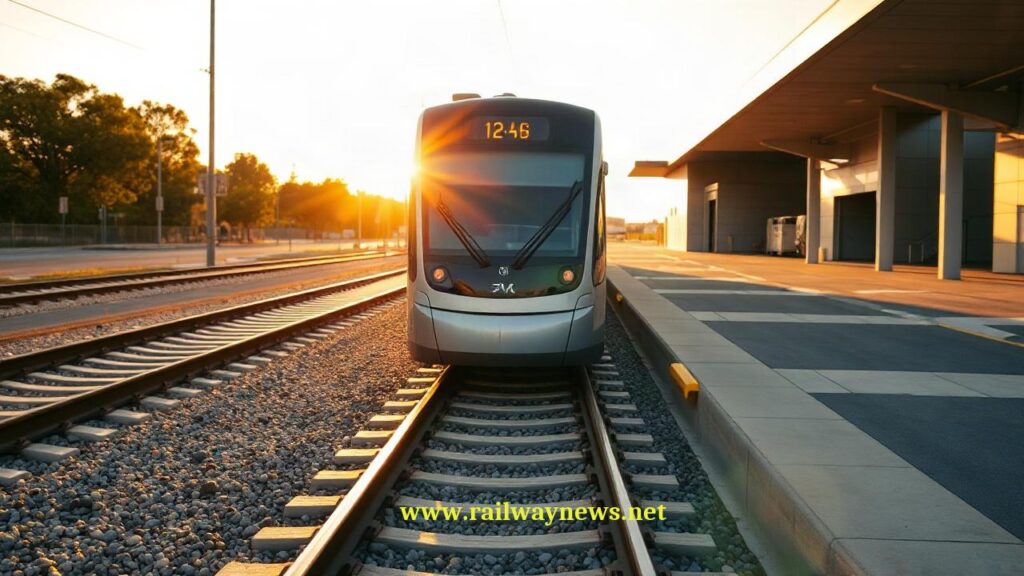
⚡ In Brief: Siemens Mobility has delivered the first of 12 automated GoA4 metro trains to Sydney for the 23-kilometre Western Sydney Airport rail line under an estimated €900 million turnkey systems contract.
SYDNEY, AUSTRALIA – Siemens Mobility delivered the first three-car automated Inspiro metro train to New South Wales following sea transit via Port Kembla in mid-2026. The vehicle is the first of 12 driverless trainsets built in Vienna scheduled to serve the 23-kilometre Sydney Metro – Western Sydney Airport link. Static commissioning is underway at the Orchard Hills depot prior to dynamic track testing on the mainline.
What Is the Full Scope of This Project?
The Sydney Metro – Western Sydney Airport turnkey project encompasses the delivery of 12 three-car driverless trainsets, complete line electrification, communication systems, platform screen doors, depot equipment, and GoA4 signalling. Each three-car train accommodates up to 645 passengers and operates at the highest grade of automation without on-board crew. Transport for NSW and the Parklife Metro consortium structured the package as a public-private partnership, with Siemens Mobility executing systems integration and a 15-year maintenance contract running alongside civil delivery partners Webuild and Plenary Group. The 23-kilometre alignment includes six stations connecting the St Marys interchange to Bradfield City Centre via Western Sydney International (Nancy-Bird Walton) Airport, yielding an end-to-end travel time of approximately 15 minutes. The remaining 11 trainsets are scheduled for progressive delivery through 2026 and into 2027 from Siemens’ manufacturing plant in Austria. Total capital cost across the broader civil infrastructure works was not disclosed within the rolling stock delivery announcement.
Key Project Data
| Parameter | Value |
|---|---|
| Project / Contract Name | Sydney Metro – Western Sydney Airport (Parklife Metro PPP) |
| Total Value | Approximately €900 million (Siemens Mobility turnkey share) |
| Parties Involved | Sydney Metro, Siemens Mobility, Plenary Group, Webuild, RATP Dev |
| Timeline / Completion | Fleet deliveries continuing through 2026–2027; commercial opening aligned with airport operations |
| Country / Corridor | Australia / Greater Western Sydney (St Marys to Bradfield) |
How Does This Compare to Similar Projects?
The Western Sydney Airport metro line represents Siemens Mobility’s return to the Australian rolling stock delivery market for the first time since 2006. On regional mass transit networks, turnkey automation contracts are expanding rapidly; the Australian Intelligent Transportation System market was valued at $907.5 million in 2025 and is projected to reach $1,363.3 million by 2030, tracking an 8.5% compound annual growth rate (Source: MarketsandMarkets, 2025). By comparison, Sydney’s initial driverless metro segment, the Metro North West Line, deployed 22 six-car Alstom Metropolis trainsets paired with Urbalis 400 CBTC signalling across 36 kilometres of track. While the North West and City & Southwest lines utilize Alstom rolling stock, the Western Sydney Airport line functions as an isolated standard-gauge corridor utilizing Siemens’ proprietary Inspiro platform and Railigent X digital diagnostic architecture. Comparative lifecycle costs per passenger-kilometer between the two distinct rolling stock sub-fleets were not publicly available at time of publication.
Editor’s Analysis
Parklife Metro’s procurement choice introduces rolling stock platform dual-sourcing across the broader Sydney Metro network, preventing single-supplier dependency while creating distinct depot maintenance supply chains. The deployment of GoA4 operations on airport rail corridors reflects a standard model to match unpredictable aviation passenger volumes with responsive headway scaling. Australia’s broader smart mobility and rail signaling expenditure reinforces this shift toward highly automated lines, expanding nationwide alongside urban expansion programs (Source: MarketsandMarkets, 2025).
FAQ
Q: What is the passenger capacity and speed of the new Western Sydney Airport trains?
A: Each three-car Siemens Inspiro train can transport 645 passengers between St Marys and Bradfield. The line enables a transit time of approximately 15 minutes between the rail interchange at St Marys and the Airport Terminal station.
Q: When will the full fleet of metro trains arrive in Australia?
A: The initial trainset arrived in mid-2026, with the remaining 11 sets scheduled for progressive delivery through 2026 and into 2027. All vehicles are manufactured at the Siemens Mobility production facility in Vienna, Austria.
Q: Who is responsible for operating and maintaining the rolling stock?
A: Operations and maintenance will be handled under the Parklife Metro consortium, which includes RATP Dev for operations and Siemens Mobility under a 15-year maintenance contract. Maintenance activities will run from the dedicated stabling and maintenance facility located at Orchard Hills.

Railway infrastructure, rolling stock and transport technologies specialist focused on global rail industry developments, high-speed rail systems, signaling technologies and freight transportation. Covering railway investments, public transport modernization, rail operations and international mobility projects across Europe, Asia and North America.
RELATED POSTS
September 6, 2026 5:19 am
Hitachi delivered Taiwan's first N700ST high-speed train from Japan in...
September 6, 2026 1:17 am
Hitachi Toshiba Supreme Consortium confirmed the first of 12 N700ST...
September 6, 2026 6:17 am
Hungary ordered a national ban on most freight trains from...

September 5, 2026 4:19 pm
CPK launched formal tender talks with four consortia to design...

September 6, 2026 4:12 am
Alstom delivered the first of 100 new G Class trams...

September 5, 2026 7:14 pm
HS2 Ltd signed renegotiated civils contracts with EKFB and Align...