
CN Expands Hybrid Locomotive Fleet to 5 Units With KLW
Canadian National expanded its hybrid switcher fleet to five units with Knoxville Locomotive Works in 2025, cutting rail yard fuel consumption by up to 50%.
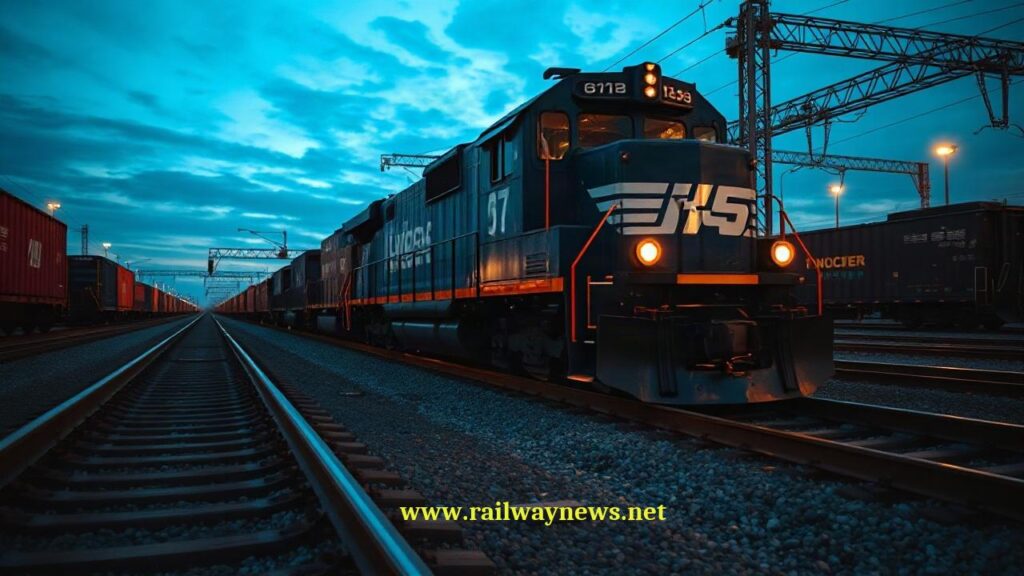
⚡ In Brief: Canadian National expanded its hybrid locomotive repower program with Knoxville Locomotive Works in February 2025, deploying five battery-diesel yard units to cut fuel consumption by up to 50% across North American operations.
MONTREAL, Canada – Canadian National (CN) confirmed in February 2025 the expansion of its hybrid-electric yard locomotive initiative, ordering two additional conversions to establish an active test fleet of five units by late 2026. Developed in partnership with Knoxville Locomotive Works (KLW), each converted switcher pairs a 2.4 MWh battery system with a 700-horsepower diesel engine to reduce fuel burn by up to 50%. The initial test unit entered service in January 2025 following cold-weather and high-temperature trials on the operator’s freight network.
What Are the Technical Specifications?
CN’s repowered switcher fleet integrates a 2.4 MWh lithium-ion energy storage system alongside a downsized 700-horsepower internal combustion engine configured for 100% biofuel operation. The conversion replaces legacy direct-current (DC) equipment with alternating-current (AC) traction motors, which deliver higher low-speed tractive effort, reduced wheel slip, and lower motor maintenance cycles in classification yard switching. Across the expanded five-unit program, three converted locomotives are currently operating in validation trials, while two additional donor locomotives are scheduled to complete AC repowering by December 2026. CN operational testing confirmed that downsized generator operation and battery-buffered yard switching reduced engine idle time, suppressed acoustic noise in terminal areas, and eliminated common diesel prime-mover mechanical failures during extreme cold-weather testing.
Key Technical Data
| Parameter | Value |
|---|---|
| Technology / System Name | CN-KLW Hybrid-Electric Repower Platform (AC Traction) |
| Total Value | Not disclosed |
| Parties Involved | Canadian National Railway (CN), Knoxville Locomotive Works (KLW) |
| Timeline / Completion | Pilot unit launched January 2025; fleet conversions scheduled through end of 2026 |
| Country / Corridor | Canada and United States (CN rail network) |
Where Does This Technology Stand in the Market?
Class I railroads are prioritizing battery-hybrid repower kits to extend the operational life of legacy yard switchers without the multi-million-dollar capital outlay required for newly fabricated zero-emission locomotives. Progress Rail offers the EMD Joule SD40JR as a 100% battery-electric switcher providing 2.4 MWh to 3.0 MWh of storage capacity without an onboard combustion engine vs CN-KLW’s hybrid architecture that retains a 700 HP biofuel generator to eliminate charging downtime in remote yards (Source: Progress Rail, 2023). In another configuration, Wabtec offers the FLXdrive switcher with a 2.4 MWh battery array paired with standard DC or AC traction, compared to CN-KLW’s purpose-built pairing of downsized diesel power with high-capacity AC traction motors designed specifically for extreme temperature regimes (Source: Wabtec Corporation, 2024). Capital expenditure figures and per-unit conversion costs for the CN-KLW program were not disclosed by either party at the time of publication.
Editor’s Analysis
CN’s choice to rebuild existing switcher platforms into battery-diesel hybrids rather than purchase new rolling stock matches a broader capital discipline across North American rail operators, who must lower terminal emissions under tightening regional air-quality standards while avoiding infrastructure investments in fixed high-voltage overhead lines. The North American rail market reached $8.59 billion in 2025 and is projected to expand to $8.9 billion in 2026, anchored primarily by fleet modernization and mechanical life-extension programs (Source: Fortune Business Insights, 2025). By proving that a 700 HP engine backed by 2.4 MWh of battery storage can handle heavy yard switching in sub-zero environments, CN creates a workable transition model for Class I terminal yards that cannot support pure battery-electric recharging logistics.
FAQ
Q: What engine and battery capacity does CN’s hybrid locomotive use?
A: The locomotive pairs a 2.4 MWh lithium-based battery pack with a 700-horsepower diesel engine designed by Knoxville Locomotive Works. This configuration permits full biofuel compatibility and reduces overall yard fuel consumption by roughly 50% compared to legacy switchers.
Q: When will all five hybrid locomotives enter service for CN?
A: Three converted units are actively undergoing operational tests as of early 2025, and two additional locomotives will complete conversion by late 2026. The financial value of the conversion contract has not been publicly released.
Q: How do these hybrid switchers perform in cold weather?
A: Testing conducted by Canadian National across late 2024 and January 2025 demonstrated that the battery-assisted AC traction system operated reliably in extreme sub-zero conditions without standard cold-weather diesel starting failures. The hybrid powertrain cut low-temperature engine idling times significantly, lowering noise and yard particulate emissions.

Railway infrastructure, rolling stock and transport technologies specialist focused on global rail industry developments, high-speed rail systems, signaling technologies and freight transportation. Covering railway investments, public transport modernization, rail operations and international mobility projects across Europe, Asia and North America.
RELATED POSTS

September 6, 2026 5:19 am
Hitachi delivered Taiwan's first N700ST high-speed train from Japan in...

September 6, 2026 1:17 am
Hitachi Toshiba Supreme Consortium confirmed the first of 12 N700ST...

September 6, 2026 4:12 am
Alstom delivered the first of 100 new G Class trams...

September 5, 2026 7:14 pm
HS2 Ltd signed renegotiated civils contracts with EKFB and Align...
September 5, 2026 6:17 pm
Universal Signalling won a deal to install its U-Cross system...
September 6, 2026 12:20 pm
Indian Railways ordered a probe after a fire destroyed 2...