
Virgin Trains Secures 20 Daily Cross-Channel Services
Virgin Trains secured UK approval for 20 daily rail paths linking London to Paris, Brussels, and Amsterdam under a 10-year track access deal starting in 2030.
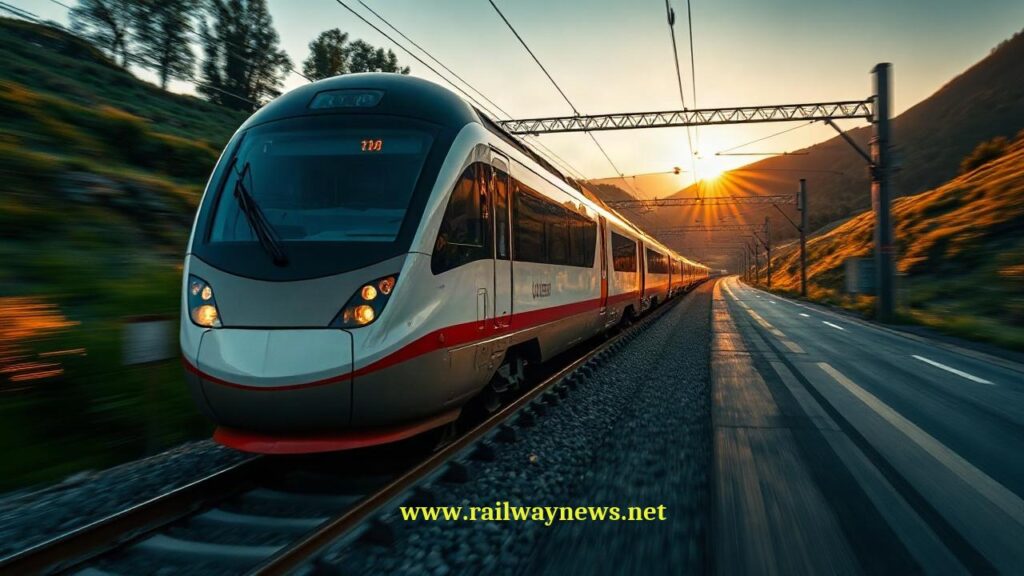
⚡ In Brief: The UK Office of Rail and Road pre-approved a 10-year track access agreement permitting Virgin Trains to operate up to 20 daily return services between London, Paris, Brussels, and Amsterdam starting in October 2030.
LONDON, United Kingdom – The Office of Rail and Road (ORR) pre-approved a 10-year framework track access agreement on 13 August 2026, granting Virgin Trains commercial paths for up to 20 daily return high-speed services from London St Pancras International. The regulatory decision establishes a formal deadline of 4 September 2026 for Virgin and London St Pancras Highspeed to execute the contract, enabling operations from 1 October 2030 to 31 December 2040. The approved service plan designates 13 daily round trips between London and Paris, four to Brussels, and three to Amsterdam.
What Does This Contract Cover?
Virgin Trains holds regulatory approval to secure 20 daily return international passenger train paths across the High Speed 1 (HS1) railway corridor through late 2040. The framework assigns 13 daily return paths to Paris, four to Brussels, and three to Amsterdam, establishing direct open-access competition against incumbent Eurostar. Full implementation requires Virgin to obtain safety certification from the European Union Agency for Railways, tunnel pathing contracts from Channel Tunnel concessionaire Getlink, and continental track access from SNCF Réseau, Infrabel, and ProRail. Commercial operation remains contingent on converting preliminary discussions with manufacturer Alstom into a firm manufacturing contract for 12 Avelia Stream high-speed trainsets, backed by approximately £700 million in private financing.
Key Contract Data
| Parameter | Value |
|---|---|
| Contract Name | London St Pancras Highspeed – Virgin Trains Framework Track Access Agreement |
| Total Value | Not disclosed (linked to £700 million private capital program) |
| Parties Involved | Office of Rail and Road (ORR), London St Pancras Highspeed, VTE OPCO Limited (Virgin Trains) |
| Timeline / Completion | Execution by 4 September 2026; operational term 1 October 2030 – 31 December 2040 |
| Country / Corridor | United Kingdom, France, Belgium, Netherlands (London–Paris / Brussels / Amsterdam via HS1) |
How Does This Compare to Similar Contracts?
Virgin Trains’ planned entry into cross-Channel passenger services marks the largest private open-access expansion on High Speed 1 since the line opened. Virgin’s pending fleet acquisition of 12 Avelia Stream trainsets operates alongside a much larger capital program by incumbent Eurostar, which finalized a €2.0 billion contract with Alstom for 30 double-deck Celestia trainsets based on the Avelia Horizon platform to support 30 million annual passengers by 2031 (Source: Eurostar, 2025). Within the wider UK rail market, rolling stock investments continue to scale up, including Alstom’s £1.0 billion order to supply 29 battery-electric trainsets for TransPennine Express (Source: Department for Transport, 2025). Operational data demonstrates that UK open-access operators achieved lower cancellation rates year-on-year than traditional long-distance contracted passenger services, showing higher reliability across non-franchised routes (Source: Department for Transport, 2025). Competitor Trenitalia France is pursuing an alternative cross-Channel operational footprint by signing a 35-year, €80 million lease with SNCF Réseau for a 25-train maintenance base at Maisons-Alfort Pompadour in Paris to support Frecciarossa cross-Channel services from 2029 (Source: FS Italiane, 2026). The specific track access charges and capacity reservation fees negotiated between Virgin Trains and HS1 were not publicly disclosed at time of publication.
Editor’s Analysis
The ORR’s approval breaks Eurostar’s thirty-year structural monopoly on passenger services through the Channel Tunnel, establishing the framework for genuine international open-access competition between Britain and continental capitals. Virgin’s greatest operational hurdles will not be marketing or rolling stock delivery, but securing scarce border control capacity and terminal turnaround slots at Paris Gare du Nord and Brussels-Midi. The commercial shift aligns with international high-speed rail investment patterns, where long-distance routes increasingly pivot toward private open-access entrants to absorb unmet capacity demand (Source: Market Research Future, 2025).
FAQ
Q: When will Virgin Trains begin running international passenger services to Europe?
A: Virgin Trains is scheduled to commence commercial passenger operations on 1 October 2030, running until at least 31 December 2040 under the pre-approved access agreement. The operator must first finalize rolling stock production and secure vehicle certifications by 2029.
Q: What trains will Virgin Trains operate on the cross-Channel network?
A: Virgin is in advanced negotiations with French manufacturer Alstom to construct 12 Avelia Stream high-speed trainsets capable of operating across British, French, Belgian, and Dutch power and signalling networks. The commercial purchase contract for this rolling stock has not been finalized.
Q: How will Virgin Trains maintain its fleet in London?
A: The ORR awarded Virgin exclusive access rights to east London’s Temple Mills International depot in October 2025, rejecting competing applications from Trenitalia and Evolyn. This depot agreement unlocked roughly £700 million in private investment to support technical servicing and up to 400 railway jobs.

Railway infrastructure, rolling stock and transport technologies specialist focused on global rail industry developments, high-speed rail systems, signaling technologies and freight transportation. Covering railway investments, public transport modernization, rail operations and international mobility projects across Europe, Asia and North America.
RELATED POSTS

September 6, 2026 5:19 am
Hitachi delivered Taiwan's first N700ST high-speed train from Japan in...

September 5, 2026 4:19 pm
CPK launched formal tender talks with four consortia to design...

September 6, 2026 1:17 am
Hitachi Toshiba Supreme Consortium confirmed the first of 12 N700ST...

September 5, 2026 7:14 pm
HS2 Ltd signed renegotiated civils contracts with EKFB and Align...

September 6, 2026 6:17 am
Hungary ordered a national ban on most freight trains from...
September 5, 2026 6:17 pm
Universal Signalling won a deal to install its U-Cross system...