
South Korea Approves KORAIL And SR Merger With 10% Fare Cut
South Korea approved the merger of operators KORAIL and SR, cutting KTX fares by 10% and adding 17,000 weekend train seats nationwide by September 2026.
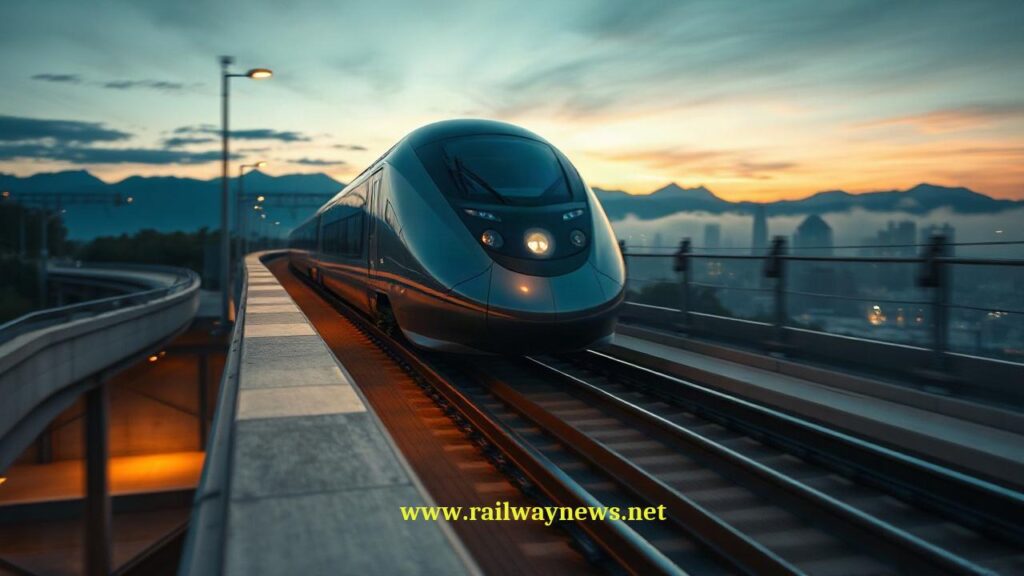
⚡ In Brief: South Korea’s competition authority approved the corporate merger of state-owned operator KORAIL and SRT operator SR, cutting KTX fares by 10% and adding over 17,000 weekend seats across the high-speed rail network by September 2026.
SEOUL, SOUTH KOREA – South Korea’s Fair Trade Commission approved the corporate merger between national rail operator Korea Railroad Corporation (KORAIL) and high-speed specialist SR on February 25, 2026, ending a decade of dual-operator division. The operational integration will harmonize passenger tariffs starting September 1, 2026, delivering an immediate 10% fare reduction on legacy KTX routes and introducing 17,000 additional weekend seats. State regulators established a three-year joint monitoring agreement to oversee network pricing, capacity allocation, and service benchmarks.
What Is the Full Scope of This Development?
The consolidation reunites South Korea’s high-speed passenger rail operations under a single public entity to eliminate rolling stock allocation bottlenecks between Seoul Station and Suseo Station. KORAIL and SR initiated interoperability trials on February 25, 2026, deploying 955-seat KTX-I trainsets on peak Suseo–Busan services to replace 410-seat SRT trainsets and increase capacity on saturated links. Full operational integration will conclude on September 1, 2026, supported by the release of the unified KORAIL+ booking system and standardized 5% loyalty reward accruals across all high-speed corridors. The Ministry of Land, Infrastructure and Transport is concurrently advancing cross-border rail connections, including restoring a severed section of the Gyeongwon Line near the Demilitarized Zone to prepare for potential future links to Wonsan in North Korea. Financial transaction values and administrative absorption costs for the merger were not disclosed by the transport ministry.
Key Development Data
| Parameter | Value |
|---|---|
| Company / Organisation | Korea Railroad Corporation (KORAIL) & SR Co., Ltd. |
| Total Value | Not disclosed |
| Parties Involved | KORAIL, SR Co., Ltd., Ministry of Land, Infrastructure and Transport (MOLIT), Fair Trade Commission (FTC) |
| Timeline / Completion | Cross-running began February 25, 2026; full operational merger September 1, 2026 |
| Country / Corridor | South Korea (Gyeongbu and Honam High-Speed Lines; Seoul/Suseo to Busan/Mokpo) |
How Does This Compare to Industry Trends?
South Korea’s decision to terminate its high-speed dual-operator model mirrors an international trend toward remunicipalization and unified public oversight in passenger rail. In the United Kingdom, the Department for Transport Operator (DFTO) integrated South Eastern Railway as the network’s first Integrated Rail Business in June 2025 and scheduled four additional private operations for state takeover by late 2025 to simplify scheduling and ticket administration (Source: Railway Gazette International, 2026). In contrast, Ukraine is aligning with open-market European Union directives by drafting a new Law on Railway Transport to promote private freight competition, supported by permit-free road and rail agreements extended through late 2025 (Source: VoxUkraine, 2025). The structural consolidation in Seoul occurs amid major capital expansion across the region, where the Asia-Pacific high-speed rail market grew to USD 24.74 billion in 2025 and is projected to reach USD 25.48 billion in 2026, led by China’s 901.5 billion yuan ($126.8 billion) railway infrastructure expenditure in 2025 (Source: Market Research Future, 2025).
Editor’s Analysis
KORAIL’s reabsorption of SR resolves an administrative divide that split high-speed rolling stock without producing genuine price competition on parallel tracks. Deploying 955-seat KTX-I trainsets into Suseo fixes severe peak-hour capacity constraints that SR’s smaller 410-seat fleet could not resolve independently. With regional high-speed rail expenditure projected to climb above USD 25 billion in 2026, national networks are increasingly favoring centralized fleet optimization over artificially fragmented passenger rail markets (Source: Fortune Business Insights, 2025).
FAQ
Q: When will the merger between KORAIL and SR take full operational effect?
A: The integrated high-speed rail system launches on September 1, 2026, following cross-running trials initiated on February 25, 2026. Unified ticket sales for all routes began in August 2026 via the KORAIL+ platform.
Q: How will the rail merger alter passenger ticket prices across South Korea?
A: Standard KTX route fares will drop by 10% on September 1, 2026, matching the lower baseline tariffs previously maintained by SRT. Loyalty accrual rates will also normalize at 5% across both legacy systems.
Q: What was the financial transaction value of the corporate rail merger?
A: The financial cost and corporate equity valuation of the merger were not disclosed by the Ministry of Land, Infrastructure and Transport. The Fair Trade Commission and transport ministry will maintain a three-year regulatory oversight regime to track fare levels and seat volumes.

Railway infrastructure, rolling stock and transport technologies specialist focused on global rail industry developments, high-speed rail systems, signaling technologies and freight transportation. Covering railway investments, public transport modernization, rail operations and international mobility projects across Europe, Asia and North America.
RELATED POSTS
September 6, 2026 5:19 am
Hitachi delivered Taiwan's first N700ST high-speed train from Japan in...

September 5, 2026 4:19 pm
CPK launched formal tender talks with four consortia to design...

September 6, 2026 4:12 am
Alstom delivered the first of 100 new G Class trams...

September 5, 2026 7:14 pm
HS2 Ltd signed renegotiated civils contracts with EKFB and Align...
September 6, 2026 1:17 am
Hitachi Toshiba Supreme Consortium confirmed the first of 12 N700ST...
September 6, 2026 6:17 am
Hungary ordered a national ban on most freight trains from...