
VR Confirms First Onboard Birth On Helsinki-Vaasa Line
VR confirmed the first onboard birth in company history aboard an IC49 train on the 418 km route between Helsinki and Vaasa, avoiding network delays.
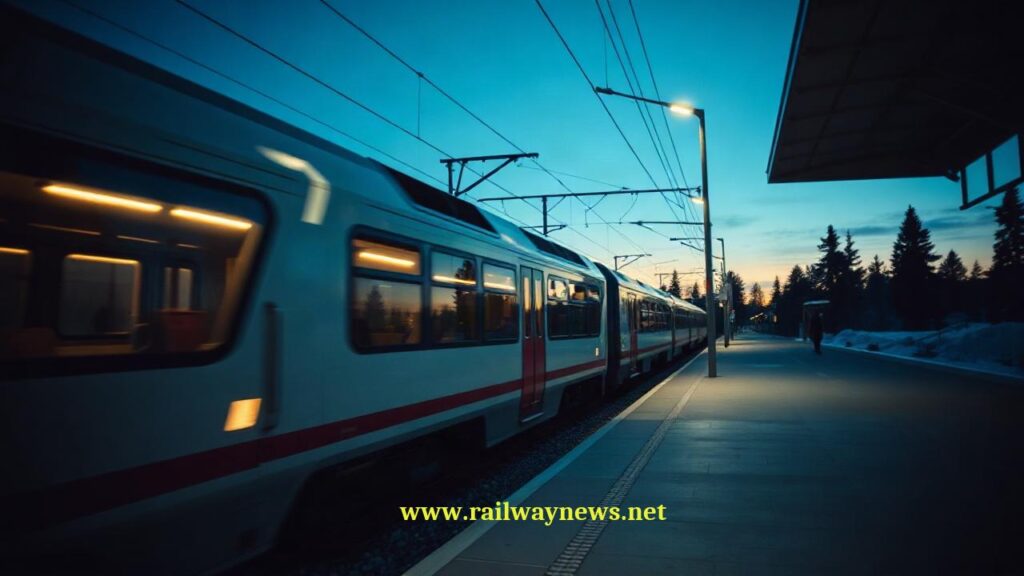
⚡ In Brief: A passenger gave birth aboard Finnish operator VR’s IC49 Intercity train on the Helsinki–Vaasa corridor, marking the first recorded onboard delivery in the company’s history while avoiding downstream network delays.
HELSINKI, Finland – Finnish state-owned rail operator VR safely managed the first recorded onboard birth in company history on Tuesday evening aboard Intercity service IC49 operating between Helsinki and Vaasa. Train personnel liaised with emergency dispatchers to arrange an ambulance rendezvous at Seinäjoki station, allowing paramedics to evacuate the family during a scheduled stop along the 418-kilometer corridor. The service resumed operations immediately after medical handover, completing its intercity run with negligible downstream impact on timetable reliability.
What Happened and What Is the Scale of Impact?
Finnish national rail operator VR executed an en-route medical emergency protocol aboard Intercity service IC49 after an unassisted passenger went into labor between Helsinki and Seinäjoki. Onboard crew members responded directly alongside a fellow passenger to assist the delivery before coordinating an intercept with regional emergency medical services. Paramedics met the train at Seinäjoki station to receive both mother and infant for hospital transport. The operator confirmed that the unscheduled delivery did not produce systemic traffic delays on the Ostrobothnia Line, and IC49 continued onward to its final destination in Vaasa. Specific clinical details, the infant’s health metrics, and the precise platform dwell time in minutes were not disclosed by the carrier.
Key Incident Data
| Parameter | Value |
|---|---|
| Incident Type | In-transit medical emergency / Onboard childbirth |
| Total Value | Not applicable |
| Parties Involved | VR Group (VR-Yhtymä Oyj), Finnish Emergency Services, IC49 train crew |
| Timeline / Completion | Tuesday evening; resolved at Seinäjoki station |
| Country / Corridor | Finland / Helsinki–Seinäjoki–Vaasa mainline route |
How Does This Compare to Similar Incidents on This Network?
In-transit deliveries remain anomalous across the Nordic passenger rail network, with VR confirming zero documented precedents of births taking place aboard its passenger rolling stock. Similar mainline medical incidents on Western European rail networks, including occurrences on SNCF commuter lines in France, routinely mandate emergency tract holds, platform isolations, and service cancellations that trigger cascading delays between 25 and 60 minutes across shared corridors (Source: Railway PRO, 2024). In contrast, VR preserved schedule discipline on the mixed-traffic Finnish mainline by staging first responders directly at an existing scheduled calling point at Seinäjoki station rather than ordering an emergency line halt. Comparable historical data regarding localized delay costs for onboard obstetric events on the Finnish network was not publicly available at time of publication.
Editor’s Analysis
Operational resilience during unprogrammed on-train medical occurrences demonstrates the value of standardized emergency integration between train crews and centralized regional dispatchers. As long-distance and high-speed passenger rail continues to expand globally toward a projected market valuation of 105.28 billion USD by 2035 (Source: Market Research Future, 2025), handling non-technical operational disruptions without mainline bottlenecks will remain critical for timetable dependability. VR’s rapid staging at a scheduled junction minimizes secondary congestion across single-track segments prevalent in Northern European rail infrastructure.
FAQ
Q: Has a baby ever been born on a VR passenger train before this event?
A: State-owned operator VR confirmed that it possesses no official historical record of an onboard childbirth occurring on its fleet prior to this incident. Communications manager Tiina Nummenmaa designated the delivery as completely unprecedented for the carrier.
Q: Did the emergency delivery cause significant delays for IC49 passengers?
A: The train crew transferred the mother and child to an ambulance during the regular station call at Seinäjoki, preventing major operational disruption. The service subsequently resumed its itinerary toward Vaasa with negligible timetable variance, though exact minute adjustments were not disclosed.
Q: What is the standard protocol for acute medical emergencies on Finnish trains?
A: VR train staff undergo training to handle frontline medical incidents and immediately patch communications through to the emergency response center to arrange trackside interception. This protocol ensures emergency medical teams meet the incoming consist at the nearest viable station equipped with road access.

Railway infrastructure, rolling stock and transport technologies specialist focused on global rail industry developments, high-speed rail systems, signaling technologies and freight transportation. Covering railway investments, public transport modernization, rail operations and international mobility projects across Europe, Asia and North America.
RELATED POSTS
September 6, 2026 5:19 am
Hitachi delivered Taiwan's first N700ST high-speed train from Japan in...

September 5, 2026 4:19 pm
CPK launched formal tender talks with four consortia to design...
September 6, 2026 1:17 am
Hitachi Toshiba Supreme Consortium confirmed the first of 12 N700ST...
September 6, 2026 6:17 am
Hungary ordered a national ban on most freight trains from...
September 7, 2026 8:16 am
Midea, Gree and TCL shipped air conditioners via China Railway...
September 6, 2026 8:17 am
DB InfraGO reopened the Nuremberg-Regensburg line in Bavaria on 31...