
Joint Committee Approves 2.4 km Corridor VIII Rail Tunnel
Bulgaria and North Macedonia approved a 2.4 km Corridor VIII rail tunnel between Gyushevo and Kriva, connecting TEN-T to the Adriatic in Sofia in 2025.
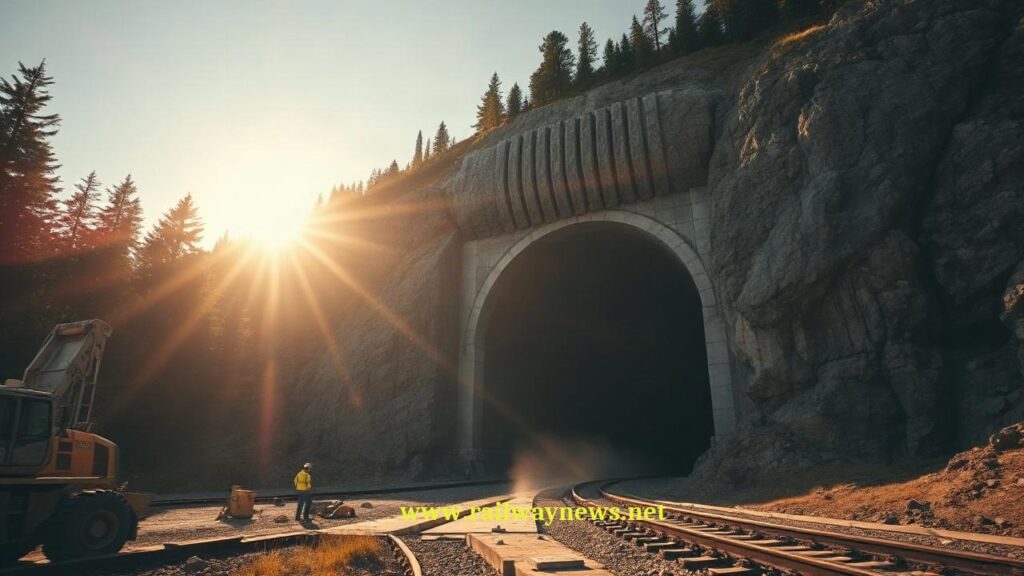
⚡ In Brief: In Sofia in 2025, Bulgaria and North Macedonia activated a joint committee governing the design and construction of the 2.4 km cross-border rail tunnel on Corridor VIII between Gyushevo and Kriva, extending TEN-T toward the Adriatic Sea.
SOFIA, Bulgaria – Bulgarian and North Macedonian transport officials held the first Joint Committee session of the Corridor VIII cross-border railway tunnel project, a 2.4 km scheme between Gyushevo and Kriva, in Sofia in 2025. Chaired by Deputy Ministers Tsveta Timeva and Kaltrina Zekoli Shakiri, the session approved rules of procedure and an indicative timetable. No total project value or construction completion date has been officially disclosed by either ministry.
What Is the Full Scope of This Project?
The project covers preparation, construction and operation of a railway tunnel that will eliminate a national bottleneck on the Pan-European Transport Corridor VIII rail axis between Bulgaria and North Macedonia. At 2.4 km, the underground link is the critical border element for closing the present gap between the Bulgarian and North Macedonian rail networks, and it is designed to carry both freight and passenger traffic in accordance with European safety and interoperability rules.
The committee’s approved work plan will be submitted as a joint letter to the European Commission, the European Investment Bank (EIB) and the European Bank for Reconstruction and Development (EBRD). Financing options were discussed during the session, but no cost split or lending commitment was announced.
Note: Independent verification of the tunnel’s total capital cost, geological survey scope and construction start date was not available at time of publication.
Key Project Data
| Parameter | Value |
|---|---|
| Project / Contract Name | Cross-border railway tunnel, Gyushevo–Kriva (Corridor VIII) |
| Total Value | Not disclosed |
| Parties Involved | Bulgaria Ministry of Transport and Communications; North Macedonia Ministry of Transport; European Commission; EIB; EBRD |
| Timeline / Completion | Indicative timetable approved; specific dates not disclosed |
| Country / Corridor | Bulgaria–North Macedonia border; Pan-European Transport Corridor VIII |
How Does This Compare to Similar Projects?
At 2.4 km, the planned cross-border bore is less than one-third the length of the roughly 8 km second-track Karavanke railway tunnel under construction between Slovenia and Austria, which remains the closest European benchmark for bilateral rail tunnel delivery on a TEN-T core corridor (Source: European Commission, 2024). No comparable rail tunnel of this border type is currently in procurement in the Western Balkans, though Corridor VIII’s road element is much further advanced: Bechtel and Enka’s joint venture was selected in 2025 to build road sections of the same corridor inside North Macedonia (Source: ENR, 2025).
The project is emerging at a favourable modal moment. European road freight rates rose slightly in 2025 while driver shortages and tighter regulation push some cargo toward rail intermodal, even though Germany’s slow manufacturing recovery still limits combined demand for both modes (Source: Upply, 2025). Politically, the corridor received renewed high-level backing at the Tirana ministerial meeting and economic forum in 2025, including a commitment to a further Albania-hosted session before the end of the year (Source: AZERTAC, 2025).
Editor’s Analysis
Corridor VIII rail planning has now reached the institutional stage that preceded financing commitments on better-known European cross-border projects: a standing bilateral committee, approved operating rules, a forward work programme and a single letter to Brussels development banks. What is still missing is not political will but a quantified financing structure — no cost estimate, no grant application ceiling and no lender allocation were made public from the Sofia session, meaning the next decisive milestone is fiscal rather than engineering.
The committee format nonetheless converts corridor rhetoric into shared administrative ownership, which historically has been the trigger for EIB and EBRD technical assistance on similar Balkan interconnections. Expect funding negotiations to focus on blending EU accession-related instruments with lender-backed guarantees, and watch for a second Joint Committee meeting once the European Commission reacts formally to the joint letter.
FAQ
Q: How long is the new Bulgaria–North Macedonia cross-border railway tunnel?
A: The tunnel between Gyushevo and Kriva will be 2.4 km long. It is designed as the rail connection element of Corridor VIII linking Bulgaria’s and North Macedonia’s networks.
Q: When will construction of the tunnel begin?
A: No construction start date has been officially announced. The Joint Committee approved only an indicative timetable at its first meeting in Sofia; the detailed schedule has not been published.
Q: Will the tunnel benefit rail freight between the two countries?
A: Yes. Officials from both governments said the project will contribute to faster and more efficient rail freight and passenger transport. No official forecast of transit-time savings or freight volumes has been released.

Railway infrastructure, rolling stock and transport technologies specialist focused on global rail industry developments, high-speed rail systems, signaling technologies and freight transportation. Covering railway investments, public transport modernization, rail operations and international mobility projects across Europe, Asia and North America.
RELATED POSTS

September 5, 2026 4:19 pm
CPK launched formal tender talks with four consortia to design...

September 6, 2026 5:19 am
Hitachi delivered Taiwan's first N700ST high-speed train from Japan in...
September 6, 2026 6:17 am
Hungary ordered a national ban on most freight trains from...

September 5, 2026 7:14 pm
HS2 Ltd signed renegotiated civils contracts with EKFB and Align...
September 5, 2026 6:17 pm
Universal Signalling won a deal to install its U-Cross system...
September 5, 2026 5:17 pm
Chiltern Railways completed the Banbury Station ticket office and main...