
FRA Approves Noise Standard for 160-220 mph Trains
FRA approved an alternative 160–220 mph noise standard in August 2026, replacing 1970s rules that blocked the final certification of US high speed rail trains.
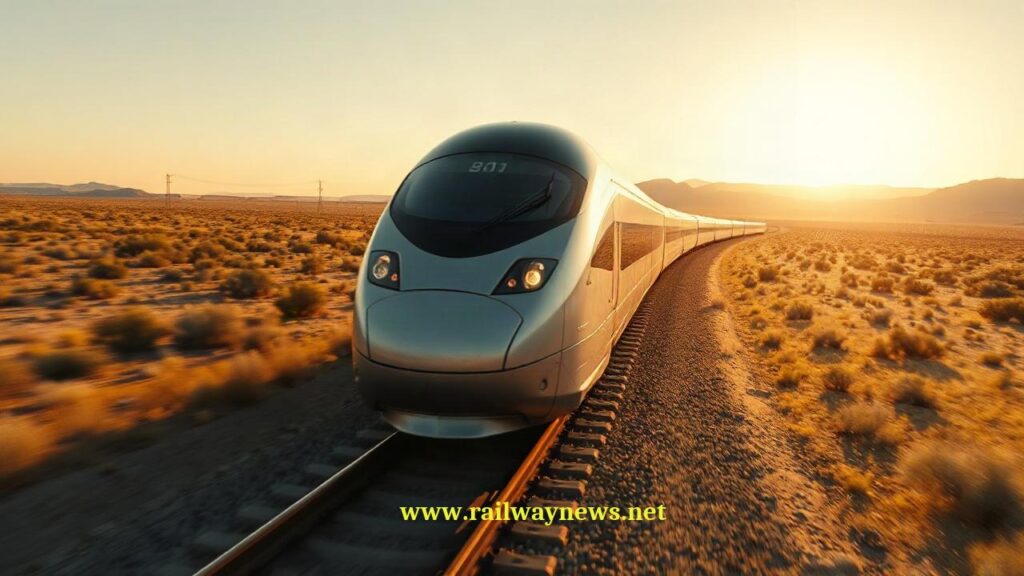
⚡ In Brief: The US Federal Railroad Administration issued an alternative noise-emission standard for trains running at 160–220 mph and added a case-by-case approval route above 220 mph, replacing a 1970s engine-noise rule that blocked high-speed rail certification.
WASHINGTON, DC – The Federal Railroad Administration (FRA) announced in August 2026 an alternative noise-emission standard for trains operating between 160 mph and 220 mph, alongside a separate approval process for systems above 220 mph, including magnetic levitation. The action updates a 1970s noise regime under 49 CFR Part 210 that measures engine and mechanical sound but does not account for aerodynamic noise, which becomes the dominant source above roughly 160 mph. The FRA described the change as removing a regulatory barrier to true high-speed rail in the United States.
What Does This Regulation Cover?
The new 160–220 mph standard moves certification from component-level engine and rolling-stock sound to total train pass-by noise, reflecting the acoustic reality that wind-generated sources dominate at high speed.
Aerodynamic noise from noses, carbody gaps, bogies and pantographs scales at roughly the fifth to seventh power of train speed, while wheel–rail noise scales near the third power; the crossover typically falls between 160 mph and 190 mph for streamlined trainsets. The FRA’s previous rules therefore forced manufacturers of modern distributed-traction trains to add sound-mitigation equipment targeting locomotive-style noise sources that are not actually the dominant emitters above 160 mph. Systems exceeding 220 mph, explicitly including maglev technology, will not receive a blanket noise limit but must instead obtain a project-specific FRA approval. Administrator David Fink said the legacy rules disadvantaged trains generating most of their noise away from engines and rolling stock, and that the update removes a major obstacle for operators.
Key Regulatory Data
| Parameter | Value |
|---|---|
| Regulation / Policy Name | FRA Alternative Noise-Emission Standard for High-Speed Trains (160–220 mph) and Above-220 mph Approval Process, updating 49 CFR Part 210 |
| Total Value | Not disclosed — no direct appropriations; removes modification and compliance costs for high-speed rolling stock |
| Parties Involved | Federal Railroad Administration / US DOT; future high-speed operators and suppliers, including Brightline West, Alstom, Siemens Mobility and prospective maglev applicants |
| Timeline / Completion | Announced August 2026; numerical pass-by decibel limits and final compliance deadlines were not disclosed |
| Country / Corridor | United States, nationwide; first likely candidate is Brightline West’s planned 186 mph Las Vegas–Rancho Cucamonga corridor |
How Does This Compare to Global Standards?
The FRA’s approach brings US certification closer to European practice, where pass-by noise type-approval already measures the complete trainset at trackside rather than isolating engine and mechanical components. Japan has applied a community noise ceiling of 70 dB(A) at 25 metres from the Shinkansen track centreline since 1975, which has driven pantograph shrouds and low-noise nose designs on Japanese high-speed fleets (Source: Japanese Ministry of the Environment, 1975).
Noise policy elsewhere is tightening even as speed limits rise: the European Environment Agency projects an 18 percent reduction in Europeans exposed to harmful transport noise by 2030 under optimistic mitigation scenarios, including electrification and lower urban speed limits (Source: EEA, 2025). In New York, congestion pricing produced a 15 percent increase in average peak-period traffic speeds while reducing vehicle-noise complaints and shifting travellers toward public transport (Source: The New York Times, 2025). Canada’s Alto project, with the Ottawa–Montreal corridor confirmed as the first segment, is projected to add US$24.5 billion annually to Canadian GDP, signalling that North American political demand for high-speed corridors is now running ahead of US federal certification rules (Source: Railway-News, 2025). Global transport-infrastructure investment tracked at US$17.84 billion in 2025 concentrated in China, India and the EU, leaving the United States dependent on regulatory modernisation such as this FRA order to remain competitive (Source: Market Research Future, 2025).
Editor’s Analysis
The rule resolves a quiet absurdity: a railroad buying an off-the-shelf 220 mph European or Japanese trainset previously had to engineer around noise tests written for diesel locomotives, adding cost while reducing no measurable wayside sound. By adopting total pass-by noise as the legal reference above 160 mph, the FRA also signals that future 200-plus mph corridors will be judged on what trackside residents actually hear. With Brightline West preparing 186 mph operations and global investment flowing to high-speed projects, the United States has removed its last major federal rulemaking obstacle while still leaving numerical dB thresholds undefined.
FAQ
Q: Why did the old FRA noise rules block high-speed rail in the US?
A: The 1970s-era standards in 49 CFR Part 210 certified engine and mechanical noise, but above 160 mph aerodynamic wind noise is the dominant source. A modern high-speed trainset could not be fairly certified under those component-level tests, forcing unnecessary equipment modifications without addressing real wayside noise.
Q: Does the new 160–220 mph standard include a specific decibel limit?
A: No numerical pass-by decibel ceiling for the alternative standard was disclosed in the FRA announcement. The agency said compliance will be demonstrated through the new standard and, for systems above 220 mph, through a case-by-case approval process.
Q: Which US high-speed routes will use the new standard first?
A: Brightline West’s planned 186 mph Las Vegas–Rancho Cucamonga line is the most immediate candidate, with Siemens-built American Pioneer 220 trainsets expected to operate in that speed band. Amtrak’s current Acela service tops out at approximately 150 mph on the Northeast Corridor and would only fall under the new rule if operating speeds are raised to 160 mph or higher.

Railway infrastructure, rolling stock and transport technologies specialist focused on global rail industry developments, high-speed rail systems, signaling technologies and freight transportation. Covering railway investments, public transport modernization, rail operations and international mobility projects across Europe, Asia and North America.
RELATED POSTS

September 5, 2026 4:19 pm
CPK launched formal tender talks with four consortia to design...

September 5, 2026 7:14 pm
HS2 Ltd signed renegotiated civils contracts with EKFB and Align...
September 5, 2026 6:17 pm
Universal Signalling won a deal to install its U-Cross system...
September 5, 2026 5:17 pm
Chiltern Railways completed the Banbury Station ticket office and main...
September 6, 2026 5:19 am
Hitachi delivered Taiwan's first N700ST high-speed train from Japan in...
September 5, 2026 10:14 pm
MTA confirmed $600M in annual savings to balance New York's...