
Universal Signalling Wins 100-Crossing Heart of Wales Deal
Universal Signalling won a deal to install its U-Cross system at more than 100 crossings on the 96-mile Heart of Wales line following a Q4 2025 trial.
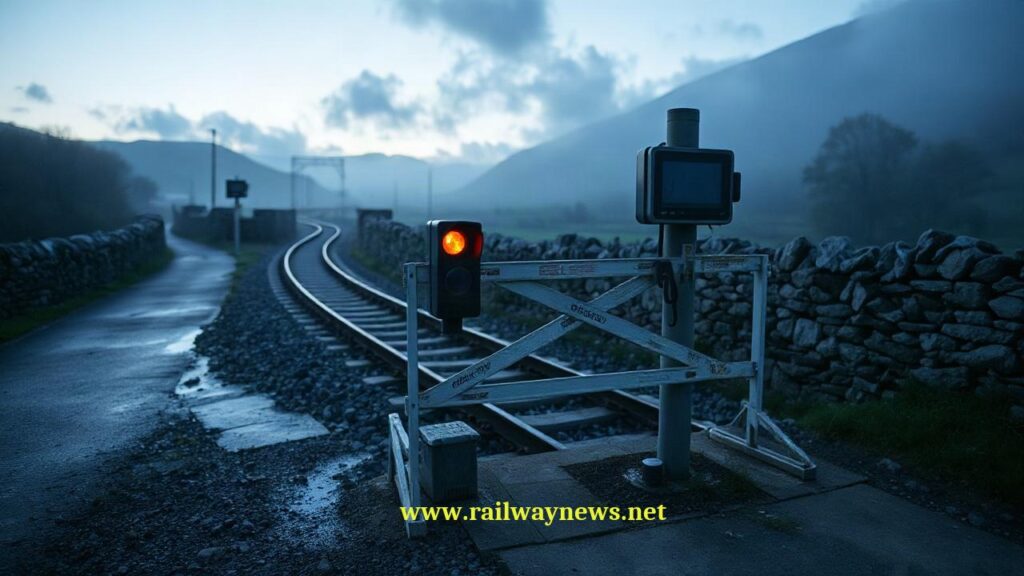
⚡ In Brief: Universal Signalling will install its U-Cross digital crossing system at more than 100 user-worked crossings on the Heart of Wales line after an 11-mile shadow-mode trial in Q4 2025.
UK – Network Rail Wales and Borders will deploy Universal Signalling’s U-Cross system at more than 100 user-worked crossings on the Heart of Wales line. The agreement follows a Q4 2025 shadow-mode trial on an 11-mile stretch between Llandeilo and Llandovery. An in-service date has not been announced.
What Are the Technical Specifications?
U-Cross is configured to give signallers accurate train-arrival information and positive crossing-clearance confirmation without relying on traditional treadles, axle counters, or track circuits. The modular platform is intended for locations without nearby lineside power, which is the limiting factor on rural sections of the Heart of Wales line. Universal Signalling and Network Rail did not disclose the system’s sensor technology, power architecture, target safety-integrity level, or per-site cost.
The Q4 2025 trial ran in shadow mode, meaning U-Cross gathered and compared operational data without yet acting as a controlling interlocking input. Assurance and installation work will be phased, with full system support running to the end of Network Rail’s current control period, CP7, which ends in March 2029.
Key Technical Data
| Parameter | Value |
|---|---|
| Technology / System Name | U-Cross, developed by Universal Signalling Ltd |
| Total Value | Not disclosed |
| Parties Involved | Universal Signalling; Network Rail Wales and Borders; Network Rail Technical Authority; Transport for Wales |
| Timeline / Completion | Q4 2025 trial completed; in-service date to be announced; support through CP7 to March 2029 |
| Country / Corridor | UK – Heart of Wales line, approximately 96-mile rural corridor |
| Deployment Scope | More than 100 user-worked crossings |
Where Does This Technology Stand in the Market?
The conventional market alternative to U-Cross is trackside train detection packaged for level-crossing control, not a competing “power-free” digital product. Frauscher’s FAdC axle-counting installations and Siemens Mobility’s interlocking-based level-crossing systems are established on powered European main lines, but both normally require lineside power feeds, trackside cabinets, and route-level integration (Source: Frauscher, 2025; Source: Siemens Mobility, 2025). U-Cross is being positioned for lines where the cost of that conventional infrastructure cannot be justified.
Scale context also differs from mainstream digital signalling procurement. Siemens Mobility’s 2025 signalling modernisation programme in Romania was valued at USD 352 million, while PORR’s Romanian railway renovation contract reached EUR 428 million; those are capital-heavy route-wide projects, whereas U-Cross is an unpriced, route-specific overlay on an existing rural line (Source: Siemens Mobility, 2025; Source: PORR, 2025). The UK rail market is forecast to reach USD 185.31 billion by 2034, and the shift toward software-based signalling is a stated growth driver, but no comparable UK deployment of a power-free crossing-monitoring product has been disclosed (Source: Market Data Forecast, 2025).
Alstom’s Q3 2025/26 results showed signalling sales up 4% on a reported basis and 13% organically, with the UK listed among growth regions; this signals that major suppliers are prioritising digital main-line signalling, leaving rural retrofit niches open to smaller firms such as Universal Signalling (Source: Alstom Q3 2025/26 results via Railway Supply, 2026).
Editor’s Analysis
The Wales deal gives Universal Signalling a route-scale reference site, not just a pilot, and that matters more than the undisclosed contract value. More than 100 installations on a single 96-mile corridor will generate reliability data that a trial cannot provide, and it positions U-Cross as a credible renewal tool for other rural routes with power-scarce user-worked crossings.
The absence of a public cost-per-crossing figure, however, means the business case for wider adoption still cannot be benchmarked against axle counters or track circuits. Network Rail has effectively used this procurement to support a domestic supplier in a market otherwise led by Alstom, Siemens Mobility, and Hitachi Rail (Source: Alstom Q3 2025/26 results via Railway Supply, 2026).
FAQ
Q: What is U-Cross and how does it differ from a conventional level crossing system?
A: U-Cross is a digital system that provides signallers with train arrival and clearance information at user-worked crossings without the need for treadles, axle counters, or track circuits. Universal Signalling says its modular design suits rural sites where traditional lineside power and cabling are difficult to install.
Q: When will the U-Cross system be in service on the Heart of Wales line?
A: Network Rail has not disclosed the in-service date. The Q4 2025 trial covered an 11-mile section from Llandeilo to Llandovery, and the full rollout remains subject to phased assurance and installation work.
Q: Will U-Cross reduce waiting times at user-worked crossings?
A: The project team states that more accurate train-arrival and clearance data will allow crossing users to cross sooner after a train has passed. No quantified reduction in waiting times has been officially confirmed.

Railway infrastructure, rolling stock and transport technologies specialist focused on global rail industry developments, high-speed rail systems, signaling technologies and freight transportation. Covering railway investments, public transport modernization, rail operations and international mobility projects across Europe, Asia and North America.
RELATED POSTS
September 5, 2026 5:17 pm
Chiltern Railways completed the Banbury Station ticket office and main...

September 5, 2026 4:19 pm
CPK launched formal tender talks with four consortia to design...

September 5, 2026 7:14 pm
HS2 Ltd signed renegotiated civils contracts with EKFB and Align...