
Network Rail Confirms Saltley Viaduct Replacement Aug 2026
Network Rail confirmed the Saltley Viaduct full rebuild from 29 Aug 2026 for 3 days, and cuts all CrossCountry trains between Birmingham and Coleshill Parkway.
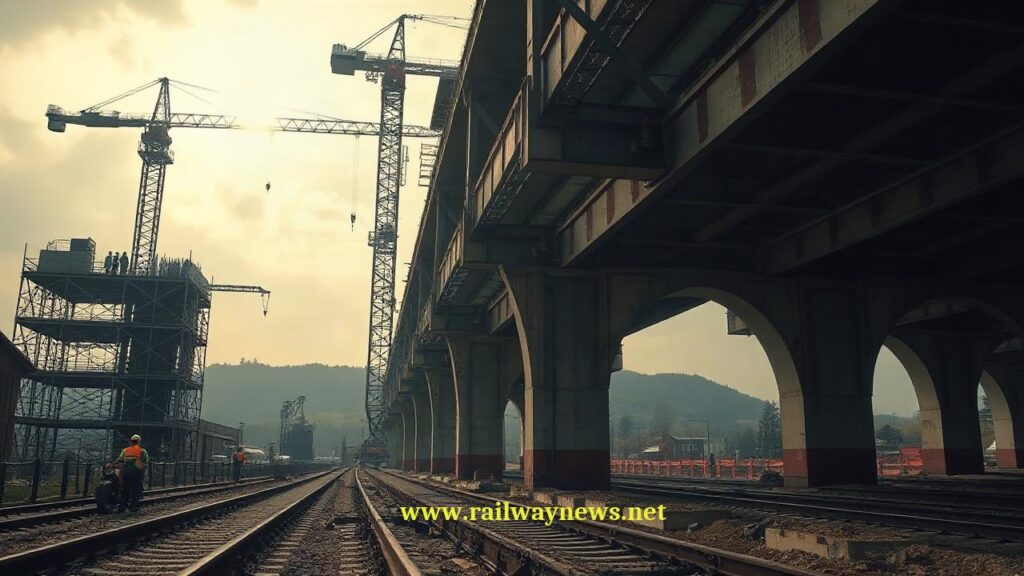
⚡ In Brief: Network Rail and HS2 will start a three-day replacement of Saltley Viaduct near Birmingham on 29 August 2026, cutting direct CrossCountry services between Birmingham New Street and Coleshill Parkway and lengthening journeys to the East Midlands, North East and Scotland.
BIRMINGHAM, UK – Network Rail has confirmed that HS2 engineers will demolish and rebuild the Saltley Viaduct on the Birmingham–Water Orton railway from Saturday 29 August to Monday 31 August 2026, forcing rail replacement buses and extended journey times on CrossCountry services to Leicester, Nottingham, Peterborough, Cambridge, Stansted Airport, the North East and Scotland. The replacement structure will be two metres higher and wider than the existing span, creating the clearance envelope HS2 trains need to pass beneath on their approach to Birmingham Curzon Street. The works will be delivered by HS2’s construction partner, Balfour Beatty VINCI, over the three-day summer bank holiday possession.
What Is the Full Scope of This Project?
The new viaduct will be two metres higher and two metres wider than the existing structure, a change that simultaneously enables HS2 clearance beneath the deck and creates improved pedestrian and cycle routes underneath the railway. The demolition-and-rebuild is being executed over a single continuous closure — the August bank holiday window — because the Saltley corridor carries the only departures from Birmingham New Street towards the East Midlands, North East England and Scotland; no diversionary passenger railway of comparable capacity exists between Birmingham and the Water Orton junction. The works form part of a wider HS2 preparation programme across Saltley, Washwood Heath and Nechells, the largest cluster of approach-corridor construction activity ahead of the opening of Birmingham Curzon Street (Source: Network Rail, 2026).
Key Project Data
| Parameter | Value |
|---|---|
| Project / Contract Name | Saltley Viaduct replacement, HS2 Phase One approach works |
| Total Value | Not disclosed |
| Parties Involved | Network Rail, HS2 Ltd, Balfour Beatty VINCI, CrossCountry |
| Timeline / Completion | 29–31 August 2026 engineering possession; wider HS2 Phase One completion subject to separate Government review |
| Country / Corridor | United Kingdom / Birmingham New Street to Water Orton, West Midlands |
How Does This Compare to Similar Projects?
HS2 Phase One remains the largest rail infrastructure programme in Europe, with a UK Government budget estimate in excess of £50 billion, making the Saltley Viaduct replacement one significant component of a far larger state-funded corridor investment (Source: UK Department for Transport, 2025). The European Commission, by contrast, allocated €5.64 billion across the entire European Union in 2025 to accelerate high-speed rail development, targeting a doubling of high-speed traffic by 2030 — a figure that illustrates how much of the EU’s strategy is distributed across many smaller projects rather than concentrated in a single country (Source: European Commission, 2025). Internationally, the China–Kyrgyzstan–Uzbekistan railway signed its project-financing agreement in December 2024, advancing construction of a new transcontinental link at a time when the global high-speed rail market is forecast to grow at 6.35% CAGR to USD 99.35 billion by 2034 (Source: Jamestown Foundation, 2025; NextMSC, 2025). No contract value for the Saltley Viaduct works specifically has been officially published, and comparable single-structure replacement costs on the UK network were not available at time of publication.
Editor’s Analysis
The August 2026 possession marks the transition of HS2 from enabling works into the most disruptive phase for operators of the classic network — a period passengers will experience repeatedly until Birmingham Curzon Street opens. CrossCountry’s entire East Midlands and North East flow depends on the Saltley corridor, and with no diversionary rail route of similar speed, the quality of rail replacement logistics will determine passenger tolerance through this stage of the programme. The European and global investment context supports the project’s strategic logic — the EU has pledged €5.64 billion to high-speed rail in 2025 and the global market is set to reach USD 99.35 billion by 2034 (Source: European Commission, 2025; NextMSC, 2025) — yet the industry’s handling of the current bank holiday closure will be what shapes public confidence in the wider scheme.
FAQ
Q: Can trains still run between Birmingham New Street and Coleshill Parkway during the August bank holiday?
A: No through trains will operate over the viaduct from 29 to 31 August 2026. CrossCountry will run rail replacement buses between Birmingham New Street, Water Orton and Coleshill Parkway, where passengers rejoin trains for Leicester, Nottingham, Peterborough, Cambridge and Stansted Airport.
Q: Why does a viaduct replacement require a full three-day closure?
A: The existing twin-track structure must be demolished and rebuilt two metres higher and wider, a sequence that cannot be executed safely beneath a live railway. Network Rail selected the August bank holiday because it offers three consecutive days of reduced commuter demand, limiting the impact on primarily leisure travellers.
Q: Will this engineering work have any long-term benefit for everyday passengers?
A: Yes — in addition to providing the clearance needed for HS2 trains, the wider deck will include improved pedestrian and cycling facilities beneath the structure. The replacement also secures the long-term condition of the Birmingham–Water Orton corridor, which Network Rail classifies as a key intercity route for CrossCountry services.

Railway infrastructure, rolling stock and transport technologies specialist focused on global rail industry developments, high-speed rail systems, signaling technologies and freight transportation. Covering railway investments, public transport modernization, rail operations and international mobility projects across Europe, Asia and North America.
RELATED POSTS

October 8, 2026 1:15 pm
Alstom secured a €1bn contract to build 13 automated trains,...

October 1, 2026 7:09 am
United States regulators confirmed a September 30 deadline for the...

October 8, 2026 12:18 pm
Siemens Mobility signed an agreement with VinSpeed to supply 350...

October 4, 2026 5:14 pm
Alstom secured a CA$4.7 billion order from VIA Rail Canada...

October 1, 2026 12:13 am
Illinois approved $1.5 billion annually for the Northern Illinois Transit...

October 5, 2026 6:12 pm
AECOM and Jacobs secured a contract in September 2026 to...