
Ural Locomotives Approves 50-Unit Orlet for Russian Railways
Ural Locomotives secured approval for a 50-unit series of its new Orlet electric locomotive for Russian Railways after a seven-month test completed in June 2026.
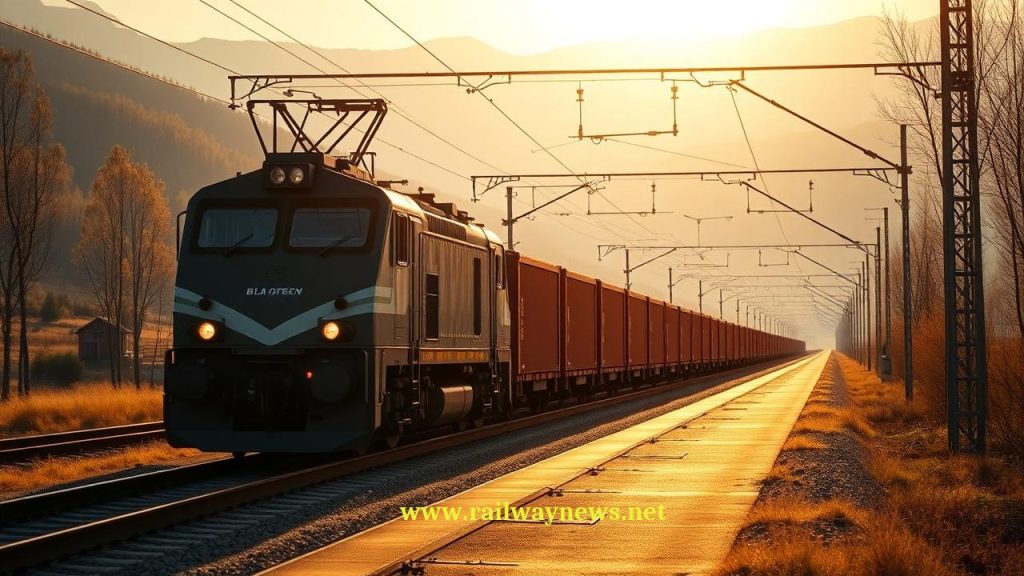
⚡ In Brief: Ural Locomotives received acceptance approval for its new 2ES11 “Orlet” AC electric freight locomotive after a seven-month testing programme at Shcherbinka, clearing production of an initial 50-unit series for Russian Railways.
VERKHNYAYA PYSHMA, RUSSIA – Ural Locomotives, part of the Sinara–Transport Machines (STM) holding, obtained acceptance commission approval for the 2ES11 Orlet AC electric freight locomotive in mid-2026, greenlighting production of an initial 50-unit series. The commission, comprising Russian Railways (RZD) representatives, research institutes, and equipment suppliers, confirmed compliance with all technical and safety requirements after tests conducted between December 2025 and June 2026.
What Are the Technical Specifications?
The 2ES11 Orlet delivers 42% more power than previous-generation Russian AC freight locomotives, hauling trains weighing up to 7,100 metric tons in its two-section configuration and up to 9,000 metric tons with an additional booster section. Built on the 2ES8 “Malahit” platform, it features a Russian-manufactured asynchronous traction system with redundant architecture, a modular design, and a new equipment cooling system targeting reduced maintenance downtime. The locomotive reached speeds of 120 km/h during trial runs and accumulated over 5,000 km before formal testing began. The exact continuous power output in megawatts was not disclosed by the manufacturer.
Key Technical Data
| Parameter | Value |
|---|---|
| Technology / System Name | 2ES11 “Orlet” AC Electric Freight Locomotive |
| Total Value | Not disclosed |
| Parties Involved | Ural Locomotives (STM), Russian Railways (RZD), National Research Institute of Railway Transport |
| Timeline / Completion | Testing: Dec 2025–Jun 2026; Initial series production pending Eurasian Customs Union certification |
| Country / Corridor | Russia; designed for RZD freight operations |
Where Does This Technology Stand in the Market?
The 2ES11 enters a global electric freight locomotive market in which asynchronous traction has been standard for over two decades. Siemens Mobility’s Vectron AC (high-power variant) delivers approximately 6,400 kW continuous output and operates at speeds up to 200 km/h across 20 European countries (Source: Siemens Mobility, 2024). Alstom’s Traxx Universal AC platform provides roughly 5,600–6,000 kW with modular configurations for cross-border European freight (Source: Alstom, 2024). China’s HXD2 twin-section electric locomotive, built by CRRC Datong, achieves 9,600 kW and hauls coal trains exceeding 10,000 tonnes on dedicated heavy-haul corridors (Source: CRRC, 2023). The Orlet’s 7,100-tonne rating places it in the upper-middle tier globally, though the absence of a disclosed megawatt figure limits direct power-density comparisons. The locomotive’s Russian-made asynchronous traction system reflects STM’s positioning within Russia’s import-substitution strategy, a factor largely absent from Western competitors’ value propositions. Per-unit pricing for the 50-unit series was not publicly available at time of publication.
Editor’s Analysis
The 2ES11 programme signals that STM is consolidating its domestic supply chain around the Malahit platform while targeting hauling capacity gains sufficient for Russia’s heaviest freight corridors. Certification under Eurasian Customs Union technical regulations—rather than solely RZD standards—suggests export ambitions toward former Soviet rail networks where Russian gauge and AC electrification predominate. This locomotive programme unfolds as global freight electrification accelerates: road freight in China reached 29.5% new-energy heavy truck penetration between January 2025 and May 2026, compressing diesel demand forecasts and underscoring the cross-modal shift toward electric traction across freight systems (Source: CleanTechnica/IEA, 2026).
FAQ
Q: What does “Orlet” mean and why was this name chosen?
A: “Orlet” is the regional name in the Ural Mountains for the pink semi-precious mineral rhodonite. Ural Locomotives continues a tradition of naming new locomotive models after minerals specific to the Ural region, following the 2ES8 “Malahit” (malachite) platform on which the Orlet is based.
Q: When will the 50 locomotives enter revenue service?
A: The manufacturer has not announced a delivery schedule. Production of the initial batch begins only after the locomotive obtains certification of compliance with Eurasian Customs Union technical regulations, a milestone not yet achieved at the time of the acceptance commission’s approval.
Q: Does the 2ES11 replace an existing locomotive class in the RZD fleet?
A: The manufacturer has not explicitly stated which fleet segment the Orlet targets, but its 42% power increase over previous AC generations—and its 7,100–9,000-tonne hauling envelope—positions it as a higher-capacity successor to classes such as the 2ES5K “Ermak” series, which have formed the backbone of RZD’s AC freight operations since the mid-2000s.

Railway infrastructure, rolling stock and transport technologies specialist focused on global rail industry developments, high-speed rail systems, signaling technologies and freight transportation. Covering railway investments, public transport modernization, rail operations and international mobility projects across Europe, Asia and North America.
RELATED POSTS

September 6, 2026 5:19 am
Hitachi delivered Taiwan's first N700ST high-speed train from Japan in...

September 5, 2026 4:19 pm
CPK launched formal tender talks with four consortia to design...

September 5, 2026 7:14 pm
HS2 Ltd signed renegotiated civils contracts with EKFB and Align...

September 6, 2026 4:12 am
Alstom delivered the first of 100 new G Class trams...

September 6, 2026 1:17 am
Hitachi Toshiba Supreme Consortium confirmed the first of 12 N700ST...

September 6, 2026 6:17 am
Hungary ordered a national ban on most freight trains from...