
Siemens Mobility Signs 32-km Trainguard STC Deal in Austria
Siemens Mobility signed a contract to deploy its new Trainguard STC on Austria’s 32-km Zillertalbahn line, with commissioning in 2028 and a 20 year maintenance.
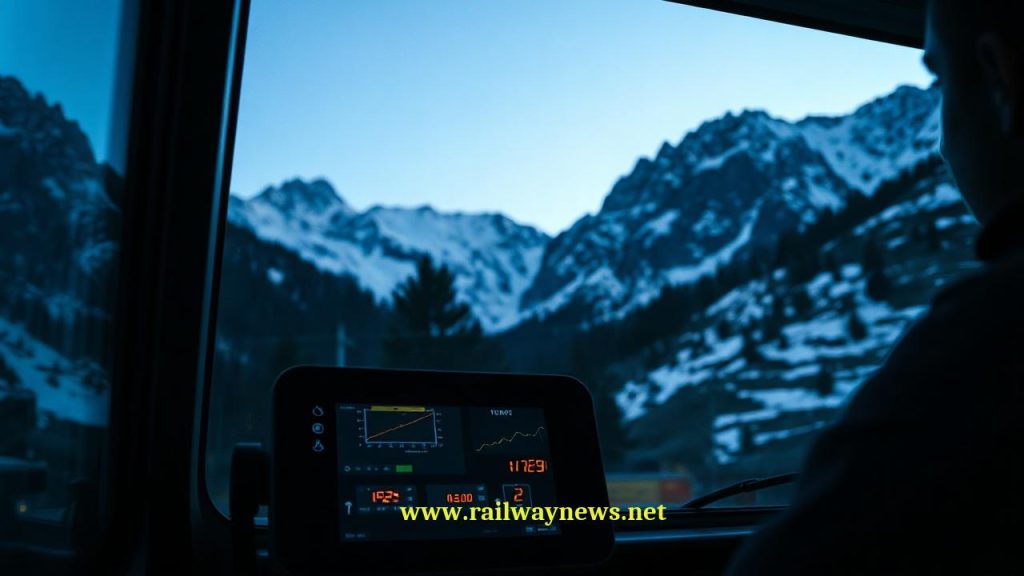
⚡ In Brief: Siemens Mobility signed a contract with Zillertaler Verkehrsbetriebe to deploy its Trainguard STC digital rail traffic control system across the 32-km Zillertalbahn narrow-gauge line in Tyrol, Austria, with commissioning scheduled for 2028 and maintenance coverage of at least 20 years.
JENBACH, AUSTRIA – Siemens Mobility secured a contract from Zillertaler Verkehrsbetriebe to modernise the entire traffic control and management system on the 32-km Zillertalbahn narrow-gauge line between Jenbach and Mayrhofen. The project, announced as the largest Trainguard STC deployment in Austria, covers 10 stations, 8 stops, 82 switches, 16 trains, and 23 level crossings. Commissioning is scheduled for 2028, with Siemens Mobility also contracted for at least 20 years of system maintenance.
What Does This Contract Cover?
The contract encompasses full deployment of Siemens Mobility’s Trainguard STC digital rail traffic control system across the entire 32-km Zillertalbahn route. The system replaces conventional signalling infrastructure with radio communications and satellite positioning for continuous traffic monitoring, automatically calculating braking curves, monitoring speed, and applying emergency brakes when limits are exceeded. Each of the 16 trains receives on-board units, and 23 railway level crossings are integrated so that train passage occurs only after safety system confirmation — with automatic train stoppage before any malfunctioning crossing. The agreement also includes a maintenance commitment of at least 20 years, extending Siemens Mobility’s role well beyond the 2028 commissioning date.
Key Contract Data
| Parameter | Value |
|---|---|
| Contract Name | Zillertalbahn Traffic Control & Management System Modernisation |
| Total Value | Not disclosed |
| Parties Involved | Siemens Mobility Austria (supplier); Zillertaler Verkehrsbetriebe (operator) |
| Timeline / Completion | Commissioning scheduled for 2028; maintenance term of at least 20 years |
| Country / Corridor | Austria — Tyrol, Jenbach to Mayrhofen (32 km) |
How Does This Compare to Similar Contracts?
Siemens Mobility has deployed Trainguard STC on regional and narrow-gauge lines in several European countries, including Switzerland’s Matterhorn Gotthard Bahn and Germany’s Harzer Schmalspurbahnen. The Zillertalbahn contract is distinguished by its scope — covering every operational element from on-board units to level crossing integration — and by the unusually long 20-year maintenance commitment. The Austrian railway signalling market is projected to grow at a mid-single-digit rate, with a 2026–2035 compound annual growth rate forecast of 2.5%–4.5%, driven by replacement demand on ageing infrastructure (Source: IndexBox, 2025). By comparison, Germany’s Profibus-based data acquisition market for rail applications shows similar modernisation-driven growth patterns, though specific contract values for comparable Trainguard STC projects have not been publicly itemised by Siemens Mobility (Source: IndexBox, 2025). No comparable narrow-gauge digital signalling contract of this scale was publicly recorded in Austria in the preceding five years.
Where Does This Technology Stand in the Market?
Trainguard STC is Siemens Mobility’s purpose-built signalling solution for regional and narrow-gauge lines, designed to deliver high automation levels without trackside signal infrastructure. Competing systems include Alstom’s Atlas ERTMS, which targets regional lines with a heavier emphasis on ETCS compliance and interoperability with mainline networks, and Hitachi Rail’s digital signalling platform, which integrates traffic management with predictive maintenance analytics at a higher upfront cost. Trainguard STC differentiates by using GNSS satellite positioning and radio communication to eliminate physical signals along the route, reducing both capital expenditure and long-term maintenance costs — a factor cited by Zillertaler Verkehrsbetriebe board member Andreas Lackner as central to the operator’s broader decarbonisation and electrification programme. Thales offers a comparable satellite-based solution for low-density lines, though its deployment footprint in narrow-gauge Alpine railways remains smaller than Siemens Mobility’s installed base across Austria and Switzerland (Source: Siemens Mobility product documentation; Alstom, 2024; Hitachi Rail, 2024).
Editor’s Analysis
The Zillertalbahn contract signals a shift among Austrian narrow-gauge operators toward integrated digital signalling packages that bundle long-term maintenance, rather than procuring hardware and services separately. This model locks in supplier relationships for two decades and aligns with broader European trends: the average passenger car in Austria exceeded 9 years of age in 2024, intensifying political pressure to make rail alternatives more reliable and frequent (Source: IndexBox, 2025). Whether other Tyrolean narrow-gauge lines — such as the Achenseebahn — follow the Zillertalbahn’s lead will depend heavily on the operational performance data that emerges from this deployment between 2028 and 2030. The absence of a disclosed contract value limits external benchmarking, but the 20-year maintenance term alone suggests a total lifecycle value in the mid-to-high eight-figure euro range based on comparable European regional signalling programmes.
Note: Independent verification of the total contract value was not available at time of publication. Siemens Mobility and Zillertaler Verkehrsbetriebe have not publicly disclosed financial terms.
FAQ
Q: What is Trainguard STC and how does it differ from conventional railway signalling?
A: Trainguard STC is a Siemens Mobility digital signalling system that uses radio communications and GNSS satellite positioning to monitor and control trains without requiring physical signals or complex trackside infrastructure. It automatically calculates braking curves, continuously monitors train speed, and applies emergency brakes if limits are exceeded — functions that conventional systems handle through costly lineside equipment.
Q: When will the Zillertalbahn modernisation be completed?
A: Commissioning of the new traffic control system is scheduled for 2028. Siemens Mobility’s maintenance contract extends for at least 20 years beyond that date, securing operational support into the late 2040s.
Q: How will passengers benefit from the new system on the Zillertalbahn?
A: Passengers will receive real-time arrival and departure information at stations and online, while digital stop-request transmission will optimise traffic flow. Safety improvements include automated speed enforcement and level-crossing protection that stops trains before any malfunctioning crossing.

Railway infrastructure, rolling stock and transport technologies specialist focused on global rail industry developments, high-speed rail systems, signaling technologies and freight transportation. Covering railway investments, public transport modernization, rail operations and international mobility projects across Europe, Asia and North America.
RELATED POSTS
July 4, 2026 11:41 pm
Eurostar cancelled all direct London–Amsterdam trains through July 2 after...
July 1, 2026 1:37 pm
NRHS awarded $187K to 34 U.S. rail heritage projects in...
July 1, 2026 1:42 am
UK government launched a £30bn Better Connected plan, allocating £15.6bn...
July 1, 2026 8:49 am
The Short Line Training Center launched FRA-funded online DSLE and...
July 1, 2026 6:37 am
Amtrak launched a small-plate dining program for Acela First Class...
July 4, 2026 11:02 pm
Eurostar suspends all direct London–Dutch trains through 2 July after...