
Alstom Invests EUR 50M in Kazakhstan Service Centres
Alstom invested EUR 50 million to expand four railway service centres in Kazakhstan, adding 700 jobs and supporting locomotive maintenance by 2027.
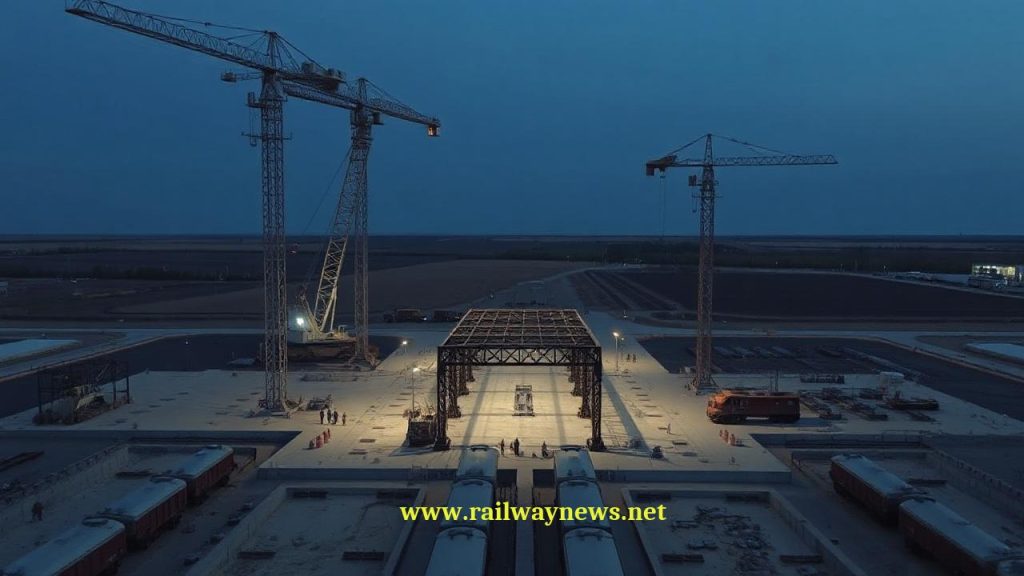
⚡ In Brief: Alstom is investing EUR 50 million to expand four railway service centres in Kazakhstan, creating 700 jobs and supporting the Middle Corridor with modernised locomotive maintenance by 2027.
ASTANA, Kazakhstan – Alstom launched a EUR 50 million service centre expansion programme in Kazakhstan this month, starting with modernisation work at its electric locomotive facility in Almaty. The investment, signed under a 2023 agreement with the Kazakh government, will add 700 jobs and support over 495 passenger and freight locomotives once the full network is operational in 2027.
What Is the Full Scope of This Project?
The programme expands Alstom’s service centres in Shu, Astana, Almaty, and Arys, creating an integrated maintenance network for Kazakhstan’s rail corridors. The Almaty site alone will maintain 95 passenger locomotives and more than 400 freight locomotives, while the Astana centre—still under construction—will serve as the main hub. A software lab will develop local digital capabilities, reinforcing the long-term service ecosystem under discussion with Kazakhstan Railways (KTZ).
Key Project Data
| Parameter | Value |
|---|---|
| Project / Contract Name | Alstom Kazakhstan Service Network Expansion |
| Total Value | EUR 50 million |
| Parties Involved | Alstom, Kazakhstan Railways (KTZ), Government of Kazakhstan |
| Timeline / Completion | Almaty centre by 2027; Shu centre operational since 2025; Astana centre under construction |
| Country / Corridor | Kazakhstan / Trans-Caspian International Transport Route (Middle Corridor) |
How Does This Compare to Similar Projects?
Alstom’s EUR 50 million outlay sits below the scale of major European service hub builds—Siemens’ locomotive service facility in Germany, for instance, exceeded EUR 300 million (Source: Siemens, 2019)—but it is the largest dedicated service infrastructure investment in Central Asia. In North America, freight rail innovation is taking a different path: Parallel Systems has raised over USD 100 million to develop autonomous, self-powered rail vehicles that could replace conventional locomotives, bypassing the need for large maintenance depots (Source: Robotics & Automation News, 2026). Meanwhile, Alstom recently completed a partial refinancing of its 2027 bond maturity, a financial move that supports the capital-intensive nature of such multi-year rail projects (Source: Reuters/TradingView, 2026). No emission-reduction targets for the expanded Kazakh centres were disclosed, in contrast to the UK’s net-zero decarbonisation support for Indonesia’s state railway operator (Source: EcoBiz Asia, 2026).
Editor’s Analysis
Alstom is strengthening its first-mover lock in Central Asia, where it remains the sole electric locomotive manufacturer, by embedding a service network that can tilt the aftermarket economics away from competitors. The investment aligns with a broader pattern: rail operators globally are building localised maintenance capacity to boost fleet availability, even as parallel innovations like autonomous freight vehicles test the long-term relevance of traditional loco depots (Source: Robotics & Automation News, 2026). The omission of any decarbonisation annex in the Kazakh project, however, risks a misalignment with the green-finance requirements now common on Eurasian corridors.
FAQ
Q: Which locations are being expanded under Alstom’s investment?
A: Service centres in Shu, Astana, Almaty, and Arys are being expanded or newly built. The Almaty electric locomotive centre is undergoing modernisation, while the Astana centre is under construction as the future main hub.
Q: How many jobs will the Kazakhstan expansion create?
A: Alstom expects to create approximately 700 new jobs, adding to its existing workforce of over 1,300 in the country.
Q: When will the upgraded Almaty service centre become operational?
A: The modernisation is scheduled for completion in 2027, under the investment agreement signed with the Government of Kazakhstan in 2023.

Railway infrastructure, rolling stock and transport technologies specialist focused on global rail industry developments, high-speed rail systems, signaling technologies and freight transportation. Covering railway investments, public transport modernization, rail operations and international mobility projects across Europe, Asia and North America.
RELATED POSTS

September 6, 2026 5:19 am
Hitachi delivered Taiwan's first N700ST high-speed train from Japan in...

September 5, 2026 4:19 pm
CPK launched formal tender talks with four consortia to design...

September 6, 2026 4:12 am
Alstom delivered the first of 100 new G Class trams...
September 6, 2026 6:17 am
Hungary ordered a national ban on most freight trains from...

September 6, 2026 1:17 am
Hitachi Toshiba Supreme Consortium confirmed the first of 12 N700ST...
September 6, 2026 8:17 am
DB InfraGO reopened the Nuremberg-Regensburg line in Bavaria on 31...