
MÁV Launches Tiered Seat Fees for Balaton Trains
MÁV launched mandatory seat reservations with fees from 300 to 1,990 forints and deployed over 200 air-conditioned standby buses for Balaton trains during summer peak.
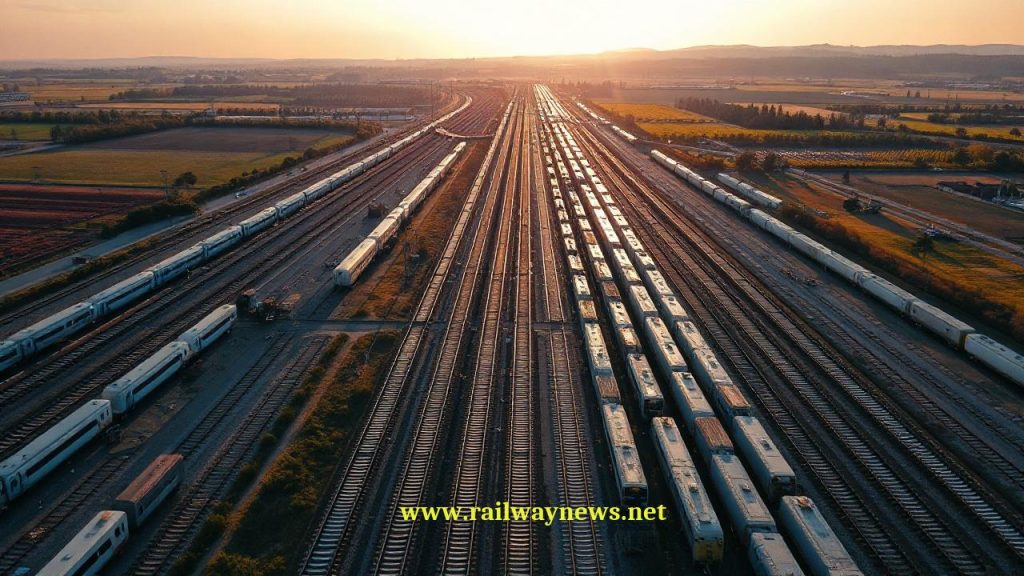
⚡ In Brief: MÁV is deploying over 200 air-conditioned standby buses and mandating seat reservations on all Lake Balaton InterCity and express services for the June 20–August 30 peak season.
BUDAPEST, Hungary – Hungarian state railway MÁV will enforce mandatory seat reservations across all major Lake Balaton rail corridors from June 20, with fees structured by vehicle comfort level and 990-forint (€2.78) charges for second-class InterCity seats. The operator has positioned over 200 air-conditioned MÁVbusz buses at 53 national response points to cover air-conditioning failures or breakdowns during the three-month peak.
What Is the Full Scope of This Development?
MÁV will operate a differentiated service hierarchy on Balaton routes, coupling mandatory seat reservations to actual vehicle quality rather than a flat-rate system. Balaton InterCity trains hauled by Vectron locomotives between Budapest Déli and Keszthely will charge 990 forints (€2.78) for second-class and 1,990 forints (€5.58) for first-class reservations, with dining cars attached. Tópart express services using FLIRT multiple units will charge 650 forints (€1.82), while non-air-conditioned express trains drop to 300 forints (€0.84). On the northern shore, Kék Hullám InterCity services are truncated to the Budapest–Tapolca corridor for schedule stability, using TRAXX locomotives south of Balatonfüred and Henschel diesel units on the non-electrified Tapolca section.
Key Development Data
| Parameter | Value |
|---|---|
| Company / Organisation | MÁV (Hungarian State Railways) |
| Total Value | Not disclosed — no aggregate operational budget figure released for the season |
| Parties Involved | MÁV, MÁVbusz, MOL Fresh Corner (bistro services), ÖBB (sourced rolling stock) |
| Timeline / Completion | Peak season June 20–August 30; eight ÖBB-sourced first-class bicycle cars introduced from June 15; Aranypart/Ezüstpart services delayed to June 26 due to Déli körvasút works |
| Country / Corridor | Hungary — Lake Balaton north and south shore corridors, Budapest–Székesfehérvár–Keszthely and Budapest–Balatonfüred–Tapolca main lines |
How Does This Compare to Industry Trends?
MÁV’s comfort-tiered reservation pricing diverges from the flat supplementary fee models used by PKP Intercity in Poland or CFR Călători in Romania during summer coastal peaks. The operator sold 110,000 bicycle reservation tickets between May and September last year — a figure that, while substantial, trails Deutsche Bahn’s bicycle volumes where over 600,000 bicycle day tickets were sold on long-distance services in 2023 (Source: Deutsche Bahn Integrated Report, 2024). MÁV’s procurement of eight ÖBB first-class bicycle cars follows a broader central European pattern of cascaded rolling stock transfers; however, no direct comparable acquisition of first-class bicycle cars was identified in neighbouring V4 rail markets for 2025. The deployment of 200-plus standby air-conditioned buses at 53 points for rail-substitution during heat events mirrors SNCF’s pre-positioned bus strategy on TGV routes during canicule alerts, though MÁV’s fleet size per route-kilometre has not been publicly benchmarked.
Editor’s Analysis
MÁV’s decision to charge reservation fees based on actual vehicle comfort — rather than service category label — reflects a revenue-management shift that aligns pricing with delivered quality, a tactic common in airline ancillary pricing but still rare in European public-service obligation (PSO) rail contracts. The truncation of Kék Hullám InterCity services to Tapolca, driven by diesel traction requirements north of Balatonfüred, exposes the infrastructure gap on the northern shore where electrification remains incomplete. This pattern mirrors the traction discontinuity on Poland’s non-electrified routes to Zakopane, where seasonal diesel substitution remains a bottleneck. Hungary’s concurrent engagement in the Rail Baltica framework and EU budget lobbying for regional connectivity (Source: Global Railway Review, 2025) places MÁV’s seasonal operational adjustments within a wider capital-constraint environment where near-term reliability fixes substitute for corridor-wide modernisation.
FAQ
Q: Do I need a seat reservation for all trains to Lake Balaton this summer?
A: Seat reservations are mandatory on all InterCity and express long-distance trains to Lake Balaton. Reservation fees range from 300 forints (€0.84) on non-air-conditioned express trains to 1,990 forints (€5.58) for first-class InterCity seats.
Q: What happens if my train’s air conditioning breaks down during a heatwave?
A: MÁV has positioned over 200 air-conditioned buses at 53 roadside response points, including locations along Balaton routes. Station staff and seasonal workers will direct passengers to replacement buses if a train cannot deliver expected comfort levels.
Q: Which direct trains connect non-Budapest cities to Lake Balaton without changing at Kelenföld?
A: From Szombathely, Tanúhegy express trains run directly to Balatonfüred. From the eastern plains, Vitorlás, Csabai Tekergő, and Panoráma trains offer direct connections. Helikon InterRégió trains connect Győr and Keszthely every two hours, and two new InterRégió weekend trains link Fonyód to Budapest-Kelenföld and Győr directly.

Railway infrastructure, rolling stock and transport technologies specialist focused on global rail industry developments, high-speed rail systems, signaling technologies and freight transportation. Covering railway investments, public transport modernization, rail operations and international mobility projects across Europe, Asia and North America.
RELATED POSTS
September 6, 2026 5:19 am
Hitachi delivered Taiwan's first N700ST high-speed train from Japan in...

September 5, 2026 4:19 pm
CPK launched formal tender talks with four consortia to design...

September 6, 2026 4:12 am
Alstom delivered the first of 100 new G Class trams...
September 6, 2026 6:17 am
Hungary ordered a national ban on most freight trains from...
September 6, 2026 1:17 am
Hitachi Toshiba Supreme Consortium confirmed the first of 12 N700ST...
September 6, 2026 8:17 am
DB InfraGO reopened the Nuremberg-Regensburg line in Bavaria on 31...