
Italo Expands €3.6B German High-Speed Amid Debate
Italo seeks long-term track access for its €3.6B German high-speed by 2028, facing DB.
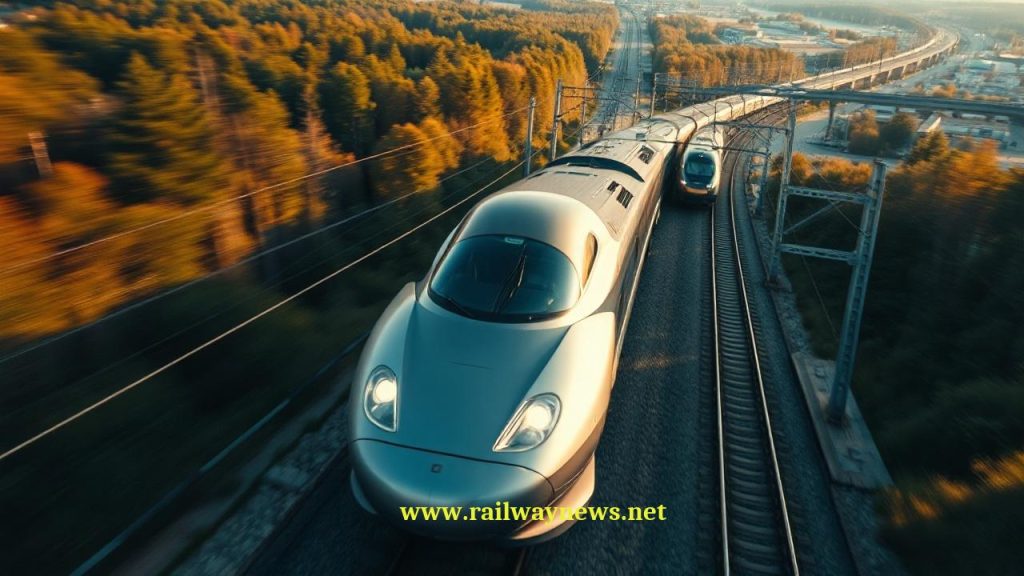
⚡ In Brief: Deutsche Bahn CEO Evelyn Palla has called for a clearer regulatory framework in Germany ahead of Italian operator Italo’s planned €3.6 billion high-speed rail entry in 2028, warning against uncontrolled competition on congested corridors.
BONN, Germany – Private high-speed rail operator Italo has requested long-term route allocation contracts and a minimum capacity reservation from the German federal network regulator, Bundesnetzagentur, to support its planned €3.6 billion market entry in 2028. The operator aims to run hourly services on the Munich–Frankfurt–Cologne–Dortmund corridor and bi-hourly services between Munich, Berlin, and Hamburg. Deutsche Bahn has urged regulators to establish a clearer policy framework to prevent new entrants from undermining the national network’s cross-subsidisation model.
What Does This Regulation Cover?
The regulatory dispute centers on the reintroduction of long-term track access agreements and capacity reservation rules for non-incumbent operators on Germany’s highly congested rail network. Since 2017, Germany has prohibited long-term framework contracts, opting instead for annual path allocations during timetable planning to maximise operational flexibility. Italo argues that securing long-term predictability is a prerequisite for its proposed €3.6 billion capital deployment, which includes procuring Siemens Velaro high-speed trainsets. Conversely, DB InfraGO, the infrastructure manager under Deutsche Bahn, opposes any regulatory carve-outs or guaranteed capacity quotas for new entrants, arguing that special rules would distort the market on corridors that are already heavily bottlenecked by ongoing rehabilitation works.
Key Regulatory Data
| Parameter | Value |
|---|---|
| Regulation / Policy Name | German Track Access Allocation and Framework Contract Regulations |
| Total Value | €3.6 billion (Italo’s planned investment) |
| Parties Involved | Italo (MSC Group), Deutsche Bahn (DB), DB InfraGO, Bundesnetzagentur |
| Timeline / Completion | Target market entry by 2028; regulatory decision date not disclosed |
| Country / Corridor | Germany (Munich–Frankfurt–Cologne–Dortmund and Munich–Berlin–Hamburg corridors) |
How Does This Compare to Global Standards?
The debate over German track access comes amid broader European efforts to liberalise passenger rail, yet Germany’s infrastructure constraints present unique barriers compared to other open-access markets. For example, the European Commission’s 2024 initiative to introduce “one journey, one ticket” rules by 2029 aims to simplify cross-border, multi-operator bookings and strengthen passenger rights across the EU (Source: European Commission, 2024). However, while European policy seeks to lower commercial barriers, Germany’s physical network is struggling to support increased competition. In 2025, the German infrastructure fund significantly underperformed, meeting only 54% of its overall spending targets, with transportation infrastructure progress lagging at just 52% (Source: Handelsblatt, 2026). This slow infrastructure deployment contrasts with the Italian high-speed model, where dedicated infrastructure allowed open-access competition between Italo and state-owned Trenitalia to double passenger volumes on the Rome-Milan corridor within a decade.
Editor’s Analysis
Italo’s entry represents a critical challenge to Deutsche Bahn’s cross-subsidisation model, where highly profitable high-speed lines support loss-making regional routes. If the regulator grants Italo’s request for guaranteed capacity, it could establish a precedent that forces DB InfraGO to prioritise commercial open-access operators over national network cohesion. Given that Germany’s transportation infrastructure funding is currently failing to meet half of its development targets, introducing intensive high-speed competition without prior network expansion risks worsening the country’s ongoing punctuality crisis (Source: Reuters, 2026).
FAQ
Q: What regulatory changes is Italo requesting from the German regulator?
A: Italo is requesting the reintroduction of long-term track access framework contracts, which Germany abolished in 2017. The operator also wants the Bundesnetzagentur to reserve a minimum capacity percentage for new market entrants.
Q: How much does Italo plan to invest in its German high-speed rail expansion?
A: Italo has announced a planned investment of €3.6 billion to launch high-speed services in Germany. This capital is expected to fund the acquisition of new high-speed trains, likely from the Siemens Velaro family.
Q: When will the German regulator issue its decision on Italo’s capacity requests?
A: The exact date for the regulatory decision by the Bundesnetzagentur has not been officially disclosed. The outcome remains critical for Italo’s planned launch of operations in 2028.

Railway infrastructure, rolling stock and transport technologies specialist focused on global rail industry developments, high-speed rail systems, signaling technologies and freight transportation. Covering railway investments, public transport modernization, rail operations and international mobility projects across Europe, Asia and North America.
RELATED POSTS
September 6, 2026 5:19 am
Hitachi delivered Taiwan's first N700ST high-speed train from Japan in...

September 5, 2026 4:19 pm
CPK launched formal tender talks with four consortia to design...
September 5, 2026 7:14 pm
HS2 Ltd signed renegotiated civils contracts with EKFB and Align...
September 6, 2026 6:17 am
Hungary ordered a national ban on most freight trains from...
September 6, 2026 1:17 am
Hitachi Toshiba Supreme Consortium confirmed the first of 12 N700ST...
September 5, 2026 5:17 pm
Chiltern Railways completed the Banbury Station ticket office and main...