
Alstom TGV-M Secures June September France Service
Alstom secured authorization for 160 TGV-M trains, launching French service from June, with passengers riding by September.
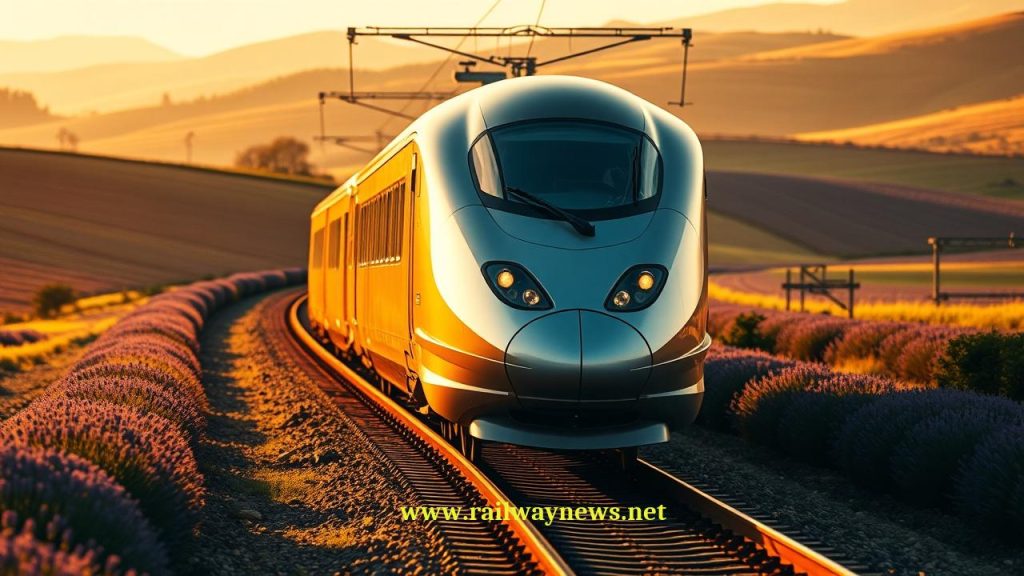
⚡ In Brief: Alstom and SNCF Voyageurs secured European Union Agency for Railways authorization for the new TGV-M high-speed train, clearing the path for 160 ordered trainsets to enter French pre-commercial service in June ahead of passenger operations in September.
PARIS, FRANCE – The European Union Agency for Railways has authorized Alstom’s new-generation TGV-M very high-speed train for service, enabling pre-commercial operations on the French national rail network to begin in June. Under the agreed deployment schedule, Alstom will deliver the first two of 130 ordered trainsets to SNCF Voyageurs this June, aiming for a total of 13 active units by the end of December. First passenger services under the TGV INOUI brand are scheduled to launch in early September.
What Are the Technical Specifications?
The TGV-M platform, commercialized as Alstom’s Avelia Horizon, introduces a modular design that increases maximum passenger capacity to 740 seats. This represents a 20% capacity increase compared to current TGV Duplex fleets. The train features a 97% recyclability rate by weight, with passenger seats constructed from 90% recyclable materials. Aerodynamic enhancements, characterized by a distinctive elliptical nose design, reduce drag to lower total energy consumption by 20% compared to previous generations. Additionally, the digital platform utilizes predictive maintenance systems, which are projected to lower overall maintenance costs by 30%.
While the technical specifications showcase extensive efficiency gains, the exact power output rating of the traction motors and the total cost of the development program were not disclosed.
Key Technical Data
| Parameter | Value |
|---|---|
| Technology / System Name | TGV-M (Alstom Avelia Horizon) |
| Total Value | Not disclosed |
| Parties Involved | Alstom, SNCF Voyageurs, Eurostar |
| Timeline / Completion | Deliveries from June; passenger service in September; complete fleet rollout timeline not disclosed |
| Country / Corridor | France / European high-speed rail corridors |
Where Does This Technology Stand in the Market?
The TGV-M enters a highly competitive European high-speed rolling stock market alongside established platforms from Siemens and Hitachi Rail. Siemens Mobility offers the Velaro Novo, which achieves a 30% reduction in energy consumption and a maximum speed of 360 km/h compared to the TGV-M’s 20% energy reduction and 350 km/h design speed (Source: Siemens Mobility, 2023). Meanwhile, the Hitachi-Bombardier ETR 1000 (Frecciarossa 1000) features a 94.4% recyclability rate and accommodates up to 460 passengers in standard configurations, whereas the TGV-M boasts a higher 97% recyclability rate and a dual-deck capacity of up to 740 passengers (Source: Hitachi Rail, 2024). Comparable domestic testing program budgets for these competing platforms were not publicly available at the time of publication.
Editor’s Analysis
The deployment of the TGV-M aligns with France’s broader strategic push to double its domestic electricity production share by 2030 to support the complete decarbonization of its transport network (Source: CleanTechnica, 2026). By securing ERA authorization, Alstom and SNCF Voyageurs have mitigated significant regulatory risks, positioning the Avelia Horizon platform as a viable export product for other European operators seeking high-capacity, energy-efficient rolling stock. This transition to highly digitalized, predictive maintenance-enabled fleets will likely force regional competitors to accelerate their own software-integration timelines.
FAQ
Q: When will the first TGV-M trains carry passengers?
A: The first passenger services are scheduled to begin in early September under the TGV INOUI brand operated by SNCF Voyageurs. This launch will follow a pre-commercial running phase starting in June.
Q: How many TGV-M trains have been ordered?
A: A total of 160 trains have been ordered by SNCF Voyageurs and its subsidiary Eurostar. This includes 130 trainsets for SNCF Voyageurs and 30 for Eurostar, with an option for an additional 20 units.
Q: What are the environmental benefits of the TGV-M compared to older trains?
A: The TGV-M reduces carbon dioxide emissions by 32% and cuts energy consumption by 20% through aerodynamic improvements. Additionally, 97% of the materials used in the trainset construction are recyclable.

Transport and railway industry editor covering global rail infrastructure, sustainable mobility, urban transit systems and next-generation railway technologies with a focus on accessible and industry-focused reporting.
RELATED POSTS
September 6, 2026 5:19 am
Hitachi delivered Taiwan's first N700ST high-speed train from Japan in...

September 5, 2026 4:19 pm
CPK launched formal tender talks with four consortia to design...

September 5, 2026 7:14 pm
HS2 Ltd signed renegotiated civils contracts with EKFB and Align...
September 6, 2026 1:17 am
Hitachi Toshiba Supreme Consortium confirmed the first of 12 N700ST...
September 6, 2026 6:17 am
Hungary ordered a national ban on most freight trains from...
September 6, 2026 8:17 am
DB InfraGO reopened the Nuremberg-Regensburg line in Bavaria on 31...