
U.S. House Approves Two-Person Crew Mandate US Freight Rail
U.S. House approved a two-person crew mandate for Class I freight trains in the United States on May 20, 2026, via the Railway Safety Act.
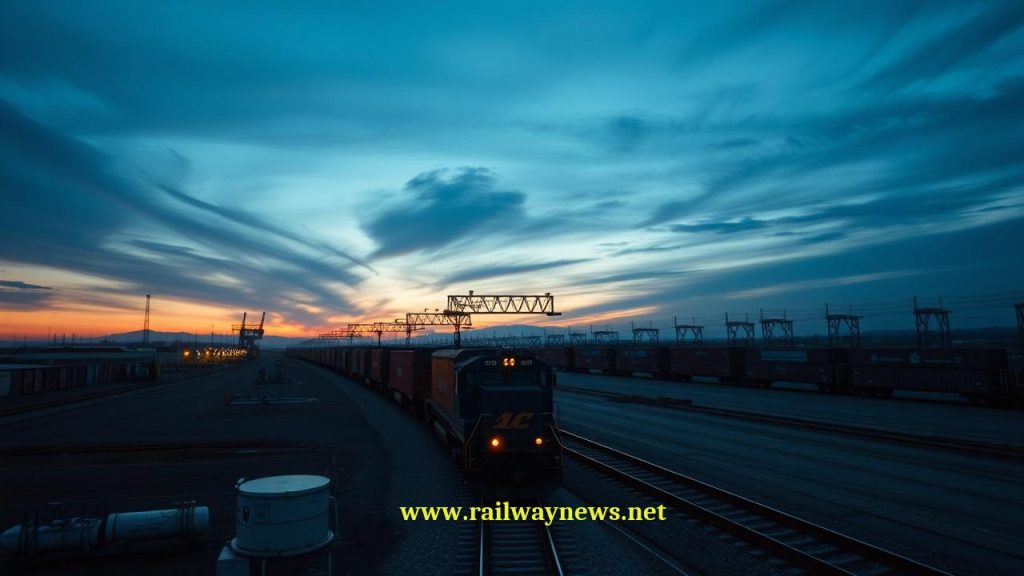
⚡ In Brief: The U.S. House Transportation & Infrastructure Committee voted 54-11 to integrate the Railway Safety Act into the five-year BUILD America 250 Act, introducing strict safety mandates for freight rail operators.
WASHINGTON, D.C. – The House Transportation & Infrastructure Committee approved a 54-11 bipartisan amendment on May 20, 2026, to integrate the Railway Safety Act (H.R. 7748) into the five-year BUILD America 250 Act (H.R. 8870). This legislative package succeeds the Infrastructure Investment and Jobs Act of 2021 to set national transport funding priorities. The newly integrated amendment introduces strict operating regulations for Class I railroads, including mandatory two-person crews.
What Does This Regulation Cover?
The integrated Railway Safety Act amendment mandates a permanent two-person crew requirement for all Class I freight trains operating across the United States. Beyond crew size, the bill enforces heightened inspection standards, sets strict operational limits for trains transporting hazardous materials, and establishes federal regulatory oversight for wayside defect detectors. The White House has actively supported the measures to prevent major derailments, while industry groups oppose the rules due to projected supply chain cost increases. Specific federal funding allocations for implementing these detector networks were not disclosed in the immediate bill text.
Key Regulatory Data
| Parameter | Value |
|---|---|
| Regulation / Policy Name | Railway Safety Act (H.R. 7748) / BUILD America 250 Act (H.R. 8870) |
| Total Value | Not disclosed (Part of the broader multi-billion dollar BUILD America 250 Act) |
| Parties Involved | U.S. House Transportation & Infrastructure Committee, Rep. Troy Nehls, Class I Railroads |
| Timeline / Completion | Five-year authorization period starting late 2026 (succeeding IIJA) |
| Country / Corridor | United States |
How Does This Compare to Global Standards?
The U.S. mandate for a two-person crew contrasts sharply with European rail networks, where single-person train operation has been the standard for decades. In Europe, safety is maintained through widespread deployment of advanced cab signaling and automated train protection systems like the European Train Control System (ETCS) (Source: European Union Agency for Railways, 2024). While the U.S. rail industry argues that wayside detector regulations could stifle innovation and increase freight transit times, global suppliers are pivoting toward digitalized monitoring. For example, Siemens AG’s late 2025 capital allocation framework emphasizes focusing capital on digitalized rail infrastructure and automation to improve trackside safety without manual labor overhead (Source: Siemens AG, 2025).
Editor’s Analysis
This legislative shift reflects a growing regulatory skepticism toward autonomous and single-person freight operations in the United States, forcing railroads to prioritize labor retention over automation. By codifying wayside detector spacing and inspections, the bill will likely accelerate capital investments in digital trackside technologies rather than proprietary operator-led solutions. This alignment with stricter oversight mirrors a broader global trend where infrastructure managers must balance automated diagnostic rollouts with rigid federal safety compliance (Source: International Union of Railways, 2025).
FAQ
Q: What are the main requirements of the newly amended Railway Safety Act?
A: The act mandates a minimum of two crew members in the cab of all freight trains. It also imposes stricter rules for hazardous material transport and establishes standardized regulations for wayside defect detectors.
Q: How will the BUILD America 250 Act affect the Infrastructure Investment and Jobs Act (IIJA)?
A: The BUILD America 250 Act will succeed the IIJA as the primary U.S. surface transportation reauthorization bill. It will dictate federal funding priorities for roads, bridges, transit, and rail for the next five years.
Q: What is the rail industry’s stance on these new safety regulations?
A: The rail industry strongly opposes the amendment, claiming it lacks empirical safety justification. Operators argue that mandatory staffing rules and detector regulations will drive up costs across the global supply chain.

Railway infrastructure, rolling stock and transport technologies specialist focused on global rail industry developments, high-speed rail systems, signaling technologies and freight transportation. Covering railway investments, public transport modernization, rail operations and international mobility projects across Europe, Asia and North America.
RELATED POSTS

September 6, 2026 5:19 am
Hitachi delivered Taiwan's first N700ST high-speed train from Japan in...

September 5, 2026 4:19 pm
CPK launched formal tender talks with four consortia to design...
September 6, 2026 6:17 am
Hungary ordered a national ban on most freight trains from...
September 6, 2026 1:17 am
Hitachi Toshiba Supreme Consortium confirmed the first of 12 N700ST...
September 6, 2026 8:17 am
DB InfraGO reopened the Nuremberg-Regensburg line in Bavaria on 31...
September 7, 2026 8:16 am
Midea, Gree and TCL shipped air conditioners via China Railway...