
Knorr-Bremse Upgrades MBTA Boston Signaling AFTC5
Knorr-Bremse upgrades Boston’s MBTA Red and Orange lines with 800+ AFTC5 signaling circuits across 26 stations for low-hundreds of millions of euros by 2026.
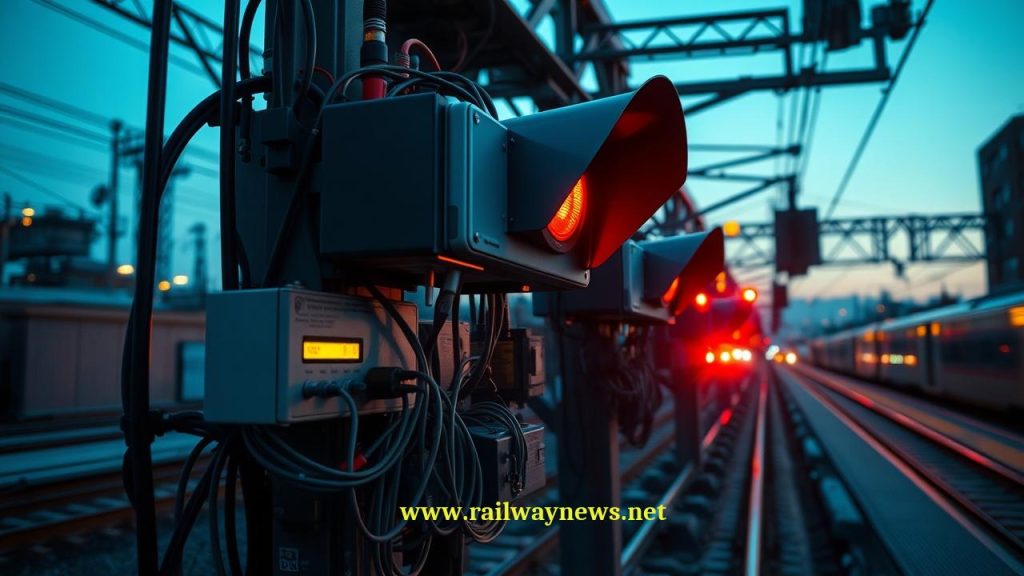
⚡ In Brief: Knorr-Bremse is modernizing the signaling on Boston’s MBTA Red and Orange lines with its AFTC5 system across 26 stations, a project valued in the low-hundreds of millions of euros set for completion by the end of 2026.
BOSTON, USA – Knorr-Bremse is executing a multi-year modernization of the rail signaling system for the Massachusetts Bay Transportation Authority (MBTA). The project involves equipping 26 stations on the city’s Red and Orange lines with the AFTC5 audio frequency track circuit system. More than 800 of these circuits are already operational as part of the program, which began in 2019 and is scheduled to conclude by the end of 2026.
What Are the Technical Specifications?
The AFTC5 is a software-based electronic signaling system designed for train detection and operational safety. It transmits audio-frequency signals through the rails to reliably detect a train’s presence, confirm track clearance, and enable the exchange of safety-critical data, including train speed commands. This technology allows for a digital upgrade of legacy infrastructure to improve traffic flow and safety without requiring a complete replacement of the trackside architecture. Specific technical details such as the system’s precise audio frequency range or data transmission rates were not disclosed in the project announcement.
Key Technical Data
| Parameter | Value |
|---|---|
| Technology / System Name | AFTC5 (Audio Frequency Track Circuit) |
| Total Value | Lower three-digit EUR million range |
| Parties Involved | Knorr-Bremse (KB Signaling), Massachusetts Bay Transportation Authority (MBTA) |
| Timeline / Completion | 2019 – End of 2026 |
| Country / Corridor | USA / Boston (MBTA Red and Orange Lines) |
Where Does This Technology Stand in the Market?
Knorr-Bremse’s AFTC5 system represents a digital evolution of traditional fixed-block signaling and is also deployed in other major U.S. transit networks, including those in Los Angeles and Chicago. While AFTC improves reliability and data communication, it operates within a competitive market featuring more advanced Communications-Based Train Control (CBTC) systems. Competitor Siemens Mobility offers its Trainguard MT CBTC system, which uses continuous radio communication to enable moving-block operations for higher capacity, as deployed on New York’s Canarsie Line. Similarly, Alstom’s Urbalis Fluence CBTC technology provides a pathway to unattended train operation (UTO) and is used in metro systems from Paris to Shanghai. The selection of AFTC technology often signifies an incremental, cost-effective upgrade path for legacy systems, enhancing existing infrastructure before a potential full migration to CBTC.
Editor’s Analysis
The MBTA’s investment in AFTC5 technology highlights a prevalent strategy among transit authorities: modernizing critical infrastructure in phases to manage costs and minimize operational disruption. This project is consistent with a global trend toward digitalization, aiming to extract more capacity and reliability from existing physical assets. While not a full-scale implementation of a moving-block CBTC system, this upgrade addresses immediate safety and performance needs and lays a digital foundation for future enhancements. This approach aligns with forecasts of steady growth in the signaling market, which is expected to see a compound annual growth rate of 2.7% in volume through 2035, driven by similar modernization programs worldwide (Source: IndexBox).
FAQ
Q: What is an AFTC5 system and what does it do?
A: The AFTC5 is an Audio Frequency Track Circuit system made by Knorr-Bremse. It sends electronic signals through the rails to detect train locations, ensure tracks are clear, and transmit speed commands, improving safety and efficiency on the line.
Q: How much is the MBTA signaling project worth and when will it be finished?
A: The project is valued in the lower three-digit EUR million range, which translates to the low hundreds of millions of euros. The program began in 2019 and is scheduled for completion by the end of 2026.
Q: Will this modernization project cause any station closures?
A: Yes, related construction work is causing significant service changes. For example, Symphony Station on the MBTA’s Green Line is closing for a period of three years as part of the broader modernization effort (Source: CBS News Boston).

Railway infrastructure, rolling stock and transport technologies specialist focused on global rail industry developments, high-speed rail systems, signaling technologies and freight transportation. Covering railway investments, public transport modernization, rail operations and international mobility projects across Europe, Asia and North America.
RELATED POSTS

September 6, 2026 5:19 am
Hitachi delivered Taiwan's first N700ST high-speed train from Japan in...

September 5, 2026 4:19 pm
CPK launched formal tender talks with four consortia to design...

September 5, 2026 7:14 pm
HS2 Ltd signed renegotiated civils contracts with EKFB and Align...

September 6, 2026 6:17 am
Hungary ordered a national ban on most freight trains from...

September 6, 2026 1:17 am
Hitachi Toshiba Supreme Consortium confirmed the first of 12 N700ST...
September 6, 2026 8:17 am
DB InfraGO reopened the Nuremberg-Regensburg line in Bavaria on 31...