
Alstom Completes ARGOS Digital Interlocking Montbard France
Alstom commissioned its ARGOS digital interlocking system in Montbard, France during Q2 2024, modernizing the network for ERTMS compatibility on the Paris-Lyon high-speed line.
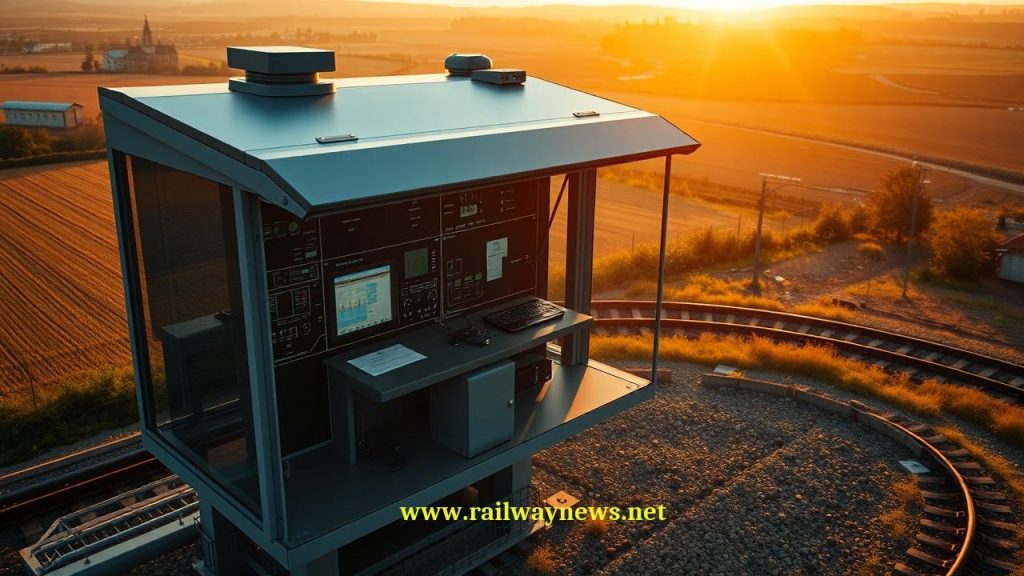
⚡ In Brief: Alstom has commissioned its ARGOS digital interlocking system at Montbard station in France, a first-of-its-kind deployment with SNCF Réseau aimed at modernizing the network for ERTMS compatibility and increasing capacity on the Paris-Lyon high-speed line.
MONTBARD, FRANCE – Alstom, in an innovation partnership with French infrastructure manager SNCF Réseau, has commissioned the first ARGOS digital interlocking system at Montbard station. The deployment is a key milestone in a program launched in 2018 to modernize the French rail network. The system is a prerequisite for the rollout of ERTMS on the Paris-Lyon high-speed line.
What Are the Technical Specifications?
The ARGOS system is a third-generation electronic signalling solution designed to provide real-time communication between trackside equipment and Centralized Network Control Centers. At its core is Alstom’s Onvia Lock technology, which uses intelligent controllers to interface directly with points and signals. This architecture eliminates the need for intermediate relays, significantly reducing the volume of on-site infrastructure, cabling, and associated installation costs.
Key Technical Data
| Parameter | Value |
|---|---|
| Technology / System Name | ARGOS digital interlocking system (featuring Onvia Lock) |
| Total Value | Not disclosed |
| Parties Involved | Alstom, SNCF Réseau |
| Timeline / Completion | Partnership launched 2018; Montbard commissioned Q2 2024 |
| Country / Corridor | France / Paris-Lyon High-Speed Line |
Where Does This Technology Stand in the Market?
Alstom’s ARGOS system competes directly with other next-generation digital interlocking solutions from major European signalling suppliers. The core principle of using object controllers to move intelligence to the trackside and reduce physical infrastructure is a common industry goal. Competitor Siemens Mobility offers its Trackguard Westrace and DS3 platforms, which are also modular, SIL 4-certified systems designed to minimize lineside equipment. Similarly, Thales provides its LockTrac family of interlockings, which also utilize distributed intelligence to reduce cabling and central hardware footprint. While all three aim for similar outcomes—cost reduction, faster deployment, and ERTMS compatibility—their proprietary hardware and software architectures create distinct ecosystems for network operators.
Editor’s Analysis
This deployment highlights the priority of strategic, state-backed infrastructure upgrades even amid broader economic caution in French private markets. The modernization of core national assets like the Paris-Lyon line is non-discretionary and essential for meeting capacity demands. This project aligns with the strong global growth forecast for the traffic management market, which is projected to expand at a CAGR of 12.3% to reach US$ 106.8 billion by 2032, driven by the shift to digital control systems. (Source: Persistence Market Research).
FAQ
Q: What is the main benefit of the ARGOS system?
A: The primary benefit is the reduction of physical lineside infrastructure and its associated costs. Its Onvia Lock solution uses intelligent controllers to directly manage signals and points, eliminating the need for traditional intermediate relays and extensive cabling.
Q: What is the total cost of the ARGOS program?
A: The total value of the innovation partnership and the cost for the Montbard station implementation have not been disclosed by Alstom or SNCF Réseau.
Q: How does this installation impact the Paris-Lyon high-speed line?
A: This digital interlocking is a foundational technology required for the implementation of the ERTMS train control system. The ERTMS upgrade is specifically intended to increase the capacity of the Paris-Lyon line, allowing more trains to operate on the route.

Railway infrastructure, rolling stock and transport technologies specialist focused on global rail industry developments, high-speed rail systems, signaling technologies and freight transportation. Covering railway investments, public transport modernization, rail operations and international mobility projects across Europe, Asia and North America.
RELATED POSTS

September 6, 2026 5:19 am
Hitachi delivered Taiwan's first N700ST high-speed train from Japan in...

September 5, 2026 4:19 pm
CPK launched formal tender talks with four consortia to design...

September 5, 2026 7:14 pm
HS2 Ltd signed renegotiated civils contracts with EKFB and Align...

September 6, 2026 6:17 am
Hungary ordered a national ban on most freight trains from...

September 6, 2026 1:17 am
Hitachi Toshiba Supreme Consortium confirmed the first of 12 N700ST...
September 5, 2026 6:17 pm
Universal Signalling won a deal to install its U-Cross system...