
Alstom Completes ARGOS Digital Interlocking at Montbard France
Alstom commissioned the first ARGOS digital interlocking system in France, involving nearly 400 experts, at Montbard for the Paris-Lyon high-speed line.
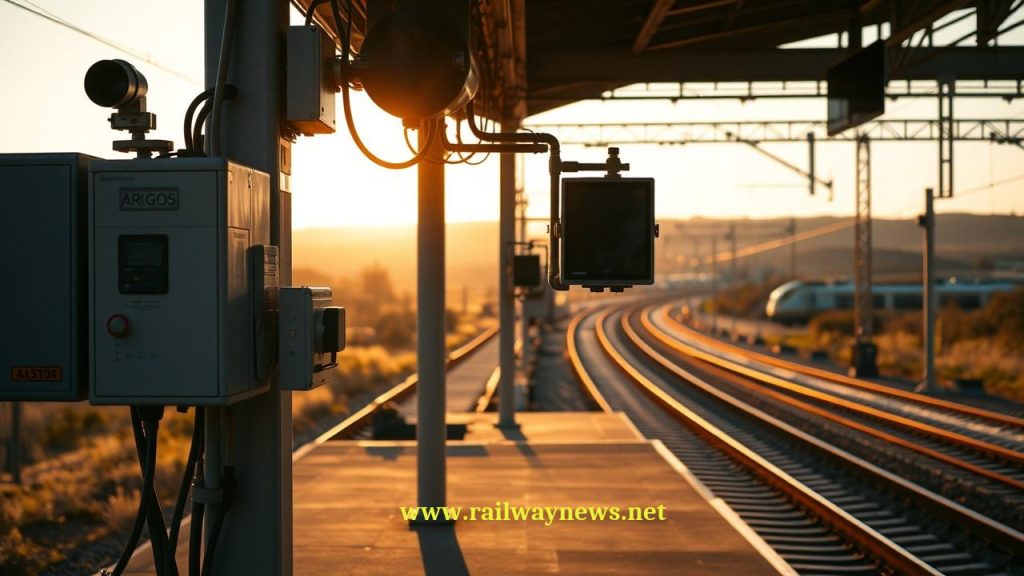
⚡ In Brief: Alstom has commissioned its ARGOS digital interlocking system at Montbard station in France, a key step in a partnership with SNCF Réseau to modernize the Paris-Lyon high-speed line with ERTMS-compatible technology involving nearly 400 experts.
MONTBARD, FRANCE – Alstom, in partnership with French infrastructure manager SNCF Réseau, has commissioned the first implementation of its ARGOS digital interlocking system at Montbard station. The project, a result of an innovation partnership launched in 2018, involved nearly 400 Alstom experts. This deployment is a critical component for upgrading the Paris-Lyon high-speed corridor to the European Rail Traffic Management System (ERTMS).
What Are the Technical Specifications?
The ARGOS system is a new-generation electronic interlocking designed for real-time communication between trackside equipment and Centralized Network Control Centers. It is built upon Alstom’s Onvia Lock solution, which uses intelligent controllers to interface directly with assets like points and signals. This architecture eliminates the need for traditional intermediate relays, significantly reducing the volume of cabling, on-site infrastructure, and associated installation costs.
Key Technical Data
| Parameter | Value |
|---|---|
| Technology / System Name | ARGOS Digital Interlocking (based on Alstom Onvia Lock) |
| Total Value | Not disclosed |
| Parties Involved | Alstom, SNCF Réseau |
| Timeline / Completion | Partnership launched 2018; First commissioning at Montbard complete |
| Country / Corridor | France / Paris-Lyon High-Speed Line |
Where Does This Technology Stand in the Market?
Alstom’s Onvia Lock technology, central to the ARGOS system, competes directly with other major suppliers’ next-generation interlocking solutions aimed at reducing physical trackside infrastructure. Siemens Mobility’s Trackguard DS3 platform employs a similar “Distributed Smart Objects” (DSO) concept, which decentralizes control logic to the trackside to minimise cabling and eliminate the need for large relay buildings, with deployments in Germany and Switzerland. (Source: Siemens Mobility, 2023). In contrast, Hitachi Rail’s well-established Microlok II platform, while a highly reliable electronic interlocking, has traditionally used a more centralized architecture requiring larger equipment housings and more extensive cabling runs. (Source: Hitachi Rail, 2022). The ARGOS deployment demonstrates Alstom’s strategy to align with the industry trend toward distributed, IP-based signaling architectures fit for ERTMS integration.
Editor’s Analysis
The successful commissioning at Montbard is a critical milestone, moving SNCF Réseau’s network modernization from a conceptual partnership to a live operational deployment. This long-term, state-backed infrastructure investment proceeds despite a cooler economic climate in France, where private equity deal activity fell 67% year-over-year in the first quarter of 2026. (Source: PitchBook, 2026). The project underscores the strategic importance of public spending in driving capital-intensive upgrades in the rail sector, providing stability when private market investment slows.
FAQ
Q: What is the main benefit of the ARGOS system?
A: The primary benefit is a reduction in the total cost of ownership by eliminating intermediate relays and extensive cabling. Alstom’s Onvia Lock solution achieves this using intelligent controllers placed directly at the trackside.
Q: Is this system only for high-speed lines?
A: While the first implementation is on the Paris-Lyon high-speed line, the Onvia Lock solution is designed to be modular and scalable. This architecture allows for its potential adaptation to various network types, including conventional and regional lines.
Q: What is the overall goal of the ARGOS partnership?
A: The partnership between Alstom and SNCF Réseau aims to design and deploy the third generation of electronic signalling across the French network. The primary goals are to improve operational reliability and maintenance while creating the technical foundation for a nationwide ERTMS implementation.

Railway infrastructure, rolling stock and transport technologies specialist focused on global rail industry developments, high-speed rail systems, signaling technologies and freight transportation. Covering railway investments, public transport modernization, rail operations and international mobility projects across Europe, Asia and North America.
RELATED POSTS
September 6, 2026 5:19 am
Hitachi delivered Taiwan's first N700ST high-speed train from Japan in...

September 5, 2026 4:19 pm
CPK launched formal tender talks with four consortia to design...

September 5, 2026 7:14 pm
HS2 Ltd signed renegotiated civils contracts with EKFB and Align...
September 6, 2026 6:17 am
Hungary ordered a national ban on most freight trains from...
September 6, 2026 1:17 am
Hitachi Toshiba Supreme Consortium confirmed the first of 12 N700ST...
September 5, 2026 6:17 pm
Universal Signalling won a deal to install its U-Cross system...