
Laude Smart Intermodal Expands Lithuania 30-Ton Containers
Laude Smart Intermodal expanded intermodal rail services into Lithuania via the Šeštokai terminal, deploying specialized 23-foot containers capable of carrying 30 tons of cargo.
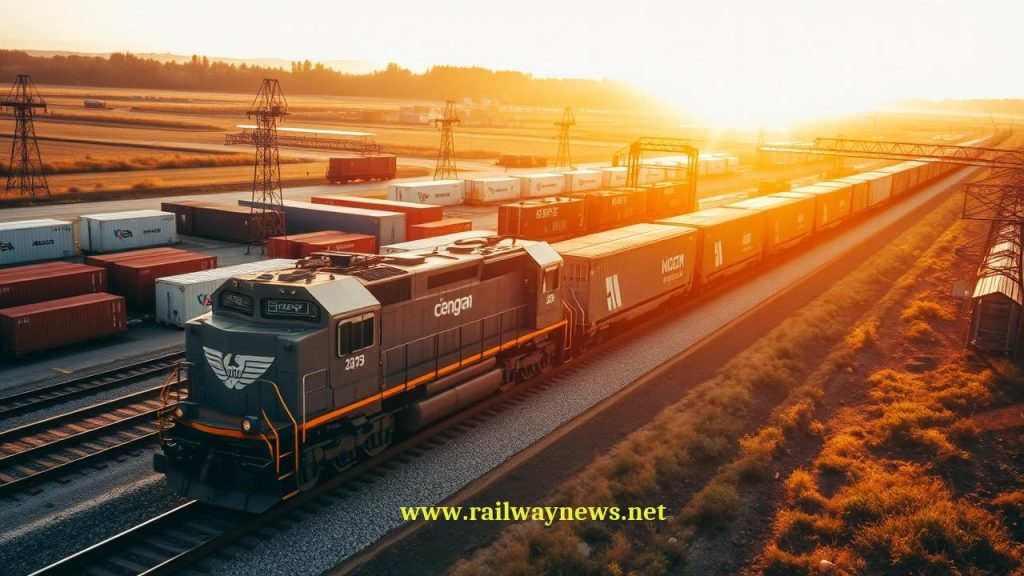
⚡ In Brief: Polish operator Laude Smart Intermodal has expanded its services into Lithuania via the Šeštokai terminal, deploying specialized containers capable of carrying up to 30 tons to enhance freight flows on the North–West rail corridor.
WARSAW, POLAND – Laude Smart Intermodal has commenced new intermodal rail services in Lithuania, leveraging the European-gauge (1435 mm) infrastructure and transshipment facilities at the Šeštokai terminal. The expansion focuses on deploying the company’s proprietary containers, which can handle up to 30 tons of cargo per unit. This initiative aims to strengthen logistics chains between the Baltic states and southern Poland.
What Is the Full Scope of This Development?
The operational expansion establishes a new rail freight route for Laude Smart Intermodal on the Lithuania–Poland corridor, facilitated by a partnership with LTG Cargo. A central element of the service is the use of specialized 23-foot side, top, and rear-loading containers designed to optimize transport costs for heavy goods, carrying up to 30 tons. The service utilizes the Šeštokai intermodal terminal for transshipment and connects to Laude’s broader network, which includes services to Germany and Ukraine via its logistics hub in Zamość, Poland, a facility that handles both standard and broad-gauge (1520 mm) rail traffic. The company has also stated its long-term goal of integrating Baltic Sea maritime transport to connect with Nordic countries.
Key Development Data
| Parameter | Value |
|---|---|
| Company / Organisation | Laude Smart Intermodal, LTG Cargo |
| Total Value | Not disclosed |
| Parties Involved | Laude Smart Intermodal (operator), LTG Cargo (rail partner) |
| Timeline / Completion | Services have commenced; future expansion timeline not specified |
| Country / Corridor | Poland-Lithuania (North–West rail corridor) |
How Does This Compare to Industry Trends?
Laude’s expansion into the Baltic region aligns with a broader market focus on strengthening North-South European logistics corridors. The company’s emphasis on heavy bulk cargo transport is particularly timely, as demand for certain commodities remains strong. For instance, mining group Fortescue reported a 4% year-over-year increase in iron ore shipments in the first nine months of its 2025/2026 fiscal year, indicating a sustained need for efficient bulk transport solutions (Source: GMK Center, 2026). However, the operator faces a mixed market, with steel demand in Central and Southeastern Europe showing volatility, which could impact freight volumes for finished or semi-finished metal products. Laude’s future plans to integrate maritime shipping also coincide with major regional infrastructure projects, such as the development of a new cruise terminal at the Port of Klaipeda, set for completion in 2027, which underscores Lithuania’s commitment to enhancing its maritime logistics capabilities.
Editor’s Analysis
Laude Smart Intermodal’s entry into Lithuania is a calculated move to capture niche market share in the heavy goods segment, where its high-capacity containers offer a distinct cost advantage over standard road and rail options. This strategy positions the company to benefit from the ongoing modal shift driven by high fuel costs and sustainability targets. While the expansion capitalizes on growing commodity flows, its long-term success will be contingent on navigating the fluctuating demand for industrial goods like steel within the CSEE region (Source: GMK Center) and successfully integrating with Baltic Sea maritime routes to realize its full network potential.
FAQ
Q: What makes Laude’s containers different from standard ones?
A: Laude’s specialized 23-foot containers are designed to maximize payload for heavy goods, carrying up to 30 tons in a single unit. This is significantly higher than many standard containers and offers cost efficiencies for dense cargo like bulk materials.
Q: What is the strategic importance of the Šeštokai terminal?
A: Šeštokai is a critical break-of-gauge point in Lithuania where the European standard-gauge (1435 mm) railway from Poland meets the broad-gauge (1520 mm) network used in the Baltic states. This allows for the efficient transshipment of goods between the two different rail systems.
Q: What is the North–West rail corridor?
A: The North–West rail corridor is a transport route designed to improve freight and passenger connections between the Baltic states (Lithuania, Latvia, Estonia) and the rest of the European Union, particularly Poland and Germany. LTG Cargo and its Polish subsidiary are key players in developing this corridor.

Railway infrastructure, rolling stock and transport technologies specialist focused on global rail industry developments, high-speed rail systems, signaling technologies and freight transportation. Covering railway investments, public transport modernization, rail operations and international mobility projects across Europe, Asia and North America.
RELATED POSTS

September 6, 2026 5:19 am
Hitachi delivered Taiwan's first N700ST high-speed train from Japan in...

September 6, 2026 6:17 am
Hungary ordered a national ban on most freight trains from...

September 6, 2026 1:17 am
Hitachi Toshiba Supreme Consortium confirmed the first of 12 N700ST...

September 5, 2026 4:19 pm
CPK launched formal tender talks with four consortia to design...
September 7, 2026 8:16 am
Midea, Gree and TCL shipped air conditioners via China Railway...
September 7, 2026 4:15 pm
Zimbabwe approved the EUR 3 billion Harare Light Rail project,...