
Ukrzaliznytsia Secures €29M Swiss Aid For 250km Rail Modernization
Switzerland provides Ukrzaliznytsia €29 million in technical assistance, rehabilitating 250 km of railway lines and upgrading Ukraine’s power network.
📉 Market Brief:
- Event: Ukrzaliznytsia secures technical aid from Switzerland for railway modernization.
- Key Data: Approximately €29 million in components financed by the Swiss government.
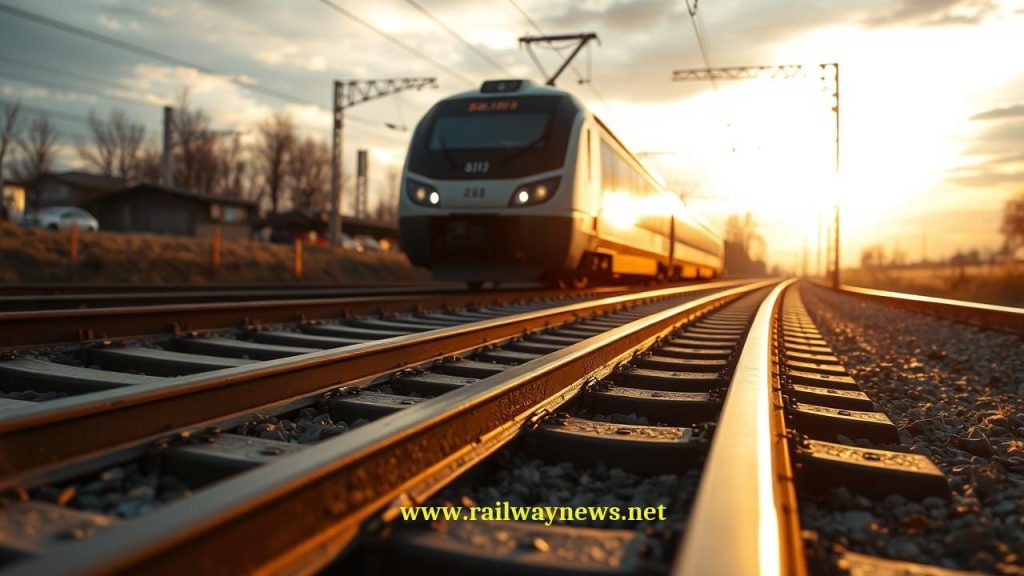
- Impact: Rehabilitation of 250 km of track and modernization of the power supply network.
Ukrainian Railways (Ukrzaliznytsia) has formalized two memoranda of understanding with the Swiss State Secretariat for Economic Affairs (SECO) and Swiss firms Arthur Flury AG and Schwihag AG. The agreements provide technical assistance for the rehabilitation of railway lines and the modernization of electrical networks. Ambassador Jacques Herber, the Swiss Federal Council’s special envoy, signed the documents on behalf of SECO, solidifying the implementation of projects selected through the First Reconstruction Project Competition in Ukraine.
The financing, valued at approximately €29 million, is provided entirely by the Swiss government. Over the next three years, the program will deliver more than 1.04 million sets of rail fasteners from Schwihag AG. This quantity is sufficient to renew approximately 250 km of railway lines, which is expected to reduce rail deformation and vibration, leading to a smoother ride for passengers. This follows a previous delivery of over 1.8 million rail fasteners valued at more than €25 million, which were used to modernize 500 km of track.
For the power supply network, the agreement with Arthur Flury AG includes the delivery of approximately 4,000 sets of sectional insulators for the contact network. This supply covers an estimated 36% of the entire network. The new insulators are designed to be lighter and more durable than the Soviet-era equipment they replace, allowing trains to maintain speed. The modular nature of the components permits isolated repairs on affected sections without halting traffic on the entire line.
These infrastructure upgrades occur amid a critical shortfall in domestic production. Ukraine’s primary manufacturer of railway rails, the Azovstal plant in Mariupol, was severely damaged and occupied during the 2022 Russian invasion, ceasing all production. To address this gap, Ukrzaliznytsia has also received 3,000 tons of R-65 rails from a leading Japanese manufacturer. This latest shipment will be used to rehabilitate or replace over 30 km of lines.
Since the start of the war, international support has been crucial for network maintenance. Japan has supplied a total of nearly 25,000 tons of rails, enabling the modernization of over 193 km of lines in the South, Southwest, Lviv, Dnipro, and Odessa regions. Additionally, Ukrzaliznytsia has received 24 construction and cargo handling machines, 22 of which are for railway work, that have accumulated over 13,000 operational hours. While the primary source provides specific figures, verification data from Tavily confirms the existence of the Swiss agreement but notes that technical details and costs were not widely publicized, indicating a potential information discrepancy. Further external analysis from the Institute for the Study of War confirms that Russian forces continue to target Ukrainian railway infrastructure as part of a battlefield air interdiction campaign, underscoring the strategic importance of these rehabilitation efforts.
Our December analysis showed Hitachi Rail winning a large deal. Full article title 📰
| Component / Program | Quantity / Value | Impact |
|---|---|---|
| Current Swiss Technical Assistance | ~€29 Million | Modernization of track and power network |
| Swiss Rail Fasteners (Current) | >1.04 Million Sets | ~250 km of line renewal |
| Swiss Sectional Insulators | ~4,000 Sets | ~36% of contact network |
| Previous Swiss Fastener Supply | >1.8 Million Sets (>€25 Million) | ~500 km of line modernization |
| Japanese Rail Supply (Current) | 3,000 Tons | >30 km of line rehabilitation |
| Total Japanese Rail Supply (Since 2022) | ~25,000 Tons | >193 km of line modernization |
| Heavy Machinery Support | 24 units | >13,000 hours in repair work |
The infusion of Swiss and Japanese components establishes a technological foundation for a more resilient railway system. The immediate objectives are to increase operational speeds, reduce equipment wear, and enable prompt repairs to maintain network functionality under extreme conditions.

Railway infrastructure, rolling stock and transport technologies specialist focused on global rail industry developments, high-speed rail systems, signaling technologies and freight transportation. Covering railway investments, public transport modernization, rail operations and international mobility projects across Europe, Asia and North America.
RELATED POSTS

October 1, 2026 7:09 am
United States regulators confirmed a September 30 deadline for the...

October 1, 2026 12:13 am
Illinois approved $1.5 billion annually for the Northern Illinois Transit...
October 1, 2026 5:14 am
Siemens confirmed delivery of the first new S200 train to...

October 1, 2026 6:10 am
Amtrak approved a System Expansion Committee on July 30 to...
October 1, 2026 3:12 am
Greenbrier confirmed Brian Comstock as new president and CEO effective...
October 1, 2026 4:10 am
DART launched two public ridership dashboards in March 2026 to...