
Canadian Unions Back Hydrogen Rail to Banff: Boosts Project
Canadian construction unions back the Calgary-Banff rail project, a 93-mile hydrogen-powered line. This boosts investor confidence and supports Alberta’s tourism sector.
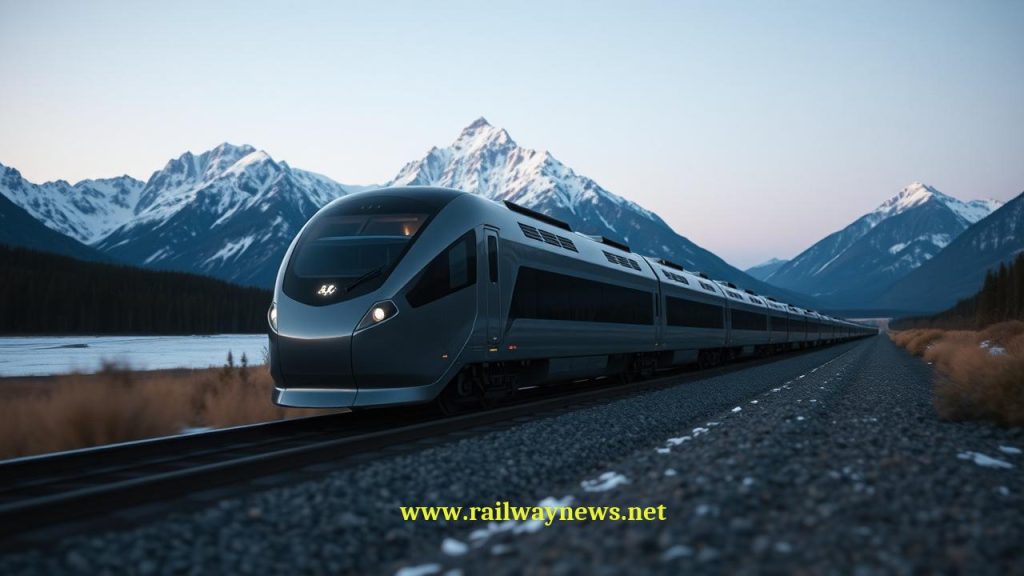
🛑 Key Takeaways:
- Two major Canadian construction unions signed an MOU backing the proposed Calgary-Banff passenger rail project.
- The 93-mile (150 km) line plans to use zero-emission hydrogen trains with a 20-minute service frequency.
- Union support adds significant labor and political weight to the privately-funded project, increasing its viability for investors like the Canada Infrastructure Bank.
CALGARY, AB – Two of Canada’s largest construction trade unions have formally backed the proposed 93-mile Calgary-Banff passenger rail project, signing a memorandum of understanding with proponent Liricon Capital’s entity, Friends of the Calgary Airport-Banff Rail (CABR). The agreement provides crucial labor support for the privately-funded initiative, though the project’s total cost and construction timeline remain undisclosed.
| Category | Specification / Detail |
|---|---|
| Project / Model | Calgary Airport-Banff Rail (CABR) |
| Route Length | 93 miles (150 km) |
| Key Route Points | Calgary Intl. Airport, Downtown Calgary, Banff National Park |
| Key Stakeholders | CABR, Canada’s Building Trades Unions (CBTU), Building Trades of Alberta (BTA), CPKC, Canada Infrastructure Bank |
| Propulsion Tech | Zero-emission hydrogen locomotives |
| Service Frequency | Planned every 20 minutes |
| Project Budget | Undisclosed |
Operational & Technical Details
The proposed passenger service is designed to operate primarily on an existing CPKC rail corridor. This strategy significantly reduces the need for new land acquisition and environmental assessments. The line will connect Calgary International Airport directly to the downtown core before continuing through the Bow Valley to Banff. The planned use of hydrogen-powered trains aligns with federal emission reduction targets. A 20-minute service frequency indicates a high-capacity system designed to handle significant tourist and commuter traffic, alleviating vehicle congestion on the Trans-Canada Highway.
Market Impact Analysis
This union support is a critical de-risking event for the project’s private investors, including primary backer, the Canada Infrastructure Bank. By securing cooperation from Canada’s Building Trades Unions and the Building Trades of Alberta, CABR mitigates potential labor disputes during construction. The project serves as a key test for a private-public partnership model for new passenger rail in North America. If successful, it could provide a template for developing other tourist-focused rail corridors without relying solely on direct government capital expenditure. The line directly supports Alberta’s economic diversification strategy by strengthening its tourism sector and providing reliable labor access to Banff.
FAQ: Quick Facts
What is the value of this agreement?
The memorandum of understanding has no specified monetary value. Its primary value is securing formal support and cooperation from the construction labor unions for the project’s development and construction phases. The total project cost has not been made public.
When is the expected completion date?
The project’s proponents have not released a construction schedule or an expected completion date.

Railway infrastructure, rolling stock and transport technologies specialist focused on global rail industry developments, high-speed rail systems, signaling technologies and freight transportation. Covering railway investments, public transport modernization, rail operations and international mobility projects across Europe, Asia and North America.
RELATED POSTS

September 6, 2026 5:19 am
Hitachi delivered Taiwan's first N700ST high-speed train from Japan in...

September 5, 2026 4:19 pm
CPK launched formal tender talks with four consortia to design...

September 6, 2026 4:12 am
Alstom delivered the first of 100 new G Class trams...

September 5, 2026 7:14 pm
HS2 Ltd signed renegotiated civils contracts with EKFB and Align...

September 6, 2026 1:17 am
Hitachi Toshiba Supreme Consortium confirmed the first of 12 N700ST...

September 6, 2026 6:17 am
Hungary ordered a national ban on most freight trains from...