
Manitoba Forms Tri-Modal Alliance: Boosts Trade Corridors
Manitoba launches the Ports Manitoba Project, integrating air, rail, and sea logistics. This alliance aims to fortify trade against global risks, attracting investment.
🛑 Key Takeaways:
- Manitoba authorities have formed a trade alliance to integrate air, rail, and sea logistics assets into a single supply chain.
- The project combines the Arctic Gateway Group’s Port of Churchill and Hudson Bay Railway with CentrePort Canada’s inland port and Winnipeg’s cargo airport.
- This initiative is a strategic move to create resilient, alternative North American trade corridors amid rising global “geoeconomic confrontation” risks.
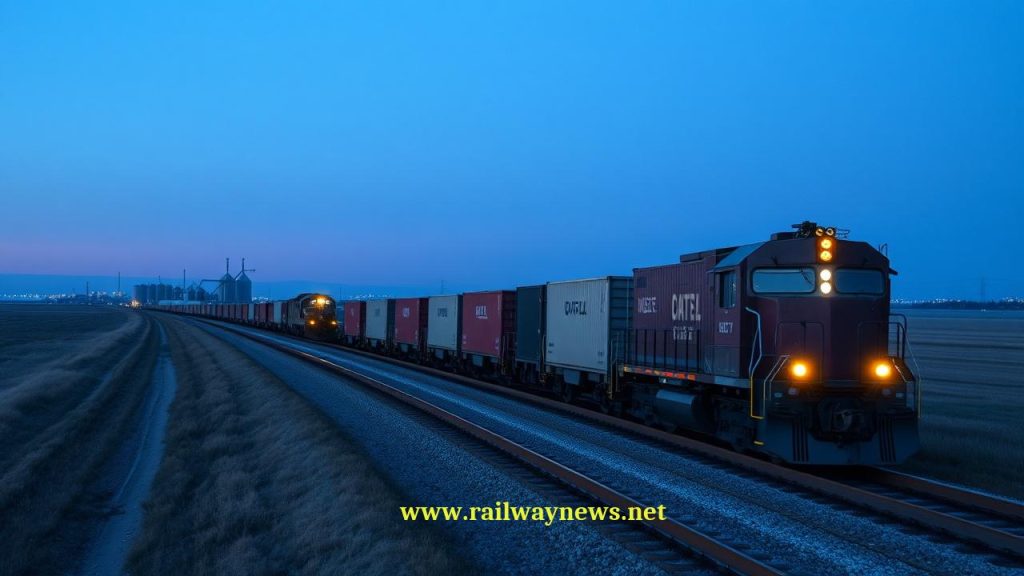
WINNIPEG, CANADA – A coalition of Manitoba’s key logistics authorities and government bodies has formed the “Ports Manitoba Project,” an alliance designed to create an integrated tri-modal supply chain. The move aims to bolster the province’s trade corridors against global volatility, a direct response to risks such as the “geoeconomic confrontation” flagged by the World Economic Forum as a top near-term threat to international trade and investment.
| Category | Specification / Detail |
|---|---|
| Project Name | Ports Manitoba Project |
| Agreement Type | Memorandum of Understanding (MOU) |
| Key Stakeholders | Prairies Economic Development Canada, Province of Manitoba, Arctic Gateway Group (AGG), CentrePort Canada Inc., Winnipeg Airports Authority |
| Core Assets Integrated | Port of Churchill (deep water), Hudson Bay Railway, CentrePort Canada (inland port/FTZ), Winnipeg International Airport (cargo) |
| Primary Objective | Develop an integrated supply chain across air, land, and sea to attract investment and expand market access. |
| Financial Commitment | Not disclosed at time of announcement. |
Operational & Technical Details
The alliance formalizes cooperation between Manitoba’s distinct logistics hubs. Arctic Gateway Group provides the northern sea and rail link, connecting the prairies to the Arctic Ocean via the Hudson Bay Railway and the deep-water Port of Churchill. CentrePort Canada, located in the provincial capital, offers 20,000 acres as an inland port and Foreign Trade Zone for cargo consolidation and processing. The Winnipeg Airports Authority contributes the air freight component, handling time-sensitive and high-value goods through its international cargo facilities. The goal is to create seamless interoperability between these three modes, offering a unified logistics solution for shippers.
Market Impact Analysis
This alliance positions Manitoba as a strategic alternative to congested coastal ports and supply chains. By creating a vertically integrated, Canadian-controlled northern trade corridor, the province aims to mitigate risks associated with international trade disputes and shipping chokepoints. For businesses, this offers a potentially more resilient and direct route for agricultural products, natural resources, and manufactured goods to European and other global markets. The initiative strengthens the strategic importance of the Hudson Bay Railway as a critical piece of national infrastructure, enhancing Canada’s supply chain sovereignty and making the region more attractive for foreign and domestic investment in logistics and processing facilities.
FAQ: Quick Facts
What is the main value of this alliance?
The primary value is the creation of an integrated supply chain across sea, rail, and air. This enhances Manitoba’s access to international markets and attracts investment by offering a resilient, alternative trade corridor.
When is the expected completion date?
The announcement concerns the signing of a Memorandum of Understanding to begin collaborative development. A specific project completion date has not been announced.

Railway infrastructure, rolling stock and transport technologies specialist focused on global rail industry developments, high-speed rail systems, signaling technologies and freight transportation. Covering railway investments, public transport modernization, rail operations and international mobility projects across Europe, Asia and North America.
RELATED POSTS
September 6, 2026 5:19 am
Hitachi delivered Taiwan's first N700ST high-speed train from Japan in...

September 5, 2026 4:19 pm
CPK launched formal tender talks with four consortia to design...

September 6, 2026 4:12 am
Alstom delivered the first of 100 new G Class trams...

September 5, 2026 7:14 pm
HS2 Ltd signed renegotiated civils contracts with EKFB and Align...
September 6, 2026 1:17 am
Hitachi Toshiba Supreme Consortium confirmed the first of 12 N700ST...
September 6, 2026 6:17 am
Hungary ordered a national ban on most freight trains from...