
Poland Launches High-Speed Train Tender: 320 km/h Fleet
Poland launches its first high-speed train tender for 320 km/h trains, aiming to integrate into the European network and boost its CPK megaproject.
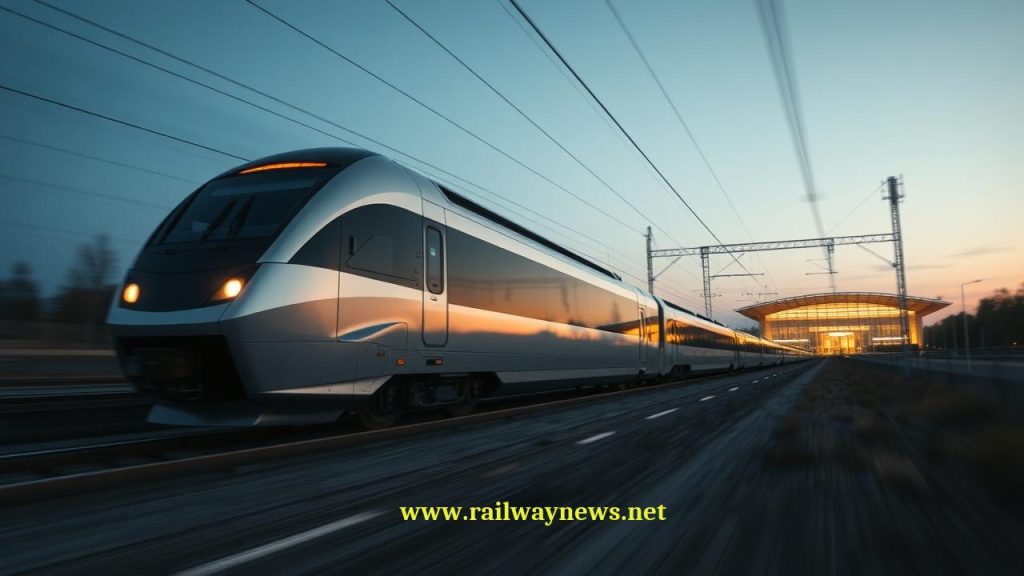
WARSAW, POLAND – National operator PKP Intercity has officially launched a historic tender for Poland’s first-ever fleet of high-speed trains, seeking 20 units capable of 320 km/h with an option for 35 more. This landmark procurement is a cornerstone of the country’s ambitious CPK (Centralny Port Komunikacyjny) megaproject, designed to establish a new high-speed network and integrate Poland into the core of European rail transport.
| Category | Details |
|---|---|
| Project | Poland’s First High-Speed Train Fleet Procurement |
| Operator | PKP Intercity |
| Rolling Stock | 20 firm order + 35 optional units |
| Maximum Speed | 320 km/h (operational design) |
| Key Timeline | Bid Submission (May 2027), Contract Award (August 2027) |
| Primary Route | “Y” Line (Warsaw – Łódź – Wrocław/Poznań) and international services |
PKP Intercity has initiated a multi-stage procedure for the procurement, which includes not only the delivery of the rolling stock but also detailed maintenance services and the construction of a dedicated technical facility. In a move to encourage broad participation, including from domestic manufacturers, the operator held preliminary market dialogues with nine potential suppliers. Consequently, the deadline for qualification applications has been set for April 2026, a significantly extended period allowing for the formation of consortia. This stage requires bidders to demonstrate prior experience in delivering trains capable of at least 250 km/h. The final submission of bids is slated for May 2027, with the contract award anticipated in August 2027.
The new trains, each approximately 200 meters long, are specified to operate at up to 320 km/h and will feature a two-class configuration, bar or restaurant areas, and full accessibility for passengers with disabilities and families. The scope of the project extends beyond Poland’s borders, as the trains must be certified for operation in Germany, the Czech Republic, and Austria. Domestically, the initial 20 units will serve the new “Y” line, connecting Warsaw, Łódź, and Wrocław with hourly services, and extending to Poznań and Szczecin every two hours. International services will include a Warsaw-Berlin route via Łódź and Poznań. The optional 35 units would enable a significant frequency increase, with services on key routes running every half hour or hour.
This tender is a critical component of the CPK project, a transformative national infrastructure program aimed at building 1,790 km of new high-speed lines. The “Y” line is the program’s backbone, with the Warsaw-Łódź section, including a new 4.6 km tunnel in Łódź, scheduled to open in 2032 to coincide with the launch of the new CPK Airport. The full 480 km “Y” line is targeted for completion by 2035, enabling travel at over 350 km/h and connecting Poland with major European cities like Berlin, Prague, and Leipzig. This procurement follows other major fleet renewal efforts by PKP Intercity, including a historic EUR 1.6 billion contract with Alstom and the introduction of 200 km/h locomotive-hauled services, all heavily supported by over EUR 1.25 billion in European funding.
Key Takeaways
- Entering the High-Speed Era: This is Poland’s first tender for 320 km/h trains, marking a strategic leap into the European high-speed rail club and a fundamental upgrade of its transport infrastructure.
- International Integration: The requirement for certification in Germany, the Czech Republic, and Austria signals a clear intent to move beyond domestic upgrades and establish Poland as a key hub in the trans-European network.
- Strategic Industrial Policy: The extended tender timeline and emphasis on consortia are designed to foster collaboration between experienced international manufacturers and the Polish domestic rail industry.
Editor’s Analysis
PKP Intercity’s tender for a high-speed fleet is more than a simple rolling stock purchase; it is a declaration of strategic intent. This move anchors Poland’s position as a future logistics and transport powerhouse in Central and Eastern Europe, directly supporting the vast ambitions of the CPK megaproject. By building a network from the ground up that is interoperable with its Western neighbors, Poland is proactively designing its integration into the heart of Europe’s economy. For global rolling stock manufacturers like Alstom, Siemens, and Hitachi, this tender represents one of the most significant and strategic opportunities in the European market for the next decade, with the winner positioned to shape the future of mobility in a rapidly developing region.
Frequently Asked Questions
- What is the “Y” line in Poland?
- The “Y” line is a new high-speed railway network being built in Poland as part of the CPK project. It will connect Warsaw with Łódź, and then branch to Wrocław and Poznań, designed for speeds over 320 km/h and set to be fully operational by 2035.
- How many high-speed trains is PKP Intercity buying?
- The tender is for a firm order of 20 high-speed trains, with an option to purchase an additional 35 units, which could bring the total fleet size to 55 trains.
- When will these new high-speed trains enter service?
- While the contract is scheduled to be awarded in August 2027, the first section of the new high-speed line (Warsaw-Łódź) is planned to become operational in 2032, aligning with the opening of the new CPK Airport.

Railway infrastructure, rolling stock and transport technologies specialist focused on global rail industry developments, high-speed rail systems, signaling technologies and freight transportation. Covering railway investments, public transport modernization, rail operations and international mobility projects across Europe, Asia and North America.
RELATED POSTS

September 6, 2026 5:19 am
Hitachi delivered Taiwan's first N700ST high-speed train from Japan in...

September 5, 2026 4:19 pm
CPK launched formal tender talks with four consortia to design...

September 6, 2026 4:12 am
Alstom delivered the first of 100 new G Class trams...

September 6, 2026 1:17 am
Hitachi Toshiba Supreme Consortium confirmed the first of 12 N700ST...
September 6, 2026 12:20 pm
Indian Railways ordered a probe after a fire destroyed 2...

September 7, 2026 4:11 am
ÖBB Rail Cargo Group leased 500 Eanos-y scrap-metal wagons from...