
North Texas-Houston High-Speed Rail: Infrastructure & Economic Impact
High-speed rail between North Texas and Houston: A game-changer for regional connectivity, but what are the real infrastructure and economic hurdles? Discover how!
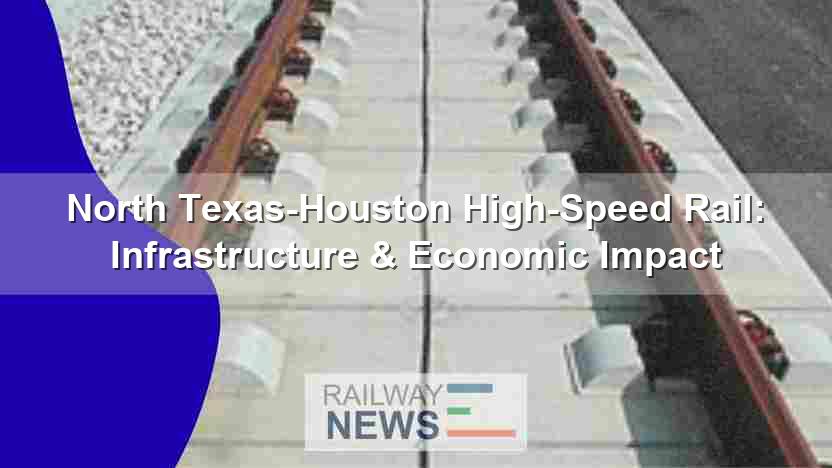
The burgeoning economies of North Texas and Houston, Texas, represent a significant economic engine in the United States. However, current transportation infrastructure struggles to keep pace with the region’s growth. This article examines the feasibility, potential benefits, and challenges of implementing a high-speed rail system connecting these two major metropolitan areas. While the concept of high-speed rail is not entirely novel, its successful implementation often hinges on careful consideration of various factors, including cost-effectiveness, environmental impact, and community engagement. A North Texas to Houston bullet train, if developed, could revolutionize travel and commerce within the region, but the path ahead is fraught with complexities.
Evaluating Infrastructure Needs
The existing rail infrastructure in the region requires careful scrutiny to determine its suitability for high-speed rail. Analysis must include an assessment of existing track conditions, signal systems, and station facilities. This assessment must evaluate whether existing infrastructure can be upgraded to accommodate high-speed trains, or if a substantial new construction project is necessary. Identifying suitable alignment routes, taking into consideration the terrain, existing land use, and potential environmental impacts, is crucial for the project’s feasibility.
Economic Impacts and Considerations
The economic viability of a high-speed rail line between North Texas and Houston requires a thorough cost-benefit analysis. This evaluation must consider the projected ridership, passenger fare structures, potential revenue streams (such as freight transport if applicable), and operating expenses. Moreover, the economic ripple effect throughout the region, including job creation in construction, maintenance, and related industries, needs to be assessed. This assessment will be pivotal in determining whether the project is financially sustainable and beneficial for the long-term economic prosperity of the region. The project’s overall impact on real estate values and development opportunities alongside economic growth needs to be evaluated.
Environmental Sustainability and Considerations
The environmental impact of a high-speed rail line is a critical factor in the project’s feasibility. This includes assessments of the project’s carbon footprint, impact on biodiversity, and potential disruption to ecosystems. The design and construction of the system must consider environmentally sound practices throughout the entire process. This analysis must evaluate the specific environmental implications of the chosen alignment routes and the potential for mitigation strategies. This will likely involve incorporating renewable energy sources in the operating and maintenance process.
Conclusions: Navigating the Path to High-Speed Rail
Implementing a high-speed rail network connecting North Texas to Houston represents a significant undertaking, requiring careful consideration of infrastructure needs, economic viability, environmental impact, and community engagement. The project’s viability depends heavily on the thoroughness of these evaluations. The potential benefits of such a system – improved transportation efficiency, economic growth, and reduced reliance on air travel – are significant. However, the substantial capital investment, challenging regulatory environment, and potential environmental concerns necessitate a detailed approach to address each issue effectively. Several vital questions remain: can the project be executed within budget constraints? Will the chosen alignment route meet the needs of all stakeholders? Detailed feasibility studies are essential. The eventual success of a North Texas to Houston bullet train project hinges on an unwavering commitment from all stakeholders, including the government, private sector, and the communities directly impacted.
A balanced approach, considering the diverse perspectives and challenges, is crucial. It requires thorough research, collaboration, and a commitment to sustainable practices. Successful implementation will be defined by a meticulous integration of the social, economic, and environmental aspects, ensuring that the project not only meets current needs but also paves the way for future growth and prosperity. Ultimately, a high-speed rail connection between North Texas and Houston could redefine regional connectivity and contribute significantly to the economic and social fabric of the area.
You might be interested in:
Last February 2019, we published an article about the East Midlands Rail franchise extension. Click here to read – East Midlands Rail: Short-Term Extension, Long-Term Vision

Railway infrastructure, rolling stock and transport technologies specialist focused on global rail industry developments, high-speed rail systems, signaling technologies and freight transportation. Covering railway investments, public transport modernization, rail operations and international mobility projects across Europe, Asia and North America.
RELATED POSTS
September 6, 2026 5:19 am
Hitachi delivered Taiwan's first N700ST high-speed train from Japan in...

September 5, 2026 4:19 pm
CPK launched formal tender talks with four consortia to design...
September 6, 2026 1:17 am
Hitachi Toshiba Supreme Consortium confirmed the first of 12 N700ST...

September 6, 2026 4:12 am
Alstom delivered the first of 100 new G Class trams...

September 5, 2026 7:14 pm
HS2 Ltd signed renegotiated civils contracts with EKFB and Align...
September 6, 2026 6:17 am
Hungary ordered a national ban on most freight trains from...