
Chicago CTA: 1000 HD Cameras Boost Red & Blue Line Safety
Chicago’s Red and Blue Lines boast a major security upgrade: 1000 HD cameras enhancing crime prevention and detection. Discover how this $38 million investment improves safety for all!
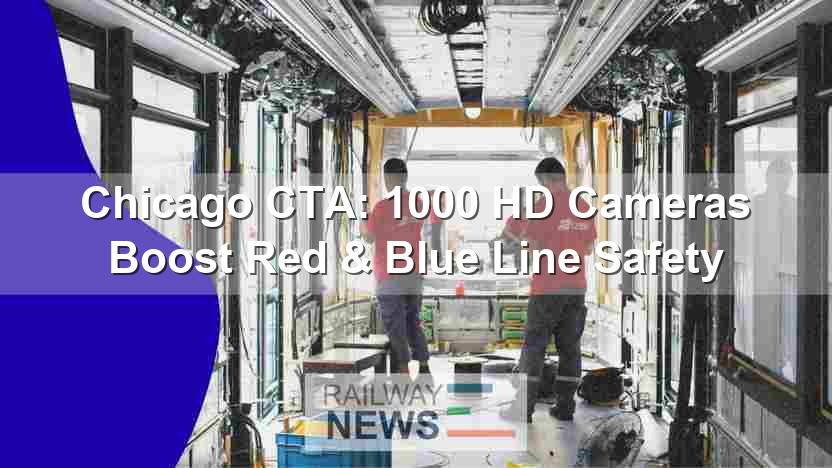
This article explores the Chicago Transit Authority’s (CTA) significant investment in upgrading its surveillance system, focusing specifically on the recent installation of 1,000 high-definition (HD) cameras across the Red and Blue Line subway stations. This initiative, a key component of the $38 million Safe & Secure Program, aims to bolster passenger safety and security by enhancing crime detection and prevention capabilities. The project represents a substantial expansion of the CTA’s existing surveillance infrastructure, significantly improving image quality and expanding coverage. This analysis will explore the technological advancements implemented, the strategic reasoning behind the project, its impact on crime reduction, and the broader implications for public transportation security. We will examine the effectiveness of the system, the challenges in implementing large-scale surveillance projects, and the future of integrated security systems within the transit industry.
Technological Advancements in Surveillance
The core of the CTA’s upgrade involved replacing aging analog cameras with modern HD cameras across the Red (9 stations) and Blue (12 stations) Lines. This transition resulted in the installation of approximately 340 new cameras and the upgrade of nearly 660 existing ones. The shift to HD technology provides significantly improved image clarity, enabling more accurate identification of individuals and detailed recording of incidents. This enhanced visual detail is crucial for law enforcement investigations, allowing for better identification of suspects and the collection of irrefutable evidence. The improved image quality also facilitates more effective remote surveillance and pattern recognition, allowing for proactive identification of potential threats or problematic behaviors.
Strategic Rationale and Crime Reduction
The primary objective of this initiative is to deter crime and enhance passenger safety. The increased number of high-resolution cameras provides wider coverage, creating a more visible security presence. This visible deterrence can significantly discourage criminal activity. Moreover, the improved image quality enables faster and more effective crime investigation, leading to higher apprehension rates. The CTA reports that its camera network has been instrumental in assisting law enforcement in apprehending nearly 200 individuals annually, contributing to a tangible reduction in crime rates. The data collected from the cameras also provides valuable insights into crime patterns, allowing the CTA and Chicago Police Department (CPD) to allocate resources more effectively to high-risk areas and times.
Integration with Law Enforcement and Public Safety
The success of the CTA’s surveillance system hinges on its effective integration with the CPD. Real-time access to camera feeds allows for immediate response to incidents, minimizing response times and potentially preventing escalation. The collaboration between the CTA and CPD extends beyond immediate response, involving sharing of data for investigation purposes, enabling the identification of trends and patterns in criminal behavior. This proactive approach to crime prevention leverages the combined resources and expertise of both organizations, fostering a collaborative environment that contributes to a safer public transportation system. The high-definition video evidence provides irrefutable evidence for criminal proceedings, leading to increased prosecution rates.
Broader Implications and Future Developments
The CTA’s initiative highlights a broader trend in enhancing security within public transportation systems. The use of advanced surveillance technology is becoming increasingly prevalent, driven by the need to maintain public safety and deter crime. This case study underscores the importance of strategic planning, technological advancements, and collaborative partnerships between transit agencies and law enforcement. The success of this program depends on several factors, including efficient maintenance and upkeep of the equipment, ongoing training for personnel managing the system, and continuous evaluation of the system’s effectiveness in reducing crime and improving public safety. The CTA’s Safe & Secure Program, of which this camera installation is a part, demonstrates a commitment to ongoing improvements in safety and security. Future developments may involve integrating advanced technologies such as artificial intelligence (AI) for automated threat detection and predictive policing, further enhancing the system’s capabilities.
Conclusions
The installation of 1,000 high-definition cameras across the Chicago Transit Authority’s Red and Blue Line subway stations represents a significant advancement in public transportation security. This project, part of the broader $38 million Safe & Secure Program, leverages technological advancements to enhance crime prevention, detection, and investigation. The improved image quality, increased coverage, and real-time access to footage provided by the HD cameras greatly assist law enforcement efforts in apprehending suspects and identifying crime patterns. The collaboration between the CTA and the Chicago Police Department (CPD) is crucial to the success of this initiative, highlighting the importance of inter-agency cooperation in maintaining public safety. The project’s success is measurable through reduced crime rates, faster response times to incidents, and increased apprehension rates. However, the long-term effectiveness of the system depends on ongoing maintenance, staff training, and continuous evaluation. The future of public transportation security likely involves the integration of even more sophisticated technologies, such as artificial intelligence, to automate threat detection and enhance predictive policing capabilities. This case study demonstrates the efficacy of proactive investment in security infrastructure to create a safer and more secure environment for commuters. The Chicago Transit Authority’s commitment to enhanced security provides a valuable model for other transit systems seeking to improve passenger safety and deter criminal activity. The success of the CTA’s initiative underscores the importance of detailed security planning, technological advancements, and collaborative partnerships in creating a secure and reliable public transportation network.

Railway infrastructure, rolling stock and transport technologies specialist focused on global rail industry developments, high-speed rail systems, signaling technologies and freight transportation. Covering railway investments, public transport modernization, rail operations and international mobility projects across Europe, Asia and North America.
RELATED POSTS

September 6, 2026 5:19 am
Hitachi delivered Taiwan's first N700ST high-speed train from Japan in...

September 5, 2026 4:19 pm
CPK launched formal tender talks with four consortia to design...

September 5, 2026 7:14 pm
HS2 Ltd signed renegotiated civils contracts with EKFB and Align...

September 6, 2026 4:12 am
Alstom delivered the first of 100 new G Class trams...

September 6, 2026 1:17 am
Hitachi Toshiba Supreme Consortium confirmed the first of 12 N700ST...
September 6, 2026 6:17 am
Hungary ordered a national ban on most freight trains from...