
Baden-Württemberg Chooses Alstom Coradia Lint: Rail Modernization
Baden-Württemberg chose Alstom’s Coradia Lint trains – boosting regional rail with speed, comfort, and cutting-edge tech. Discover how this €80 million investment drives efficiency and enhances passenger experience!
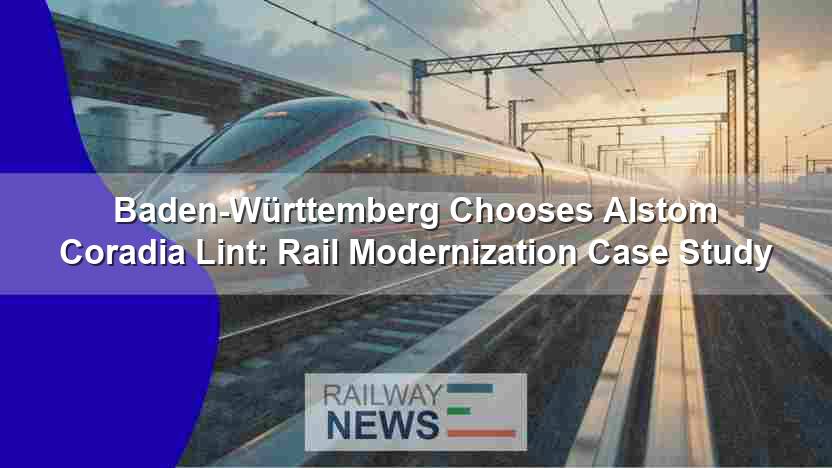
This article examines the recent order placed by Landesanstalt Schienenfahrzeuge Baden-Württemberg (SFBW) (the Baden-Württemberg Railway Vehicle Authority) with Alstom for 18 additional Coradia Lint regional trains. This procurement signifies a continuation of Baden-Württemberg’s commitment to modernizing its regional rail network and underscores Alstom’s success in the German market. The analysis will explore the strategic implications of this order for both Alstom and the Baden-Württemberg transport system, examining the technological advancements incorporated into the Coradia Lint fleet, the economic benefits for the region, and the broader trends shaping the future of regional rail in Germany. We will delve into the operational efficiency improvements resulting from the deployment of these modern DMUs (Diesel Multiple Units), and consider the implications for passenger experience and overall sustainability. Finally, the article will offer perspectives on the broader context of this order within the German railway landscape and Alstom’s global market position.
The Coradia Lint: A Proven Performer in Regional Rail
The Coradia Lint family of DMUs has established itself as a reliable and versatile platform for regional rail services across Europe and Canada. Its modular design allows for customization to meet specific operational requirements, contributing to its widespread adoption. The trains ordered by SFBW will be manufactured at Alstom’s Salzgitter facility, highlighting the importance of domestic manufacturing and its contribution to German employment. The chosen configuration, featuring 150 seats, 18 bicycle parking spaces, and laptop tables at every seat, showcases Alstom’s focus on passenger comfort and convenience, reflecting modern demands for accessible and amenity-rich public transportation. Additionally, the incorporation of WLAN (Wireless Local Area Network), an entertainment system, passenger information systems, and video surveillance contribute to an enhanced and secure passenger experience. The trains’ top speed of 140 km/h ensures efficient and timely service on the Zollernalbbahn network.
Economic Impact and Supply Chain Dynamics
The nearly €80 million contract awarded to Alstom represents a significant investment in Baden-Württemberg’s infrastructure and economy. The manufacturing process at Alstom’s Salzgitter facility will generate employment and stimulate local businesses within the supply chain. Additionally, the improved rail service will have indirect economic benefits by facilitating easier commuting for residents and enhanced accessibility for tourism and business. The rapid delivery timeline, less than a year and a half, underscores Alstom’s commitment to efficient project management and its capacity to meet the demanding schedules of its clients. This efficiency, demonstrated previously with the ‘Ulmer Stern’ network delivery, positions Alstom favorably in the competitive railway market.
Technological Advancements and Passenger Experience
The Coradia Lint’s technological features are not merely amenities but crucial components in optimizing rail service delivery. WLAN connectivity addresses the increasing demand for internet access during commutes, while the passenger information system streamlines communication and reduces passenger confusion. The integration of video surveillance enhances security and passenger safety. These features combined with the design aspects – comfortable seating, bicycle storage, and laptop tables – elevate the overall passenger experience, fostering positive perceptions of regional rail travel and encouraging increased ridership.
Alstom’s Market Position and Future Outlook
This order further solidifies Alstom’s position as a key player in the German regional rail market. Coupled with the March contract from Transdev for 41 Coradia Lint trains, Alstom’s strong performance demonstrates its capacity to meet the demands of large-scale procurement projects and to adapt its product line to diverse operational environments. The operational efficiency of the Coradia Lint trains, evidenced by their deployment across over 30 networks, contributes significantly to the profitability of railway operators. As regional governments continue to invest in upgrading their rail infrastructure, Alstom’s commitment to innovation and its established track record will likely sustain its competitive advantage. The company’s ability to deliver reliable and technologically advanced DMUs, tailored to specific customer requirements, positions it for continued success in the evolving landscape of European regional rail.
Conclusions
The procurement of 18 additional Coradia Lint trains by Baden-Württemberg represents a significant milestone in the modernization of Germany’s regional rail network. This order underscores the success of Alstom’s Coradia Lint platform, highlighting its versatility, reliability, and technological sophistication. The nearly €80 million investment represents not only an upgrade in regional rail infrastructure but also a significant boost to the local economy through job creation and supply chain stimulation within Germany. The rapid delivery timeline, less than 18 months, showcases Alstom’s efficient project management capabilities. The train’s features, such as WLAN, passenger information systems, video surveillance, ample seating, and bicycle storage, significantly enhance the passenger experience, promoting increased ridership and positive perception of regional rail travel. Alstom’s continued success in securing large-scale contracts, such as this order and the previous 41-train contract with Transdev, establishes its position as a leader in the European regional rail market. The long-term implications of this procurement extend beyond immediate economic benefits; it contributes to improved regional connectivity, increased accessibility, and reduced reliance on environmentally less-friendly transportation modes, thereby fostering sustainable growth within Baden-Württemberg and setting a precedent for other regions seeking to modernize their rail infrastructure.

Transport and railway industry editor covering global rail infrastructure, sustainable mobility, urban transit systems and next-generation railway technologies with a focus on accessible and industry-focused reporting.
RELATED POSTS

September 6, 2026 5:19 am
Hitachi delivered Taiwan's first N700ST high-speed train from Japan in...

September 5, 2026 4:19 pm
CPK launched formal tender talks with four consortia to design...

September 6, 2026 4:12 am
Alstom delivered the first of 100 new G Class trams...

September 6, 2026 1:17 am
Hitachi Toshiba Supreme Consortium confirmed the first of 12 N700ST...

September 6, 2026 6:17 am
Hungary ordered a national ban on most freight trains from...
September 5, 2026 6:17 pm
Universal Signalling won a deal to install its U-Cross system...