
Alstom’s €160M CDG Express Train Deal: A French Rail Success
Alstom secured a €160 million contract to supply 13 trains for the Charles de Gaulle Airport Express line, emphasizing Alstom’s technological capabilities and commitment to domestic manufacturing in France, highlighting its role as a key player in high-speed rail technology.
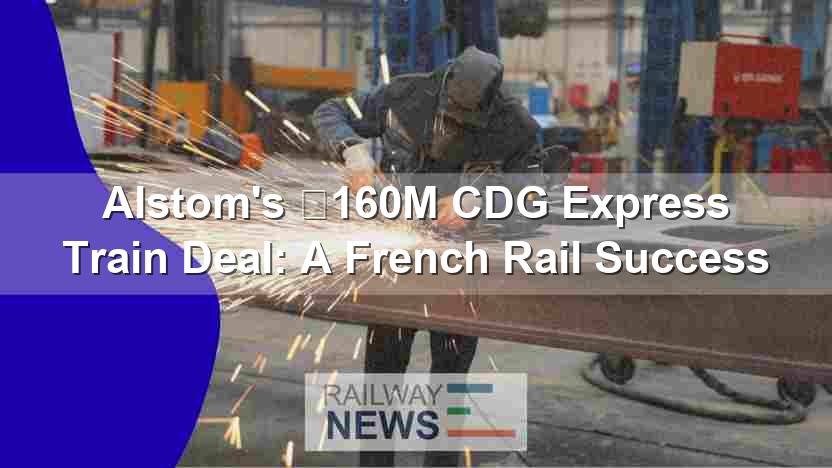
This article explores the significant contract awarded to Alstom, a leading French rolling stock manufacturer, for the supply of trains to the CDG Express (Charles de Gaulle Airport Express) line connecting central Paris to Charles de Gaulle Airport. The €160 million contract highlights not only the technological capabilities of Alstom but also the substantial economic impact on French employment and the broader rail industry. We will explore the specifics of the contract, the technological advancements incorporated in the trains, the economic benefits for France, and the broader implications for the future of high-speed rail transport. The analysis will examine the strategic significance of this project within the context of Alstom’s broader business activities and the evolving landscape of the French and international rail sectors. The article will also briefly consider the wider implications of this project within the global railway industry and the future trends in railway technology.
The CDG Express Contract and Alstom’s Coradia Polyvalent Range
Alstom secured a substantial contract valued at €160 million to provide 13 trains for the Hello Paris consortium, the operator of the CDG Express line. The chosen rolling stock is based on Alstom’s proven Coradia Polyvalent platform. This platform represents a mature and reliable design, offering a foundation for customization and integration of advanced technologies. The selection underscores the confidence in the Coradia Polyvalent’s performance, maintainability, and adaptability to meet the specific requirements of high-frequency airport shuttle services. The contract’s significance extends beyond the financial value; it signifies Alstom’s position as a key player in supplying technologically advanced rolling stock for high-profile projects.
Technological Advancements and Manufacturing in France
The 13 trains are being entirely designed and manufactured in France, leveraging the expertise of six Alstom sites: Reichshoffen, Ornans, Le Creusot, Tarbes, Villeurbanne, and Saint-Ouen. This highlights Alstom’s commitment to domestic manufacturing and its significant contribution to the French economy. The trains will incorporate unique interior fittings and state-of-the-art on-board passenger information systems, enhancing passenger comfort and journey experience. This focus on passenger experience is vital for attracting ridership and ensuring the CDG Express’s success as a convenient and efficient transportation option.
Economic Impact and Job Creation
The project is projected to generate 400 direct jobs at Alstom and a further 1,200 indirect jobs within the wider French rail sector. This substantial job creation demonstrates the considerable multiplier effect of such large-scale infrastructure projects. The economic stimulus extends beyond employment, encompassing increased activity within the supply chain and associated industries. The project’s success will serve as a model for future investments in sustainable transportation infrastructure and its associated economic benefits.
Strategic Implications and Future Trends
The CDG Express contract reflects Alstom’s ongoing commitment to technological innovation and its strategic position within the global rail market. Alstom’s recent memorandum of understanding (MoU) with Kazakhstan Railways (KTZ) to develop digital technologies for railway signaling further underscores its proactive approach to technological advancement. This strategic focus on digitalization is essential for improving operational efficiency and enhancing the overall passenger experience. The success of the CDG Express project will serve as a powerful case study for future high-speed rail projects globally, showcasing the integration of cutting-edge technology and sustainable infrastructure development.
Conclusions
The Alstom contract for the CDG Express represents a significant milestone for both Alstom and the French rail industry. The €160 million deal for 13 Coradia Polyvalent trains, entirely designed and manufactured in France, showcases Alstom’s technological prowess and its commitment to domestic manufacturing. The project’s anticipated creation of 1600 jobs (400 direct and 1200 indirect) underscores the considerable economic benefits associated with large-scale infrastructure projects. The focus on passenger experience, with unique interior fittings and advanced onboard information systems, is crucial for ensuring the CDG Express’s success as a vital transportation link. Additionally, Alstom’s continued investment in technological innovation, as evidenced by its MoU with Kazakhstan Railways for digital signaling technology, positions the company as a leader in the evolving global rail landscape. The project’s success will serve as a compelling case study demonstrating the positive economic and social impacts of investing in high-speed rail and sustainable transportation infrastructure. The emphasis on domestic manufacturing further highlights the importance of supporting national industries and their contribution to economic growth and technological advancement. The CDG Express, therefore, stands as a powerful symbol of innovation, economic development, and the future of sustainable transportation.

Railway infrastructure, rolling stock and transport technologies specialist focused on global rail industry developments, high-speed rail systems, signaling technologies and freight transportation. Covering railway investments, public transport modernization, rail operations and international mobility projects across Europe, Asia and North America.
RELATED POSTS

September 5, 2026 4:19 pm
CPK launched formal tender talks with four consortia to design...

September 5, 2026 7:14 pm
HS2 Ltd signed renegotiated civils contracts with EKFB and Align...

September 6, 2026 4:12 am
Alstom delivered the first of 100 new G Class trams...
September 5, 2026 6:17 pm
Universal Signalling won a deal to install its U-Cross system...
September 6, 2026 8:17 am
DB InfraGO reopened the Nuremberg-Regensburg line in Bavaria on 31...
September 6, 2026 12:20 pm
Indian Railways ordered a probe after a fire destroyed 2...