
Sydney-Melbourne XPT Derailment: A Safety Crisis
The tragic derailment of the Sydney to Melbourne XPT train in 2020 highlighted critical safety protocols and infrastructure issues, emphasizing the need for enhanced maintenance, improved signaling systems, and better operational procedures to prevent future derailments.
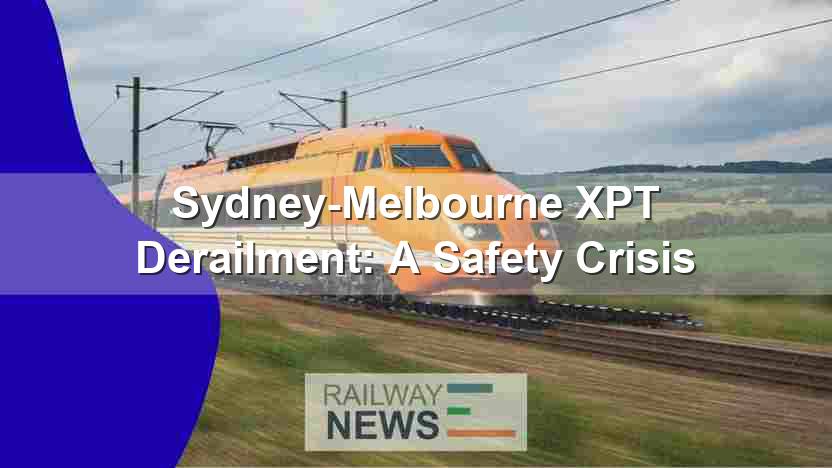
This article explores the tragic derailment of the Sydney to Melbourne XPT (XPT – Xpress Passenger Train) train in Victoria, Australia, on February 20, 2020, focusing on the contributing factors, immediate responses, and long-term implications for railway safety. The incident, resulting in two fatalities and several injuries, underscores the critical need for rigorous safety protocols and ongoing advancements in railway technology and maintenance. We will examine the immediate aftermath of the derailment, the investigation into the cause, and the subsequent impact on the railway network and passenger confidence. Further, we will explore potential improvements to infrastructure, rolling stock maintenance, and signaling systems that could mitigate the risk of future derailments. The analysis will consider the human factor, operational procedures, and the broader implications for railway safety management practices within Australia and internationally.
The Derailment and Immediate Response
The XPT train, en route from Sydney to Melbourne, derailed near Wallan station, approximately 45 kilometers north of Melbourne, at approximately 8:00 PM local time. The derailment involved the diesel locomotive and five carriages, resulting in two fatalities, both located in the driver’s carriage, and several injuries. The train, carrying around 160 passengers, was running over two hours behind schedule at the time of the incident. Emergency services, including Ambulance Victoria and the Country Fire Authority (CFA), were swiftly deployed. A temporary triage center was established utilizing the nearby Wallan McDonald’s and BP service station to provide immediate medical attention to walking wounded passengers. One passenger was airlifted to a Melbourne hospital, while four others were admitted and reported to be in stable condition. The CFA reported that all passengers were rescued by 9:00 PM.
Investigation and Causal Factors
A thorough investigation into the cause of the derailment is crucial to preventing similar incidents. This investigation would involve analyzing various factors, including:
- Track condition: A detailed examination of the rail tracks, sleepers, and ballast for any signs of defects, wear and tear, or substandard maintenance.
- Rolling stock maintenance: A detailed assessment of the locomotive and carriage maintenance records, focusing on wheel condition, bogie (wheel assembly) integrity, and brake system functionality. This would include checking for any signs of fatigue, cracks, or other potential mechanical failures.
- Signaling system integrity: A review of the signaling system’s performance leading up to the incident to identify any malfunctions or irregularities that may have contributed to the derailment. This would also look at speed restrictions, adherence to signals, and overall system reliability.
- Human factors: An assessment of the driver’s actions, training, and adherence to operating procedures, potentially including consideration of fatigue and the impact of the late running schedule.
Impact on the Railway Network and Passenger Confidence
The derailment caused significant disruption to the railway network, resulting in the closure of rail lines between Melbourne and Sydney. This disruption impacted freight and passenger services, leading to significant delays and operational challenges. Beyond the immediate operational impact, the incident likely affected passenger confidence in the railway system. Restoring passenger trust requires transparency about the investigation’s findings, clear communication regarding implemented safety improvements, and demonstrable commitment to enhancing railway safety protocols.
Recommendations for Enhanced Railway Safety
Preventing future derailments requires a multi-faceted approach incorporating technological advancements, robust maintenance programs, and strengthened safety regulations. This includes:
- Investment in track infrastructure: Regular track inspections and timely maintenance are paramount. Investing in advanced track monitoring systems can help detect potential problems before they lead to derailments.
- Improved rolling stock maintenance: Strict adherence to maintenance schedules and the implementation of predictive maintenance techniques using data analytics can proactively identify and address potential mechanical issues before they escalate.
- Advanced signaling systems: Upgrading signaling systems to incorporate advanced technologies like Automatic Train Protection (ATP) systems can enhance safety by preventing trains from exceeding speed limits or entering unsafe sections of track.
- Enhanced driver training and fatigue management: Rigorous driver training programs, coupled with effective fatigue management strategies, are crucial to minimizing human error.
Conclusions
The tragic derailment near Wallan serves as a stark reminder of the critical importance of railway safety. The incident, resulting in two deaths and multiple injuries, highlighted vulnerabilities within the system. The investigation into the derailment’s causes, encompassing track condition, rolling stock maintenance, signaling system integrity, and human factors, is crucial for determining the root causes. Restoring public confidence requires transparency and a commitment to implementing significant safety enhancements. Recommendations include substantial investments in track infrastructure, employing advanced monitoring systems, strengthening rolling stock maintenance programs with predictive maintenance strategies, upgrading signaling systems with technologies like ATP, and strengthening driver training and fatigue management initiatives. A holistic approach incorporating technological advancements, stringent safety protocols, and a culture of proactive risk management is essential to prevent future derailments and ensure the safety and reliability of the Australian railway network. The long-term implications of this event necessitate a renewed focus on railway safety standards and the implementation of detailed safety improvements across all aspects of railway operations. Only through a collaborative effort involving government agencies, railway operators, and industry stakeholders can we ensure a safer future for rail travel.

Railway infrastructure, rolling stock and transport technologies specialist focused on global rail industry developments, high-speed rail systems, signaling technologies and freight transportation. Covering railway investments, public transport modernization, rail operations and international mobility projects across Europe, Asia and North America.
RELATED POSTS

September 5, 2026 4:19 pm
CPK launched formal tender talks with four consortia to design...

September 5, 2026 7:14 pm
HS2 Ltd signed renegotiated civils contracts with EKFB and Align...

September 6, 2026 4:12 am
Alstom delivered the first of 100 new G Class trams...
September 5, 2026 6:17 pm
Universal Signalling won a deal to install its U-Cross system...
September 6, 2026 8:17 am
DB InfraGO reopened the Nuremberg-Regensburg line in Bavaria on 31...
September 6, 2026 12:20 pm
Indian Railways ordered a probe after a fire destroyed 2...