
Dresden-Prague High-Speed Rail: A Cross-Border Revolution
This article details Deutsche Bahn’s collaboration with Správa železnic in developing a high-speed rail link between Dresden, Germany, and Prague, Czech Republic, aiming to revolutionize cross-border travel and freight transport while addressing environmental concerns through sustainable tunnel construction.
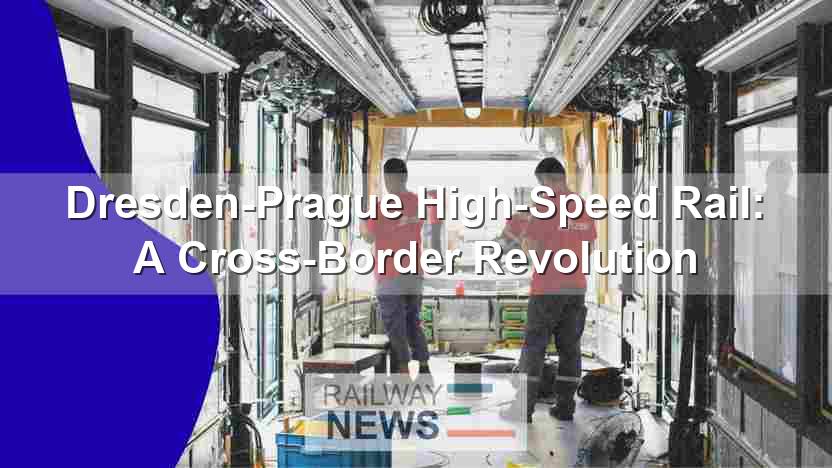
This article explores the significant collaboration between Deutsche Bahn (DB), the German national railway company, and Správa železnic (SŽDC), the Czech railway infrastructure manager, to develop a high-speed rail link between Dresden, Germany, and Prague, Czech Republic. This project promises to revolutionize cross-border travel and freight transport, significantly impacting both regional economies and the environment. The partnership aims to reduce travel time, enhance efficiency, and alleviate congestion along the existing Elbe valley route. This undertaking involves complex engineering challenges, demanding meticulous planning, substantial investment, and coordinated efforts from both governments and railway operators. The project’s success hinges on navigating environmental concerns, securing funding, and overcoming technical hurdles in the construction of a substantial cross-border tunnel. A detailed examination of the project’s various facets, from its strategic importance to the technical intricacies, will be undertaken to provide a detailed overview.
Strategic Rationale and Economic Benefits
The Dresden-Prague high-speed rail line is not merely a transportation improvement; it’s a strategically crucial project for both Germany and the Czech Republic. Reducing travel time between these two important cities from over two hours to a mere hour will significantly boost economic integration. This enhanced connectivity facilitates increased tourism, trade, and cross-border commuting, fostering economic growth in both regions. The project directly addresses the current bottleneck along the Elbe Valley, a heavily congested route for both passenger and freight traffic. By diverting freight transport to the new high-speed line, the existing route will experience reduced congestion, leading to decreased noise pollution and environmental impact in the Elbe Valley. This exemplifies a sustainable approach to transportation infrastructure development, prioritizing environmental responsibility alongside economic advancement.
Engineering Challenges and Technological Solutions
The core of this ambitious project lies in the construction of a 25km-long cross-border tunnel under the Ore Mountains (Erzgebirge). This presents a considerable engineering challenge, demanding advanced tunneling techniques and meticulous geological surveys to ensure stability and safety. The selection of suitable tunneling methods will significantly impact the project’s timeline and budget. Factors such as the geological composition of the mountains, the presence of groundwater, and the overall environmental impact need careful consideration. The project team’s decision to evaluate several “full tunnel variants” reflects a commitment to finding the most optimal and sustainable solution. The successful implementation of this tunnel represents a major feat of modern engineering and will showcase technological innovation in railway construction.
Environmental Considerations and Sustainability
While the economic benefits are substantial, the environmental impact of the project necessitates careful planning and mitigation strategies. The construction phase will inevitably generate disturbances, including noise and potential habitat disruption. However, the project’s long-term benefits in terms of reduced road traffic and the shift of freight transport from road to rail contribute significantly to environmental sustainability. The project team’s evaluation of multiple tunnel variants underscores a commitment to minimizing environmental impact. The reduced congestion in the Elbe Valley will significantly decrease noise and air pollution in the region, improving air quality and the overall quality of life for residents. A thorough environmental impact assessment is crucial to ensuring the project’s alignment with sustainable development principles.
Project Management and International Collaboration
The Dresden-Prague high-speed rail link is a prime example of successful international collaboration in infrastructure development. The partnership between DB and SŽDC exemplifies the potential for effective cross-border cooperation in tackling complex engineering projects. The project’s success hinges on effective coordination between the German and Czech governments, regulatory bodies, and the involved railway companies. A transparent and well-defined project management structure is vital for the timely and efficient implementation of the project. The preparation of tenders for the Erzgebirge tunnel highlights the systematic approach being undertaken, signaling a commitment to transparency and competitiveness in the procurement process. The successful execution of this project serves as a model for future cross-border infrastructure collaborations.
Conclusions
The Dresden-Prague high-speed rail link represents a significant endeavor with far-reaching implications for both Germany and the Czech Republic. The project promises to significantly reduce travel time, foster economic integration, and contribute to environmental sustainability. The collaboration between Deutsche Bahn and Správa železnic exemplifies effective international cooperation in tackling complex infrastructure projects. The project’s success hinges upon successfully navigating several critical challenges, including the construction of a substantial cross-border tunnel under the Ore Mountains, addressing environmental concerns, and maintaining efficient project management. The substantial investment required necessitates careful planning and resource allocation. The successful completion of this project will not only provide a modern and efficient transportation link but also serve as a model for future cross-border railway infrastructure development, demonstrating the benefits of international collaboration and strategic investment in sustainable transportation solutions. The substantial reduction in travel time between two major European cities, along with the positive environmental impacts associated with shifting freight from road to rail, promises a significant boost to both regional economies and the overall quality of life for residents along the Elbe Valley. The project is not merely about building a railway line; it is about fostering economic growth, improving environmental sustainability, and strengthening international collaboration. The careful planning and innovative engineering solutions employed underscore a commitment to delivering a project that benefits both countries for decades to come.

Railway infrastructure, rolling stock and transport technologies specialist focused on global rail industry developments, high-speed rail systems, signaling technologies and freight transportation. Covering railway investments, public transport modernization, rail operations and international mobility projects across Europe, Asia and North America.
RELATED POSTS

September 5, 2026 4:19 pm
CPK launched formal tender talks with four consortia to design...

September 5, 2026 7:14 pm
HS2 Ltd signed renegotiated civils contracts with EKFB and Align...

September 6, 2026 4:12 am
Alstom delivered the first of 100 new G Class trams...
September 5, 2026 6:17 pm
Universal Signalling won a deal to install its U-Cross system...
September 6, 2026 8:17 am
DB InfraGO reopened the Nuremberg-Regensburg line in Bavaria on 31...
September 6, 2026 12:20 pm
Indian Railways ordered a probe after a fire destroyed 2...