
Alstom’s €35M ERTMS Deal: Öresund Rail Upgrade
Alstom secured a €35 million contract to install the European Train Control System (ERTMS) on 77 regional trains in southern Sweden and Denmark’s Öresund region, enhancing safety, capacity, and interoperability across Europe.
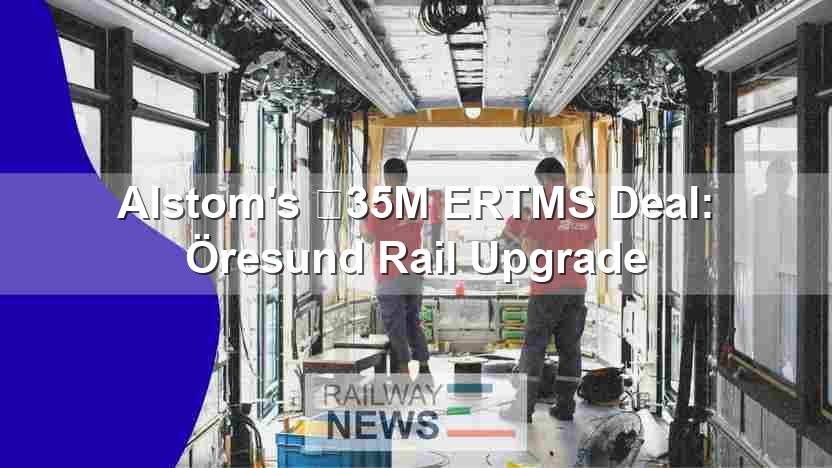
This article explores the significant contract awarded to Alstom for the installation of the European Train Control System (ERTMS) on regional trains in the Öresund region, spanning southern Sweden and eastern Denmark. The €35 million project highlights the ongoing modernization of railway infrastructure and the increasing adoption of ERTMS as a crucial component of enhancing safety, capacity, and interoperability across European rail networks. This detailed upgrade underscores the strategic importance of interoperable signaling systems for efficient and safe cross-border train operations. The detailed analysis will delve into the specifics of the contract, the technology involved, the benefits for the region, and the implications for the broader railway industry. The successful implementation of this project serves as a case study for future ERTMS deployments across Europe and beyond, emphasizing the collaborative efforts needed for such large-scale infrastructure projects.
ERTMS Implementation on Öresund Regional Trains
Alstom secured a substantial contract valued at €35 million from AB Transitio, a consortium representing several regional transport authorities in southern Sweden and Denmark, to equip 77 X31 regional trains with the European Train Control System (ERTMS). This contract includes an option for an additional 34 trains. The X31 trains operate within the Öresund region, a significant area of cross-border travel between Sweden and Denmark. The core objective is to upgrade the trains’ onboard signaling systems to align with modern ERTMS Level 2 standards, improving safety and interoperability across the network.
Addressing Interoperability Challenges in the Öresund Region
The Öresund region presents unique challenges due to its cross-border nature and the diverse signaling systems currently in use. This project directly addresses these challenges. By installing ERTMS Level 2, the trains will be capable of operating seamlessly on lines equipped with this system in both Sweden and Denmark. The solution also incorporates backward compatibility, allowing operation on older Swedish lines equipped with the ATC-2 system and existing lines in Denmark utilizing the ZUB 123 system. This ensures continued service on existing infrastructure while paving the way for a fully modernized, interoperable railway network. The project’s success demonstrates a viable strategy for gradual ERTMS deployment, mitigating disruption while achieving long-term modernization goals.
Strategic Significance and Collaboration
This contract represents a significant win for Alstom in the Swedish market. The company’s substantial experience in ERTMS deployment internationally is leveraged to improve a major portion of the southern Swedish train fleet. The project involves a collaborative effort between Alstom’s teams in Sweden, Belgium (its ERTMS center of excellence), and Denmark (responsible for installation design and supply chain management). This highlights the international nature of modern railway projects and the importance of leveraging expertise from different locations to achieve project success. The collaboration underscores a key element in successful ERTMS implementation: a robust and coordinated approach encompassing engineering, procurement, and project management.
Benefits and Future Implications
The upgraded signaling system offers substantial benefits, including enhanced safety through improved train control and reduced risk of human error. Increased capacity and efficiency are also expected due to more precise train spacing enabled by ERTMS. The modernization effort contributes to a more sustainable transport solution, supporting the region’s growing passenger numbers. For Alstom, the contract strengthens its position in the European ERTMS market and showcases its ability to deliver complex, cross-border projects. The project also acts as a successful case study that can be replicated in other regions facing similar challenges of interoperability and infrastructure modernization. The completed project will demonstrate the real-world advantages of modern signaling systems, potentially accelerating similar upgrades across Europe.
Conclusion
The Alstom contract to equip 77 X31 regional trains in the Öresund region with ERTMS is a significant milestone in European railway modernization. The project tackles the challenges of cross-border interoperability by integrating ERTMS Level 2 while maintaining compatibility with existing signaling systems (ATC-2 and ZUB 123). The successful implementation, expected by the end of 2023, demonstrates the feasibility of a phased approach to ERTMS deployment, maximizing efficiency and minimizing disruption. The collaboration between Alstom’s teams in Sweden, Belgium, and Denmark showcases the expertise and coordinated effort required for such large-scale undertakings. Beyond the immediate benefits of enhanced safety, capacity, and interoperability in the Öresund region, this project serves as a compelling example for future ERTMS rollouts across Europe and globally. The project highlights the growing need for standardized signaling systems to improve rail transport efficiency, safety, and sustainability. The successful delivery will undoubtedly pave the way for similar large-scale modernization projects, driving a significant step forward in European rail transportation. It emphasizes the value of strategic partnerships and international collaboration in delivering complex infrastructure projects, solidifying the position of ERTMS as a leading technology in modernizing railway networks worldwide. The project underscores that a modern, safe, and efficient railway network is vital for supporting economic growth and sustainable transportation in a rapidly growing region.

Railway infrastructure, rolling stock and transport technologies specialist focused on global rail industry developments, high-speed rail systems, signaling technologies and freight transportation. Covering railway investments, public transport modernization, rail operations and international mobility projects across Europe, Asia and North America.
RELATED POSTS

September 5, 2026 4:19 pm
CPK launched formal tender talks with four consortia to design...

September 6, 2026 4:12 am
Alstom delivered the first of 100 new G Class trams...

September 5, 2026 7:14 pm
HS2 Ltd signed renegotiated civils contracts with EKFB and Align...
September 5, 2026 6:17 pm
Universal Signalling won a deal to install its U-Cross system...
September 6, 2026 8:17 am
DB InfraGO reopened the Nuremberg-Regensburg line in Bavaria on 31...
September 6, 2026 12:20 pm
Indian Railways ordered a probe after a fire destroyed 2...