
JSPL: India’s Self-Reliant Rail Revolution
The research designs & standards organisation (RDSO) has approved Jindal Steel and Power Limited (JSPL) as a regular supplier of rails for main track usage in India, marking a significant step towards bolstering domestic rail manufacturing capabilities.
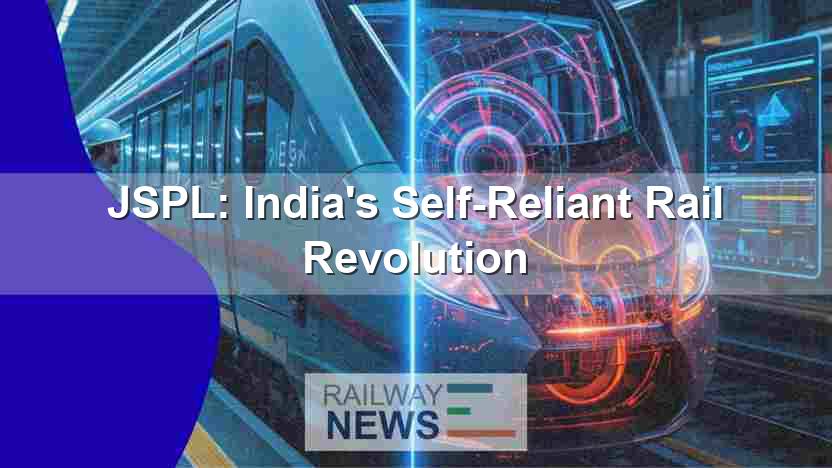
This article explores the significant development in the Indian railway sector: the approval of Jindal Steel and Power Limited (JSPL) as a regular supplier of rails for main track usage. This decision, reached after rigorous testing and validation by the Research Designs & Standards Organisation (RDSO) – the technical advisory body for the Indian Ministry of Railways – marks a crucial step towards bolstering domestic rail manufacturing and reducing reliance on imports. The approval covers JSPL’s UIC 60kg, 880 Grade prime (Class-A) rails, produced at their Raigarh plant. This achievement is not only economically beneficial for India, contributing to the ‘AtmaNirbhar Bharat’ (Self-Reliant India) initiative, but also signifies a considerable leap in the quality and technological capabilities of Indian rail manufacturing. The subsequent sections will delve into the implications of this approval, examining the technical specifications of the approved rails, the testing procedures employed, and the broader strategic impact on the Indian railway network and its future expansion plans. The role of the RDSO and the Indian Railway Board in ensuring the safety and reliability of the rail infrastructure will also be analyzed.
RDSO Approval and JSPL’s Rail Manufacturing Capabilities
The Research Designs & Standards Organisation (RDSO), the apex technical body of Indian Railways, plays a pivotal role in ensuring the quality and safety of all railway infrastructure components. Their rigorous testing and approval process for JSPL’s UIC 60kg, 880 Grade prime (Class-A) rails is a testament to the high standards achieved by the manufacturer. The UIC (International Union of Railways) 60kg designation refers to the rail’s weight per meter, indicating its strength and suitability for high-speed and heavy-load applications. The 880 Grade classification specifies the rail steel’s tensile strength, guaranteeing durability and resistance to wear and tear. JSPL’s success in meeting these exacting standards highlights their advanced manufacturing capabilities and commitment to quality. The approval also extends beyond this specific grade, as JSPL has previously received RDSO approval for other rail grades, including 1080 grade head-hardened rails used in metro rail projects. This demonstrates JSPL’s versatility and ability to produce rails tailored to various applications within the Indian Railways network.
Testing and Validation Procedures
The approval process undertaken by RDSO for JSPL’s rails involved extensive field performance testing. These tests rigorously evaluate the rails’ behavior under real-world conditions, assessing their resistance to fatigue, wear, and other factors that influence their lifespan and safety. The rigorous nature of these tests ensures that only rails meeting the highest standards of quality and reliability are approved for use on the main track, where the consequences of failure are potentially severe. The acceptance of the RDSO’s field performance test report by the Indian Railway Board further underscores the thoroughness and validity of the assessment. This validation process provides assurance to all stakeholders, including passengers, that the infrastructure is safe and dependable. The detailed analysis encompassed not only material properties but also factors such as track geometry and stress distribution under varying operating conditions.
Strategic Impact on Indian Railways
The approval of JSPL as a regular rail supplier significantly contributes to India’s national goal of self-reliance (‘AtmaNirbhar Bharat’) in critical infrastructure sectors. Reducing reliance on foreign rail imports enhances the country’s strategic autonomy and strengthens its domestic manufacturing capabilities. This development fosters economic growth by creating jobs and stimulating technological advancement within the Indian steel industry. Additionally, the increased domestic supply of high-quality rails ensures the timely completion of ongoing and future railway projects. This will facilitate expansion of the rail network, improve connectivity, and support the economic development of various regions within the country. The increased competition in the rail supply market may also lead to better pricing and potentially more innovative rail solutions.
Conclusion
The approval of JSPL’s rails for main track usage by Indian Railways is a landmark achievement that signifies considerable progress in the Indian railway sector. The successful completion of RDSO’s rigorous testing and field performance evaluations underscores JSPL’s commitment to quality and advanced manufacturing capabilities. This decision holds profound strategic importance, contributing significantly to the ‘AtmaNirbhar Bharat’ initiative by enhancing domestic manufacturing and reducing reliance on imports. The increased domestic supply of high-quality rails is crucial for the timely completion of ambitious railway expansion projects, bolstering India’s infrastructure development and economic growth. The improved competitiveness in the rail supply market will likely drive further innovation and efficiency in rail manufacturing, enhancing the safety, reliability, and overall performance of India’s extensive rail network. The positive impact extends beyond mere economic benefits; it represents a substantial step towards improving national security and technological self-sufficiency in a vital infrastructure sector.

Railway infrastructure, rolling stock and transport technologies specialist focused on global rail industry developments, high-speed rail systems, signaling technologies and freight transportation. Covering railway investments, public transport modernization, rail operations and international mobility projects across Europe, Asia and North America.
RELATED POSTS

September 5, 2026 4:19 pm
CPK launched formal tender talks with four consortia to design...

September 5, 2026 7:14 pm
HS2 Ltd signed renegotiated civils contracts with EKFB and Align...

September 6, 2026 4:12 am
Alstom delivered the first of 100 new G Class trams...
September 6, 2026 8:17 am
DB InfraGO reopened the Nuremberg-Regensburg line in Bavaria on 31...
September 5, 2026 6:17 pm
Universal Signalling won a deal to install its U-Cross system...
September 6, 2026 12:20 pm
Indian Railways ordered a probe after a fire destroyed 2...