
COVID-19 Crisis: Drastic Cuts to WMATA Service
The Washington Metropolitan Area Transit Authority (WMATA) faced significant financial challenges due to a $559.5 million revenue shortfall, leading to drastic service reductions and potential workforce cuts in FY2022 to address the substantial budget deficit caused by the pandemic’s impact on ridership and revenue generation.
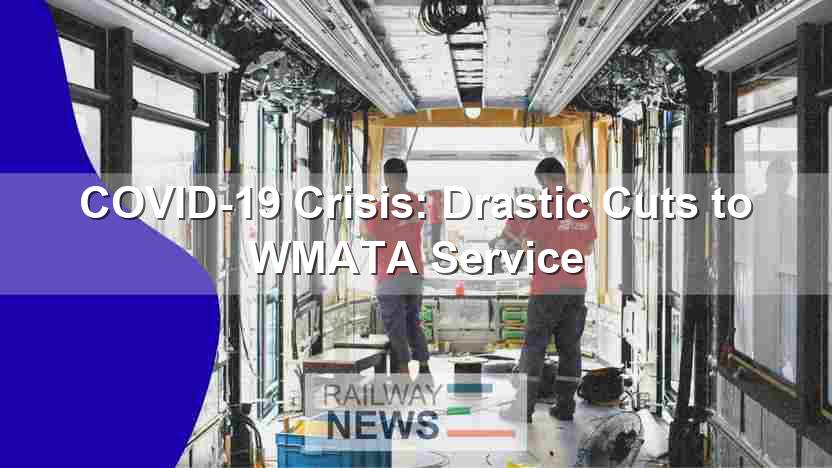
The Impact of the COVID-19 Pandemic on Washington Metropolitan Area Transit Authority (WMATA) Operations and Funding
This article examines the significant financial and operational challenges faced by the Washington Metropolitan Area Transit Authority (WMATA) – commonly known as Metro – in the wake of the COVID-19 pandemic. The unprecedented drop in ridership directly impacted revenue streams, forcing WMATA to propose drastic service reductions and potential workforce cuts to address a substantial budget deficit. The analysis explores the specific service alterations proposed for Fiscal Year 2022 (FY2022), the underlying financial pressures, and the potential long-term consequences for the regional transit system. The interconnectedness of ridership, revenue generation, operational costs, and the overall sustainability of the WMATA system will be thoroughly explored. This case study serves as a valuable example of the vulnerability of public transportation systems to unforeseen global crises and the difficult decisions required to maintain essential services while navigating severe financial constraints.
Proposed Service Reductions and Financial Projections
In response to a projected $559.5 million revenue shortfall compared to pre-pandemic levels, WMATA proposed a series of drastic service reductions for FY2022. These include the elimination of weekend subway services, reduced weekday operations, and the closure of 19 stations. Further, bus services are slated for significant cuts, focusing only on essential routes. This strategic reduction aims to maintain a minimal level of service while drastically reducing operating costs. The agency anticipates ridership will reach only 34% of pre-pandemic levels across all modes in FY2022. The proposed cuts reflect the harsh reality of balancing the need for essential public transportation with the severe financial limitations imposed by the pandemic’s impact on ridership and revenue generation.
Impact on Workforce and Operational Costs
Beyond service reductions, WMATA is confronting the necessity of substantial workforce reductions. Having already eliminated 1,400 positions, the agency is considering an additional 2,400 job cuts as part of its cost-cutting measures. These workforce reductions underscore the severity of the budget crisis. While mitigating operational costs is crucial, the impact on employee morale, service quality, and future operational capacity warrants serious consideration. The long-term effects of staff reductions on maintenance, safety, and the overall efficiency of the system remain to be seen. The increase in operating costs due to COVID-19 related expenses, contractual obligations and inflation further compounds the financial burden faced by WMATA.
Long-Term Sustainability and Regional Impact
The proposed budget cuts raise concerns about the long-term sustainability of the WMATA system and its impact on the Washington, D.C. metropolitan area. While the plan aims to preserve “barebones service,” the significant reductions in service frequency and accessibility may disproportionately affect low-income communities and essential workers who rely on public transportation. The reduced service levels could also negatively influence regional economic recovery by hindering access to employment centers and essential services. These issues highlight the broader socio-economic implications of the pandemic’s impact on public transportation and the need for sustainable solutions beyond immediate cost-cutting measures.
Conclusions and Future Outlook
The financial crisis facing WMATA, triggered by the COVID-19 pandemic, necessitates immediate and difficult decisions. The proposed service reductions, including the elimination of weekend subway service, reduced weekday operations, and the closure of numerous stations, represent a stark response to a projected $559.5 million revenue shortfall for FY2022. These measures, coupled with planned workforce reductions, aim to create a financially viable, albeit significantly diminished, transit system. However, the long-term implications are considerable. The decreased service levels pose risks to the overall accessibility and usability of the system, potentially impacting low-income communities and hindering regional economic recovery. The reduction in workforce could negatively affect maintenance, safety protocols and overall system efficiency. Moving forward, WMATA needs to explore detailed strategies beyond short-term cost-cutting. This includes exploring innovative funding models, enhancing ridership through enhanced service offerings, and engaging in meaningful discussions with regional stakeholders to secure additional financial support. The future of WMATA hinges on a robust, long-term plan that addresses both immediate financial challenges and the broader societal implications of providing essential public transportation services in a post-pandemic world. The example of WMATA demonstrates the vulnerability of public transit systems to unforeseen global events and emphasizes the need for innovative, proactive planning to ensure the long-term viability and sustainability of such crucial infrastructure.

Railway infrastructure, rolling stock and transport technologies specialist focused on global rail industry developments, high-speed rail systems, signaling technologies and freight transportation. Covering railway investments, public transport modernization, rail operations and international mobility projects across Europe, Asia and North America.
RELATED POSTS

September 5, 2026 4:19 pm
CPK launched formal tender talks with four consortia to design...

September 5, 2026 7:14 pm
HS2 Ltd signed renegotiated civils contracts with EKFB and Align...

September 6, 2026 4:12 am
Alstom delivered the first of 100 new G Class trams...
September 5, 2026 6:17 pm
Universal Signalling won a deal to install its U-Cross system...
September 6, 2026 8:17 am
DB InfraGO reopened the Nuremberg-Regensburg line in Bavaria on 31...
September 6, 2026 12:20 pm
Indian Railways ordered a probe after a fire destroyed 2...