
TRUe Rail Upgrade: Systra’s Engineering Expertise
Systra’s significant contribution to the Transpennine Route Upgrade project, a major rail infrastructure enhancement in Northern England, showcases their expertise across various disciplines including track alignment correction, line clearance, electrification, geotechnical and structural engineering, environmental management, BIM modeling, and more, aiming to modernize and improve train services while prioritizing sustainability.
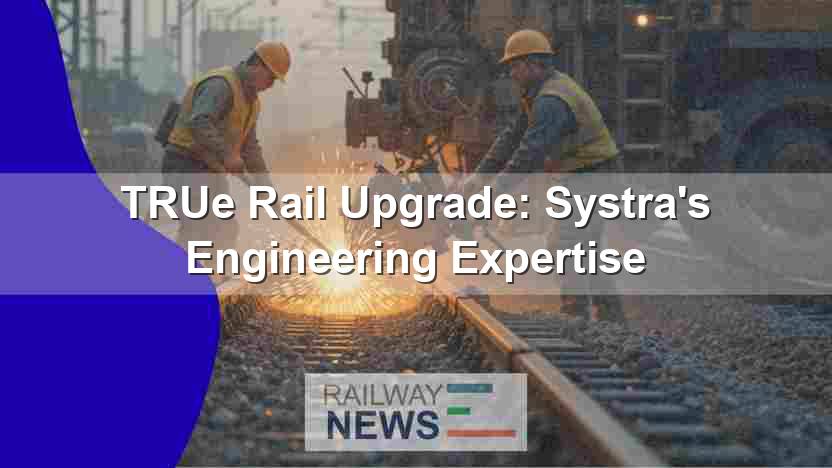
The Transpennine Route Upgrade (TRUe): A Case Study in Large-Scale Rail Infrastructure Enhancement
This article explores the significant Transpennine Route Upgrade (TRUe) project in the United Kingdom, focusing on the substantial role played by Systra, a leading French engineering and consulting group. The TRUe project represents a large-scale undertaking aimed at modernizing and improving rail services across Northern England. This involves not only increasing train frequencies and reducing journey times between major cities but also a significant commitment to sustainable practices, including widespread electrification. The project’s complexity necessitates a collaborative approach, with multiple stakeholders, including Network Rail (the organization responsible for managing and developing the UK’s rail infrastructure), Tier 1 contractors like the VolkerRail, Siemens, Murphy Alliance, and specialist engineering firms like Systra contributing their expertise. This analysis will explore the various aspects of Systra’s involvement, the technical challenges addressed, and the broader implications for the future of rail infrastructure development in the UK. We will examine the scope of Systra’s work, including their contributions to track alignment, electrification, and other critical aspects, alongside the overall strategic goals and environmental impact of the TRUe project within the context of the UK government’s Project Speed initiative.
Systra’s Multifaceted Contribution to TRUe
Systra’s decade-long involvement in the TRUe project highlights their expertise in various aspects of rail engineering. Their work encompasses a wide range of disciplines, including track alignment correction (adjusting the track geometry for improved train stability and speed), line clearance (ensuring sufficient space between the track and surrounding obstacles), ballast renewal (replacing the supporting material under the track), electrification (installing overhead lines or third rail systems for electric trains), geotechnical engineering (assessing and managing ground conditions), structural engineering (designing and constructing railway structures such as bridges and viaducts), environmental engineering (minimizing the environmental impact of the project), civil engineering (all aspects of infrastructure construction), level crossing upgrades (improving safety and efficiency at crossings), and Building Information Modeling (BIM) engineering (using 3D modeling for design and construction management).
Strategic Alignment and Project Scope
The TRUe project, as a strategic priority for the UK government, is intrinsically linked to Project Speed, a larger government-led initiative focused on modernizing and improving the country’s rail network. Systra’s contributions align directly with the overall goals of Project Speed – enhancing capacity, improving journey times, and achieving environmental sustainability through electrification. Systra’s involvement extends to the design of sections of the route, significantly the crucial York to Leeds section, including portions of the East Coast Main Line (ECML). The company’s experience on the ECML further underscores its expertise and familiarity with the existing infrastructure. This long-term involvement allows for a deep understanding of the project’s specific constraints and opportunities. The detailed design of Project 1, followed by the outline design of Projects 2, 3, and 4, illustrates the phased approach to a project of this magnitude.
Technological Advancements and Collaborative Partnerships
The TRUe project leverages advanced technologies and collaborative working models. Systra’s utilization of BIM enhances design efficiency and coordination among stakeholders. The collaborative nature of the project, involving Network Rail, Tier 1 contractors (VolkerRail, Siemens, Murphy Alliance), and other specialist engineering firms, emphasizes the importance of integrated project management and shared responsibility for success. The exclusion of signaling and telecoms engineering from Systra’s remit demonstrates a strategic allocation of responsibilities based on specific expertise within the wider consortium.
Environmental Sustainability and Long-Term Vision
A key driver of the TRUe project is environmental sustainability. The planned electrification of the Transpennine route significantly reduces carbon emissions, aligning with the UK’s broader net-zero targets. This transition to electric traction represents a substantial step toward a greener transportation system. This initiative not only contributes to reducing the carbon footprint of the rail network but also enhances the overall efficiency and resilience of the railway system.
Conclusion
The Transpennine Route Upgrade (TRUe) project stands as a significant endeavor in modernizing the UK’s rail infrastructure. Systra’s extensive involvement, spanning nearly a decade and encompassing multiple phases of design and engineering, showcases their critical role in delivering this ambitious project. Their contribution, encompassing a wide range of disciplines from track alignment and electrification to environmental and BIM engineering, highlights their expertise and commitment to the project’s success. The strategic alignment of TRUe with Project Speed emphasizes the UK government’s commitment to improving rail connectivity and sustainability. The collaborative nature of the project underscores the importance of integrated project management and the synergy between different engineering disciplines. The successful implementation of TRUe will not only enhance the efficiency and capacity of the Transpennine rail network but will also contribute significantly to the UK’s broader goals of environmental sustainability and improved transportation infrastructure. The project’s success will serve as a model for future large-scale rail infrastructure upgrades, emphasizing the importance of detailed planning, collaboration, and the integration of advanced technologies to achieve both operational and environmental benefits. The ongoing electrification and modernization efforts will positively influence regional economic development and enhance the overall quality of life for communities across Northern England, showcasing the transformative power of strategic investment in rail infrastructure.

Railway infrastructure, rolling stock and transport technologies specialist focused on global rail industry developments, high-speed rail systems, signaling technologies and freight transportation. Covering railway investments, public transport modernization, rail operations and international mobility projects across Europe, Asia and North America.
RELATED POSTS

September 5, 2026 4:19 pm
CPK launched formal tender talks with four consortia to design...

September 5, 2026 7:14 pm
HS2 Ltd signed renegotiated civils contracts with EKFB and Align...

September 6, 2026 4:12 am
Alstom delivered the first of 100 new G Class trams...
September 5, 2026 6:17 pm
Universal Signalling won a deal to install its U-Cross system...
September 6, 2026 8:17 am
DB InfraGO reopened the Nuremberg-Regensburg line in Bavaria on 31...
September 6, 2026 12:20 pm
Indian Railways ordered a probe after a fire destroyed 2...