
India’s High-Speed Rail: Bridge Construction Deep Dive
The construction of high-speed rail lines presents unique engineering challenges that require innovative solutions and meticulous planning, with specific focus on bridge construction contracts for India’s Mumbai-Ahmedabad High-Speed Rail (MAHSR) project, involving specialized expertise and advanced techniques across diverse terrains.
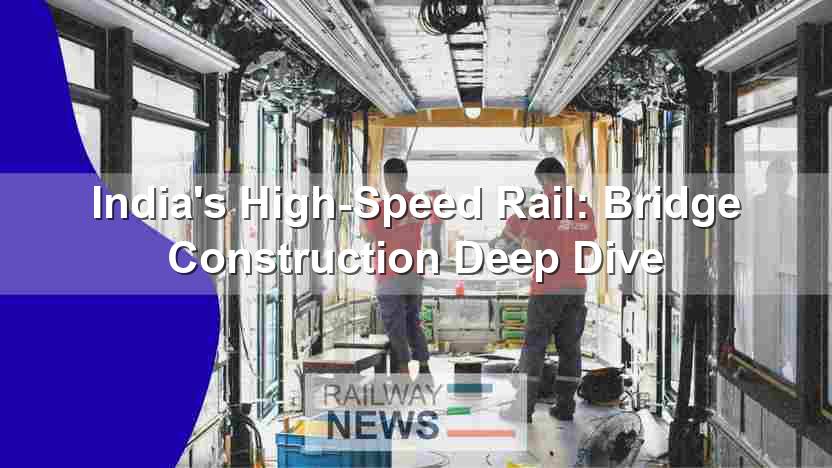
The construction of high-speed rail lines presents unique engineering challenges, demanding innovative solutions and meticulous planning. This article explores the specifics of the bridge construction contracts for the Mumbai-Ahmedabad High-Speed Rail (MAHSR) corridor in India, a project of significant national importance. The project, spearheaded by the National High Speed Rail Corporation Limited (NHSRCL), involves the construction of numerous bridges across diverse terrains, requiring specialized expertise and advanced construction techniques. We will explore the complexities involved in these tenders, examining the technical specifications, the selection process, and the implications of this ambitious undertaking for India’s infrastructure development. The analysis will further examine the role of different stakeholders and the broader economic and social impacts of the MAHSR project. The focus will be on understanding the technical intricacies of bridge construction within the high-speed rail context and the implications for future high-speed rail projects in India and beyond. This detailed examination will provide valuable insights into the challenges and successes of this major infrastructure development.
High-Speed Rail Bridge Construction: A Technical Deep Dive
The NHSRCL (National High Speed Rail Corporation Limited) has released two significant technical tenders, P-1(B) and P-1(C), focusing on the construction of bridges along the Mumbai-Ahmedabad High-Speed Rail (MAHSR) corridor. These tenders represent a crucial phase in the project, addressing the complex engineering requirements for constructing bridges suitable for high-speed rail operations. The specifications for these bridges are rigorous, demanding materials and designs capable of withstanding the high speeds and stresses associated with high-speed trains. Package P-1(C) encompasses the construction of four Pre-stressed Concrete (PSC) bridges and seven steel truss bridges between Zaroli village and Vadodara, spanning Gujarat and Dadra and Nagar Haveli. Package P-1(B) similarly involves the construction of one PSC bridge and four steel truss bridges, but located between Ahmedabad and Vadodara within Gujarat. The selection of PSC and steel truss bridge designs is based on a careful assessment of factors such as site conditions, span lengths, and the overall structural integrity required for high-speed rail operation.
Competitive Bidding and Stakeholder Participation
The bidding process attracted participation from nine companies, demonstrating significant industry interest in this prestigious project. This competition is crucial in ensuring the selection of the most qualified and cost-effective contractors. The successful bidders will not only possess the necessary technical expertise but also the financial capacity and logistical capabilities to manage such a large-scale project. Among the participating companies were Ranjit Buildcon, MG Contractors, KEC-SAM India JV, GRIL-GPT JV, and URC Construction. This diversity of bidders contributes to a robust selection process, ensuring the project benefits from the best available expertise and resources. The involvement of Joint Ventures (JV) indicates the complexity of the project and the need for specialized skills within individual firms to successfully execute the project.
Project Scale and Economic Significance
The Mumbai-Ahmedabad High-Speed Rail corridor, spanning 508.17 km, will significantly improve connectivity between two major Indian cities. This project represents a substantial investment in India’s infrastructure, creating employment opportunities and stimulating economic growth along the corridor. The allocation of funds by the Gujarat government underscores the project’s strategic importance to the state’s economic development. The project’s impact extends beyond just transportation, improving logistics, tourism, and trade within the region. The successful completion of the bridge construction contracts is a vital step towards realizing the full potential of this transformative project.
Technical Challenges and Solutions
The construction of high-speed rail bridges presents several unique challenges. These include the precise alignment and tolerance requirements to ensure smooth, high-speed train operation. The bridges must be designed to withstand significant dynamic loads from high-speed trains and potential seismic activity. Material selection, construction techniques, and quality control are all critical factors influencing the durability and safety of the completed structures. Innovative engineering solutions are necessary to overcome obstacles such as difficult terrain and environmental considerations. The successful completion of these bridge projects will establish valuable precedents for future high-speed rail infrastructure development in India.
Conclusions
The awarding of contracts for the Mumbai-Ahmedabad High-Speed Rail (MAHSR) bridges represents a pivotal moment in India’s ambitious high-speed rail development program. The technical specifications of these tenders, particularly Packages P-1(B) and P-1(C), reflect the stringent engineering standards required for high-speed rail infrastructure. The competitive bidding process, involving several reputable firms and joint ventures, ensures a focus on quality, efficiency, and cost-effectiveness. The successful completion of these bridge projects will not only contribute to the overall progress of the MAHSR corridor but will also serve as a valuable case study for future high-speed rail projects across India and beyond. The project underscores India’s commitment to modernizing its transportation infrastructure, leading to improved connectivity, economic growth, and enhanced mobility for citizens. The successful execution of these complex engineering projects will build upon existing expertise and advance technological capabilities within India’s infrastructure sector, laying a strong foundation for future large-scale infrastructure endeavors. The detailed planning, stringent quality control, and sophisticated engineering solutions required for this project promise to enhance safety standards and promote the adoption of best practices in high-speed rail construction. The economic implications of the MAHSR project, including job creation, regional development, and enhanced tourism potential, further underscore the significance of this strategic infrastructure initiative. Therefore, the completion of these bridge projects represents a critical step towards achieving India’s goal of modern, efficient, and high-speed rail transport, driving economic growth and enhancing regional connectivity.

Railway infrastructure, rolling stock and transport technologies specialist focused on global rail industry developments, high-speed rail systems, signaling technologies and freight transportation. Covering railway investments, public transport modernization, rail operations and international mobility projects across Europe, Asia and North America.
RELATED POSTS

September 5, 2026 4:19 pm
CPK launched formal tender talks with four consortia to design...

September 5, 2026 7:14 pm
HS2 Ltd signed renegotiated civils contracts with EKFB and Align...

September 6, 2026 4:12 am
Alstom delivered the first of 100 new G Class trams...
September 6, 2026 8:17 am
DB InfraGO reopened the Nuremberg-Regensburg line in Bavaria on 31...
September 5, 2026 6:17 pm
Universal Signalling won a deal to install its U-Cross system...
September 6, 2026 12:20 pm
Indian Railways ordered a probe after a fire destroyed 2...