
Auckland Rail Upgrade: Jacobs’ Crucial Role
Jacobs Engineering Group is a pivotal player in Auckland’s rail transformation, securing contracts under the Auckland Metro Rail Programme to upgrade and expand the city’s network, focusing on projects like the Wiri to Quay Park extension and the Papakura to Pukekohe Rail Electrification project.
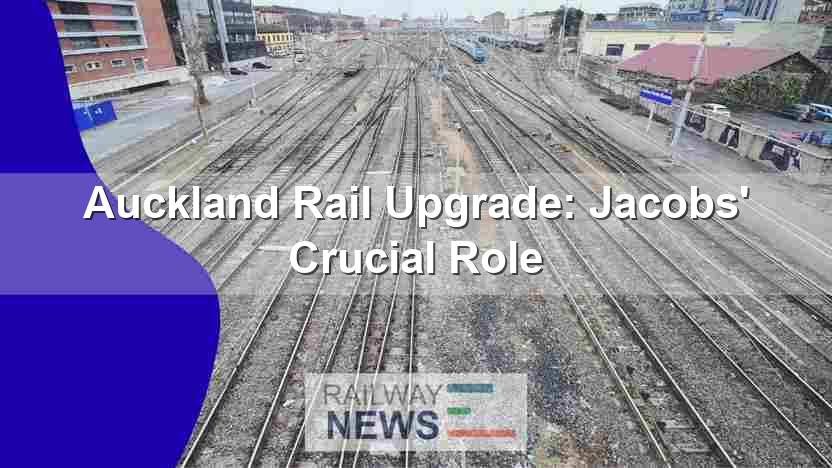
This article analyzes the significant rail infrastructure upgrades underway in Auckland, New Zealand, focusing on the pivotal role of Jacobs Engineering Group in these projects. The Auckland Metro Rail Programme, a key initiative to modernize and expand Auckland’s rail network, is examined in detail. We will explore the specific projects Jacobs is involved in, including the Wiri to Quay Park project and the Papakura to Pukekohe Rail Electrification project. Further, the broader context of these projects within New Zealand’s national rail modernization strategy and the substantial government investment in rail infrastructure will be explored. Finally, we will assess the long-term impact of these projects on Auckland’s transportation network and its economic growth, analyzing the benefits and challenges associated with large-scale rail infrastructure development.
Jacobs’ Role in Auckland’s Rail Transformation
Jacobs Engineering Group (Jacobs) has secured crucial contracts under the Auckland Metro Rail Programme, playing a significant role in upgrading Auckland’s rail network. Their involvement encompasses two primary areas: Management, Surveillance, and Quality Assurance (MSQA) and detailed design services. The MSQA services ensure the projects adhere to the highest safety and quality standards throughout their lifecycle. The detailed design services provided by Jacobs are integral to the successful execution of these complex engineering projects, ensuring all elements are accounted for and aligned with the overall objectives. This dual role emphasizes Jacobs’ detailed capabilities and expertise in rail infrastructure projects.
The Wiri to Quay Park Project: Expanding Auckland’s Rail Network
As the lead designer for the Wiri to Quay Park project, Jacobs is responsible for multi-sectoral engineering and architectural services. This project involves the construction of additional tracks running from South to Central Auckland, directly addressing the issue of network congestion. The extension aims to improve connectivity, reduce travel times, and provide an enhanced commuter experience. The successful completion of this project will significantly enhance Auckland’s rail network capacity and its ability to handle increased passenger demand, particularly with the impending opening of the City Rail Link (CRL). The design will consider integration with existing infrastructure and future expansion possibilities. Successful design will also necessitate considerations for environmental impact, cost-effectiveness and community engagement.
Papakura to Pukekohe Rail Electrification: Expanding Commuter Reach
In collaboration with John Holland, McConnell Dowell, and Novare, Jacobs provides design and construction services for the Papakura to Pukekohe Rail Electrification project. This 19km electrification project, coupled with the addition of two platforms at Pukekohe station, will significantly enhance commuter convenience. Before electrification, commuters traveling from Pukekohe to the city center were required to change trains at Papakura. The electrification eliminates this transfer, providing a direct and more efficient route. This project exemplifies the strategic initiative to improve regional connectivity and reduce reliance on personal vehicles, thereby contributing to both environmental sustainability and urban growth. Jacobs’ MSQA services during the construction phase are crucial to ensure the project’s timely and efficient completion, upholding the high standards required for rail infrastructure projects.
Broader Context: National Rail Modernization and Government Investment
The Auckland Metro Rail Programme is not an isolated initiative. It forms part of a larger national strategy for modernizing New Zealand’s rail network. The government’s substantial investment, highlighted by the nearly NZD 1.3 billion allocated in Budget 2021, underscores the commitment to improving rail infrastructure nationwide. Projects such as the modernization of the rail line north of Whangārei and the construction of a new 19km rail line between Whangārei and Northport, implemented under the New Zealand Upgrade Programme, are testament to this commitment. These investments aim to enhance connectivity throughout the country, boosting economic activity in various regions and strengthening the overall transportation network. This integrated approach to rail development emphasizes the long-term vision for a more efficient and sustainable transportation system in New Zealand.
Conclusion
The Auckland Metro Rail Programme, with Jacobs playing a crucial role, represents a significant investment in improving Auckland’s and New Zealand’s rail infrastructure. The projects undertaken, like the Wiri to Quay Park expansion and the Papakura to Pukekohe electrification, are not merely isolated upgrades but crucial components of a larger strategic plan to modernize the entire rail network. Jacobs’ contribution extends beyond simple construction; their MSQA and detailed design services ensure the highest standards of quality, safety, and efficiency. The government’s substantial financial commitment and the broader national rail modernization efforts demonstrate a long-term vision to leverage rail as a key component of sustainable and efficient transportation. The successful completion of these projects will not only alleviate traffic congestion in Auckland but also enhance regional connectivity and contribute to sustainable economic growth. The improved efficiency and convenience of rail travel are expected to attract a significant increase in ridership, further solidifying the importance of rail transport in New Zealand’s future.
The strategic partnerships forged between Jacobs and other major players in the construction industry showcase a collaborative approach to complex infrastructure projects. The meticulous focus on design, construction, and quality assurance promises a reliable and efficient rail network. This detailed approach, coupled with significant government funding, suggests a positive outlook for the future of rail transportation in New Zealand and, in particular, the transformative impact on Auckland’s transport system. The long-term economic benefits, enhanced commuter experiences, and increased environmental sustainability associated with these advancements mark a significant step towards a more advanced and efficient transportation network for the region and the country as a whole.

Railway infrastructure, rolling stock and transport technologies specialist focused on global rail industry developments, high-speed rail systems, signaling technologies and freight transportation. Covering railway investments, public transport modernization, rail operations and international mobility projects across Europe, Asia and North America.
RELATED POSTS

September 5, 2026 4:19 pm
CPK launched formal tender talks with four consortia to design...

September 5, 2026 7:14 pm
HS2 Ltd signed renegotiated civils contracts with EKFB and Align...

September 6, 2026 4:12 am
Alstom delivered the first of 100 new G Class trams...
September 5, 2026 6:17 pm
Universal Signalling won a deal to install its U-Cross system...

September 6, 2026 8:17 am
DB InfraGO reopened the Nuremberg-Regensburg line in Bavaria on 31...
September 6, 2026 12:20 pm
Indian Railways ordered a probe after a fire destroyed 2...