
Sydney Metro: Driverless Rail to Western Sydney Airport
The Sydney Metro – Western Sydney Airport project showcases a significant advancement in automated rail transit technology, linking Western Sydney to the new airport with substantial high-capacity capacity and driverless capabilities, aiming to alleviate traffic congestion and improve urban transportation for millions of commuters.
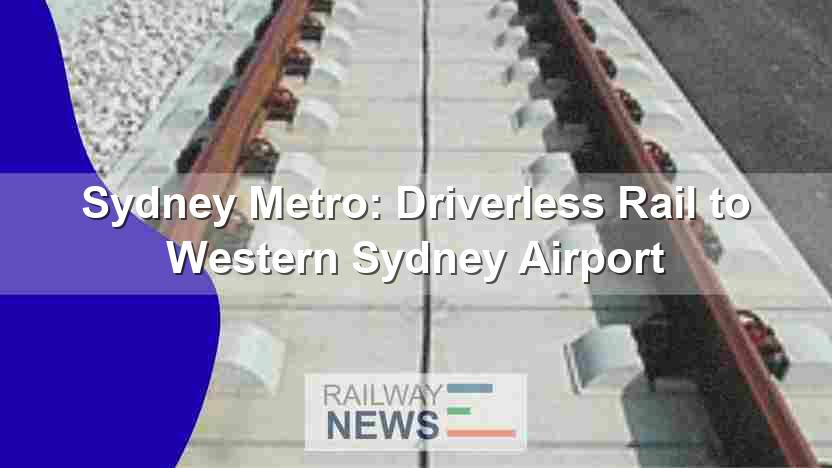
The Sydney Metro – Western Sydney Airport: A Case Study in Automated Rail Transit
This article examines the significant development of the Sydney Metro – Western Sydney Airport (WSA) project, a crucial infrastructure undertaking for the city’s growth and connectivity. The project, a driverless metro line spanning approximately 23 kilometers, will link Western Sydney to the new Western Sydney International (Nancy-Bird Walton) Airport. This ambitious initiative represents a significant advancement in automated rail transit (ART) technology and its application in a major metropolitan area. We will delve into the project’s planning, construction, anticipated impacts on traffic and commute times, economic benefits, and the broader implications for future urban rail development. The focus will be on analyzing the technological aspects of the driverless system, the project’s integration with existing infrastructure, and the consideration of community feedback in its design and implementation. The success of this project will serve as a benchmark for future large-scale ART projects globally, demonstrating the viability and benefits of such systems in addressing urban transportation challenges.
Project Approval and Commencement
The NSW (New South Wales) government’s approval for the Sydney Metro – WSA project marks a pivotal moment. This approval cleared the path for the commencement of major construction work, following preliminary works initiated in December 2020. The line’s projected capacity is substantial, with the ability to transport up to 7,740 commuters per hour in each direction. This high capacity is crucial for serving the expected high volume of passengers to and from the new airport. Additionally, the project is designed to alleviate significant traffic congestion by removing an estimated 110,000 vehicles from local roads daily, thus improving overall traffic flow and reducing commute times.
Technological Aspects and Infrastructure Integration
The Sydney Metro – WSA project’s implementation of driverless technology signifies a move towards modern, efficient, and automated rail systems. This technology promises smoother operations, reduced operational costs, and improved passenger experience. The integration of this new ART system into the existing Sydney rail network is another critical aspect. The line will connect to the existing network at St Marys, providing seamless travel options for commuters throughout the broader Sydney metropolitan area. The project also involves the construction of six new stations between St Marys and the Western Sydney Aerotropolis, including two strategically located within the airport itself, ensuring optimal accessibility for airport users.
Community Engagement and Mitigation Strategies
Public feedback played a vital role in shaping the project’s design and execution. The incorporation of community concerns led to the implementation of measures to mitigate potential parking impacts on local areas and the relocation of a temporary bus interchange. This proactive engagement highlights a commitment to responsible urban planning, minimizing the project’s potential negative effects on local communities. Open communication channels and responsiveness to community needs are essential aspects of ensuring the project’s social acceptance and its long-term success.
Economic Impact and Job Creation
Beyond its transportation benefits, the Sydney Metro – WSA project is poised to deliver a significant economic boost to the NSW economy. The construction phase alone is expected to generate approximately 14,000 jobs, including 250 apprenticeships. This signifies a substantial contribution to the local labor market and skills development, showcasing the project’s role in stimulating economic growth. The long-term operational benefits, enhanced accessibility to the new airport, and positive impacts on the Aerotropolis development are further anticipated to generate substantial economic returns.
Conclusions
The Sydney Metro – Western Sydney Airport project represents a significant leap forward in urban transportation planning and technology implementation in Australia. The project’s approval and commencement signify a commitment to modernizing the city’s infrastructure, enhancing connectivity, and driving economic growth. The incorporation of automated rail technology demonstrates a forward-thinking approach, while the focus on integrating the project with existing transport networks ensures a seamless travel experience for commuters. The success of this project will not only alleviate congestion around the new airport and improve travel times but will also serve as a model for future large-scale automated rail transit projects globally. The project’s positive economic impact, through job creation and enhanced accessibility, will be felt for years to come. Additionally, the proactive engagement with the community throughout the planning and implementation phases underscores the importance of public participation in shaping major infrastructure projects. The meticulous planning and implementation, combined with the utilization of advanced technology and a commitment to community engagement, position the Sydney Metro – Western Sydney Airport project as a leading example of responsible and effective urban development. The project’s ongoing development warrants continued observation, as it presents a valuable case study for the global rail industry, demonstrating the potential benefits of driverless systems and integrated urban planning strategies.

Railway infrastructure, rolling stock and transport technologies specialist focused on global rail industry developments, high-speed rail systems, signaling technologies and freight transportation. Covering railway investments, public transport modernization, rail operations and international mobility projects across Europe, Asia and North America.
RELATED POSTS

September 5, 2026 4:19 pm
CPK launched formal tender talks with four consortia to design...
September 5, 2026 7:14 pm
HS2 Ltd signed renegotiated civils contracts with EKFB and Align...
September 6, 2026 4:12 am
Alstom delivered the first of 100 new G Class trams...
September 5, 2026 6:17 pm
Universal Signalling won a deal to install its U-Cross system...
September 6, 2026 8:17 am
DB InfraGO reopened the Nuremberg-Regensburg line in Bavaria on 31...
September 6, 2026 12:20 pm
Indian Railways ordered a probe after a fire destroyed 2...