
ProRail’s NG Signal: Visibility Crisis Delays Dutch Rail
ProRail encountered significant visibility issues with its New Generation Signal (NG Signal) during safety testing, necessitating modifications to ensure adequate visibility and leading to delays in several railway improvement projects, emphasizing the importance of robust contingency planning and improved monitoring capabilities within the Dutch rail network.
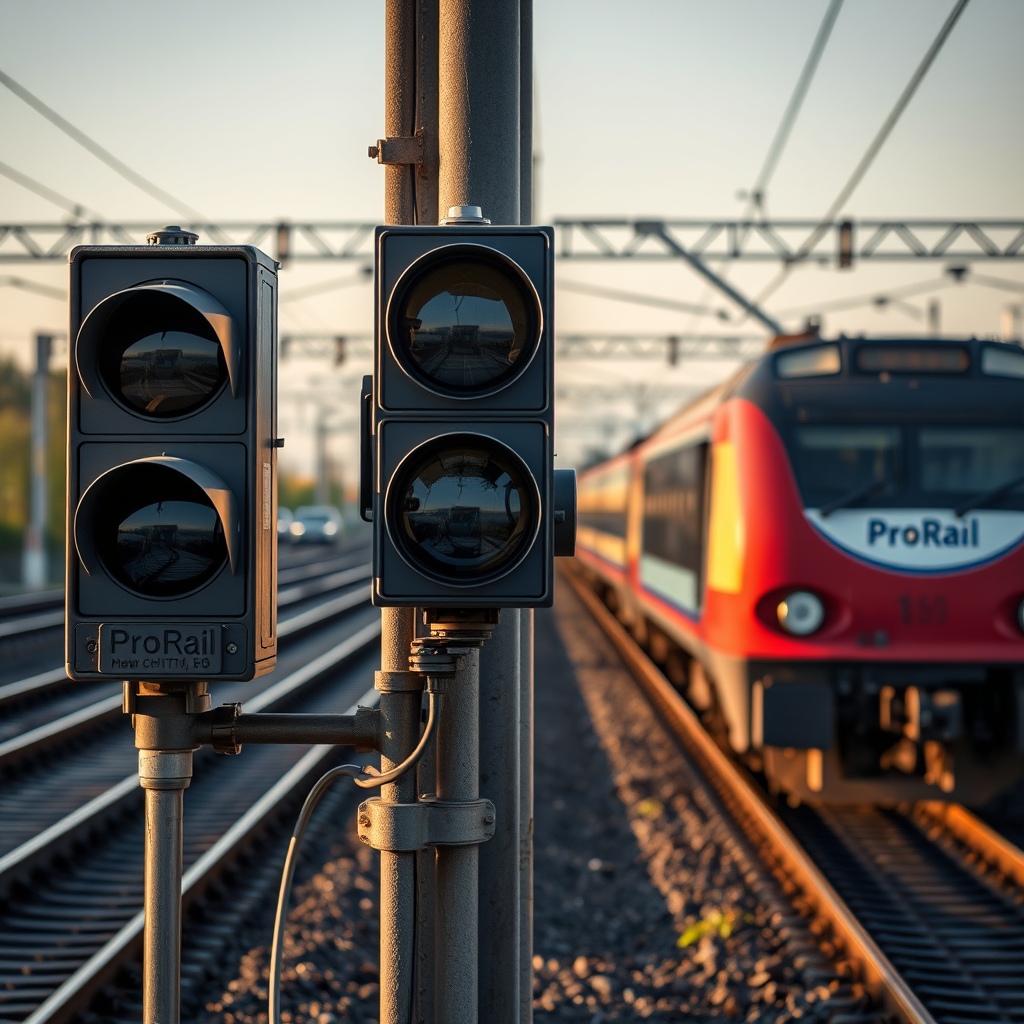
This article examines the recent challenges faced by ProRail (Netherlands Railways Infrastructure Manager), the Dutch national railway infrastructure manager, concerning the deployment of its new signaling system, the New Generation Signal (NG Signal). The discovery of significant visibility issues during safety testing has resulted in project delays and highlights crucial considerations in the design, implementation, and testing phases of advanced railway signaling systems. The article will explore the nature of the visibility problems, the impact on ongoing railway improvement projects, ProRail’s response, and the broader implications for railway safety and infrastructure management. We will also delve into the context of this setback in light of a previous major signaling system failure, emphasizing the need for robust contingency planning and improved monitoring capabilities within the Dutch rail network.
The Visibility Problem with the NG Signal
ProRail encountered “visibility problems” during safety testing of the NG Signal. These issues, occurring under “certain circumstances,” render the smaller NG Signal unsuitable for immediate implementation in its current form. The problem stems from a significant size difference between the new and old signaling systems. The older signals, being considerably larger, offer better visibility. Simply replacing the existing infrastructure with the NG Signal is not a viable solution due to safety concerns. This necessitates design modifications to ensure adequate visibility, a process that requires considerable time and resources, leading to delays in several railway improvement projects.
Impact on Ongoing Projects
The visibility issues have caused significant disruptions to several projects. The Hague rail yard conversion and PHS Tilburg projects have experienced postponements, with elements pushed into 2024. In Kijfhoek, the newly installed NG Signals are temporarily covered and deactivated pending resolution of the visibility problems. This highlights the interconnected nature of railway infrastructure projects and the cascading effects of delays in one area upon other aspects of the network. The inability to simply revert to the older system underscores the importance of rigorous testing and thorough risk assessment during the development and implementation of new technologies.
ProRail’s Response and Future Plans
ProRail’s response has focused on addressing the visibility issue. The company acknowledges the problem and is actively working on solutions to enlarge the NG Signal structures, aiming to improve visibility to meet safety standards. While ProRail’s statement expresses commitment to resolving the issues, the timelines remain uncertain, and the delays are substantial. This situation necessitates a detailed evaluation of the current testing protocols and a reassessment of the risk management strategies employed for large-scale infrastructure projects.
Lessons Learned and Broader Implications
The NG Signal visibility issues underscore several critical aspects of railway infrastructure management. First, the discovery of the problems comes at an unfortunate time, following a major June traffic control failure in Amsterdam caused by a hardware problem. This sequence of events highlights the need for robust monitoring systems and preventative maintenance to mitigate risks and prevent future disruptions. Second, the inability to quickly revert to the older system emphasizes the potential challenges associated with technological upgrades and the importance of contingency planning. Third, the impact on passenger services—delaying improvements and causing further potential for disruption—underlines the need for collaborative efforts between infrastructure managers (like ProRail) and passenger service providers (like NS, the Dutch national railway operator). Finally, the scale of the impact necessitates a thorough review of current safety and testing procedures for future railway infrastructure projects. Improved communication strategies with passengers during major service disruptions must also be implemented. This includes proactively providing updates, alternative transportation options, and clear information about expected service restoration times. The incident serves as a stark reminder of the complex interplay between technology, safety, and effective communication within the rail industry.

Railway infrastructure, rolling stock and transport technologies specialist focused on global rail industry developments, high-speed rail systems, signaling technologies and freight transportation. Covering railway investments, public transport modernization, rail operations and international mobility projects across Europe, Asia and North America.
RELATED POSTS

September 5, 2026 4:19 pm
CPK launched formal tender talks with four consortia to design...

September 5, 2026 7:14 pm
HS2 Ltd signed renegotiated civils contracts with EKFB and Align...

September 6, 2026 4:12 am
Alstom delivered the first of 100 new G Class trams...
September 5, 2026 6:17 pm
Universal Signalling won a deal to install its U-Cross system...
September 6, 2026 8:17 am
DB InfraGO reopened the Nuremberg-Regensburg line in Bavaria on 31...
September 6, 2026 12:20 pm
Indian Railways ordered a probe after a fire destroyed 2...