
Chennai Metro Phase 2: Linxon Electrifies City Transit
This article discusses Linxon securing a contract with the Chennai Metro Rail project, focusing on its role in designing and installing the traction power supply system for Phase 2 of the Chennai Metro, which is part of India’s efforts to expand public transportation infrastructure while addressing traffic congestion and promoting sustainable urban development.
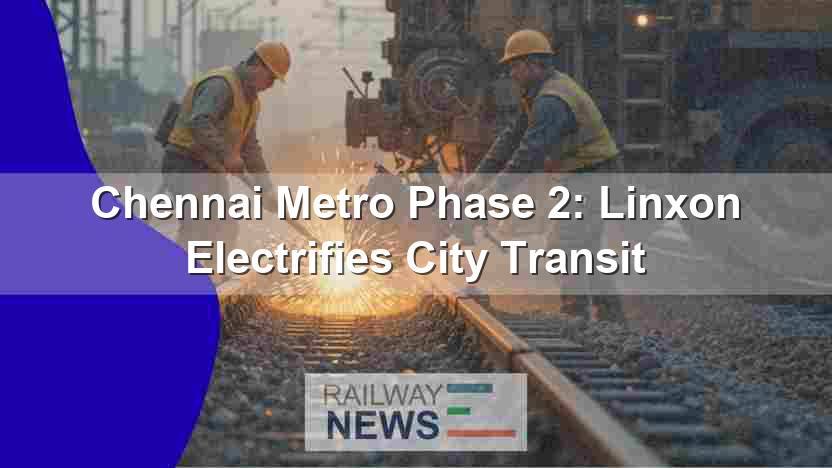
This article explores the significant expansion of the Chennai Metro Rail (CMRL) system in India, specifically focusing on the traction power supply contract awarded to Linxon for Phase 2 of the project. The Chennai Metro, a vital component of Chennai’s public transportation infrastructure, is undergoing a substantial upgrade to accommodate the city’s burgeoning population and address growing traffic congestion, particularly around its prominent Information Technology (IT) hub. This expansion represents a considerable investment in sustainable, eco-friendly public transport, highlighting the increasing global trend towards electrifying urban transit systems. We will examine the scope of Linxon’s contract, its implications for the Chennai Metro’s operational capacity and sustainability goals, and the broader context of this project within the larger landscape of railway electrification and infrastructure development in India and the Asia-Pacific region. The analysis will also touch upon the technological advancements and challenges inherent in such large-scale projects.
Linxon’s Role in Chennai Metro’s Phase 2 Electrification
Linxon, a global provider of power solutions, has secured a contract to design, manufacture, install, test, commission, and provide training for the complete traction power supply system for Phase 2 of the Chennai Metro. This encompasses a wide range of critical infrastructure elements, including traction substations (which convert high-voltage electricity from the grid to the voltage required for train operation), auxiliary main substations (which supply power to non-traction systems within the metro stations and depots), wayside substations (smaller substations located along the track to provide power to the trains), power cables, overhead catenary systems (OCS) (the overhead wires that supply power to electric trains), and a sophisticated Supervisory Control and Data Acquisition (SCADA) system (a centralized system for monitoring and controlling the entire power supply network).
Expanding Chennai’s Transit Capacity and Sustainability
Phase 2 of the Chennai Metro, with its extensive network expansion of approximately 119 km across three new lines, is poised to dramatically increase the city’s daily ridership by an estimated 1.55 million passengers. This substantial increase in capacity is crucial for mitigating traffic congestion and providing a more efficient and environmentally friendly alternative to private vehicles. The project is being financed by the Asian Development Bank (ADB), signifying international recognition of the project’s importance for urban development and sustainability in India. By opting for electric train technology and implementing a modern power supply infrastructure, the Chennai Metro actively contributes to reducing carbon emissions and improving air quality within the city.
Technological Advancements and Project Challenges
The scale and complexity of the Chennai Metro Phase 2 project present numerous technical challenges. Integrating the new lines seamlessly with the existing Phase 1 infrastructure requires meticulous planning and coordination. Ensuring the reliability and efficiency of the power supply system is paramount to maintain safe and uninterrupted metro operations. Linxon’s expertise in designing and implementing sophisticated SCADA systems will be crucial in monitoring and controlling the entire network, ensuring timely detection and resolution of any potential issues. Advanced technologies, such as energy-efficient power conversion equipment and intelligent control systems, are being implemented to maximize energy efficiency and reduce operational costs.
Market Leadership and Future Prospects
Linxon’s award of this significant contract reinforces its position as a leading player in the Asia-Pacific region’s rail electrification market. The project aligns with Linxon’s “from grid to vehicle” vision, emphasizing the company’s commitment to sustainable and reliable power solutions for electric transportation. This success further highlights the immense potential for growth within the rail sector, especially given the increasing global focus on sustainable urban transportation solutions. The successful completion of this project will not only enhance Chennai’s transport infrastructure but will also serve as a showcase for Linxon’s capabilities and expertise, potentially opening doors to similar large-scale projects across India and beyond.
Conclusion
The Linxon contract for the Chennai Metro Phase 2 electrification project represents a significant milestone in India’s urban transportation development and highlights the growing importance of sustainable and efficient public transit solutions. The project’s scale, encompassing a substantial network expansion and the deployment of advanced power supply technologies, demonstrates a commitment to addressing Chennai’s transportation challenges and improving the quality of life for its citizens. Linxon’s role, encompassing the complete lifecycle of the power supply system from design to commissioning and training, underscores the complexity of such endeavors. The successful implementation of this project will not only alleviate congestion and reduce emissions but also contribute to the economic growth of the region, showcasing the potential of public-private partnerships in driving sustainable infrastructure development. The project’s success hinges on effective project management, technological innovation, and the seamless integration of advanced systems. The successful completion of this project will not only benefit Chennai but also serve as a model for future large-scale rail electrification projects across the globe, potentially shaping the future of urban transportation in many rapidly developing cities.

Railway infrastructure, rolling stock and transport technologies specialist focused on global rail industry developments, high-speed rail systems, signaling technologies and freight transportation. Covering railway investments, public transport modernization, rail operations and international mobility projects across Europe, Asia and North America.
RELATED POSTS

September 5, 2026 4:19 pm
CPK launched formal tender talks with four consortia to design...

September 5, 2026 7:14 pm
HS2 Ltd signed renegotiated civils contracts with EKFB and Align...

September 6, 2026 4:12 am
Alstom delivered the first of 100 new G Class trams...
September 5, 2026 6:17 pm
Universal Signalling won a deal to install its U-Cross system...

September 6, 2026 8:17 am
DB InfraGO reopened the Nuremberg-Regensburg line in Bavaria on 31...
September 7, 2026 11:16 pm
China Railway Tunnel Group completed the 11.3-km underwater Yangtze tunnel...