
AI Revolutionizes Rail Safety: Israel Railways’ Smart Vision System
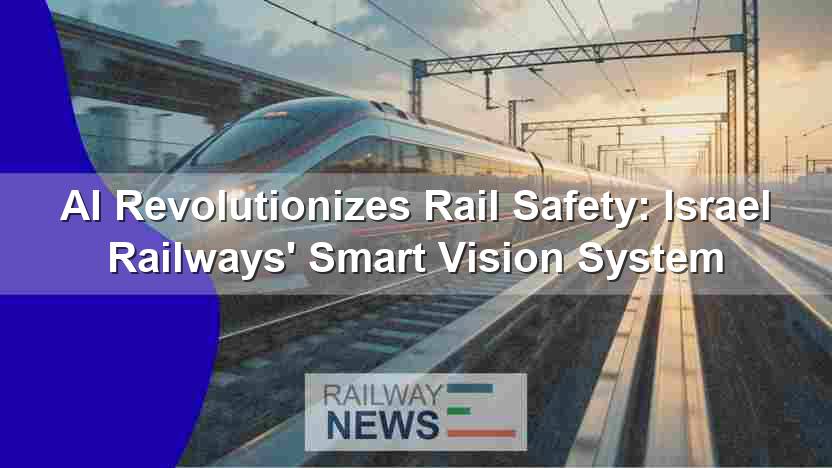
The acquisition of Rail Vision’s AI-based Main Line System by Israel Railways represents a pivotal moment in railway safety technology, marking the first major commercial deployment of AI-driven vision technology for mainline rail operations, offering real-time obstacle detection and collision prevention, significantly improving operational efficiency and reducing accidents.
Introduction
The railway industry is constantly seeking innovative solutions to enhance safety and efficiency. This article explores the significant advancement in railway safety technology represented by Israel Railways’ recent acquisition of Rail Vision’s AI-based Main Line System. This $1.4 million deal marks a pivotal moment, representing the first major commercial deployment of AI-driven vision technology for mainline rail operations. The system’s ability to detect obstacles – including humans, animals, and vehicles – in real-time, offers the potential for significant improvements in collision avoidance, reduced downtime, and increased operational efficiency. We will delve into the technological aspects of the system, its impact on operational safety and efficiency, and the broader implications for the future of railway technology and its integration into Intelligent Transportation Systems (ITS).
AI-Powered Obstacle Detection and Prevention
Rail Vision’s Main Line System utilizes cutting-edge artificial intelligence to provide detailed obstacle detection along railway lines. Employing advanced computer vision algorithms, the system analyzes visual data from strategically placed cameras, identifying potential hazards with high accuracy. This technology goes beyond traditional systems, offering long-range detection capabilities and the ability to differentiate between relevant and irrelevant objects. The system’s effectiveness has been rigorously tested, demonstrating its ability to reliably identify obstacles such as pedestrians, animals, and vehicles on or near the tracks, significantly reducing the risk of collisions. This is a crucial development as human error and unexpected obstructions remain leading causes of railway accidents. The system’s real-time alerts, delivered visually and acoustically to the train’s command-and-control center, allow for immediate corrective action, minimizing the potential for accidents.
Enhanced Operational Efficiency and Safety
The integration of the Rail Vision system is poised to significantly impact Israel Railways’ operational efficiency and safety. The system’s ability to proactively identify and alert operators to potential hazards directly translates into reduced downtime and delays. By mitigating the risk of collisions caused by unexpected obstacles, the system minimizes disruptions to train schedules and ensures the smooth flow of rail traffic. This is particularly significant given that Israel Railways operates nearly 700 trains daily across more than 1,000 km of track, connecting major population centers. The improved safety afforded by the system also contributes to a more reliable and dependable rail network, boosting passenger and freight confidence in the service. Additionally, the system’s data collection capabilities could inform future infrastructure improvements and operational strategies, leading to even greater efficiency gains.
Integration with Intelligent Transportation Systems (ITS)
The successful deployment of Rail Vision’s Main Line System by Israel Railways highlights the growing convergence of railway technology with broader Intelligent Transportation Systems (ITS). The system’s real-time data feeds and its integration into the train’s command-and-control center demonstrate the potential for seamless data exchange within a more detailed ITS architecture. This integration could allow for better coordination between different modes of transportation, improved traffic management, and enhanced overall network efficiency. The system’s data could also contribute to predictive maintenance, allowing for proactive identification and resolution of potential issues before they escalate into major disruptions. This proactive approach aligns perfectly with the broader goals of developing smart and resilient transportation networks.
Conclusions
The adoption of Rail Vision’s AI-powered Main Line System by Israel Railways signifies a substantial leap forward in railway safety and operational efficiency. The system’s advanced obstacle detection capabilities, coupled with real-time alerts, offer a proactive approach to collision avoidance, mitigating the risk of accidents caused by human error or unexpected obstructions. The demonstrably superior performance of the system during testing, highlighted by its selection by Israel Railways after a detailed evaluation of competing technologies, underscores its potential to transform mainline rail operations globally. Beyond its immediate impact on safety and efficiency, the integration of this technology into a broader ITS framework opens up exciting possibilities for enhanced network coordination, predictive maintenance, and overall improved transportation management. The success of this deployment serves as a compelling case study for other rail operators worldwide, illustrating the transformative potential of AI in improving the safety, reliability, and efficiency of railway networks. The long-term implications are far-reaching, promising a future where railway transportation is safer, more dependable, and better integrated with other modes of transport. The collaboration between Israel Railways and Rail Vision represents a significant step toward achieving this vision, setting a new standard for the industry and paving the way for broader adoption of advanced AI-based safety systems.

Railway infrastructure, rolling stock and transport technologies specialist focused on global rail industry developments, high-speed rail systems, signaling technologies and freight transportation. Covering railway investments, public transport modernization, rail operations and international mobility projects across Europe, Asia and North America.
RELATED POSTS

September 5, 2026 4:19 pm
CPK launched formal tender talks with four consortia to design...

September 6, 2026 4:12 am
Alstom delivered the first of 100 new G Class trams...

September 5, 2026 7:14 pm
HS2 Ltd signed renegotiated civils contracts with EKFB and Align...
September 6, 2026 8:17 am
DB InfraGO reopened the Nuremberg-Regensburg line in Bavaria on 31...
September 6, 2026 12:20 pm
Indian Railways ordered a probe after a fire destroyed 2...
September 5, 2026 6:17 pm
Universal Signalling won a deal to install its U-Cross system...