
Virginia Rail Revolution: Jacobs & VPRA Transform Transit
This article explores how Jacobs collaborates with the Virginia Passenger Rail Authority (VPRA) to transform Virginia’s rail infrastructure through a decade-long initiative aimed at doubling Amtrak services and enhancing VRE, focusing on strategic planning, design, construction, and maintenance.
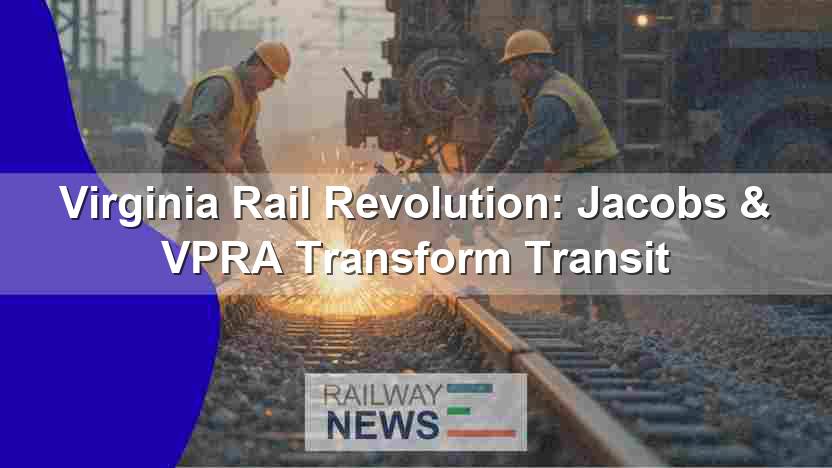
This article examines the significant collaboration between Jacobs, a leading technical professional services company, and the Virginia Passenger Rail Authority (VPRA) to transform Virginia’s rail infrastructure. The partnership centers around the ambitious “Transforming Rail in Virginia” plan, a decade-long initiative aiming to drastically improve passenger rail services across the state. This involves a multifaceted approach encompassing service frequency increases, route expansions, and acquisition of crucial right-of-way, requiring extensive planning, design, construction, and ongoing maintenance. The strategic importance of this project lies in its potential to reshape Virginia’s transportation landscape, boosting economic development, reducing traffic congestion, and offering a more sustainable and efficient mode of travel. The article will delve into the key aspects of this transformative plan, analyzing the roles played by both Jacobs and the VPRA, and assessing the long-term implications for Virginia’s rail network and its integration within the broader national rail system.
Transforming Rail in Virginia: A Multi-faceted Approach
The VPRA’s “Transforming Rail in Virginia” plan represents a bold vision for modernizing the state’s passenger rail system. Central to this plan is the doubling of Amtrak services and the enhancement of the Virginia Railway Express (VRE) within the next ten years. This ambitious goal necessitates significant investment and meticulous planning. Key aspects include acquiring additional right-of-way (ROW), potentially requiring complex negotiations and agreements with freight rail operators to ensure sufficient capacity for passenger services. This will likely involve operational adjustments, possibly including timetabling changes and infrastructure improvements to accommodate the increased passenger rail traffic.
Jacobs’ Crucial Role in Planning and Execution
Jacobs’ contribution to the project is multifaceted. Their expertise extends beyond simple consultancy; they provide detailed support across the entire project lifecycle. This includes market analysis to inform service frequency and route planning, detailed design specifications for infrastructure improvements, and overseeing the construction process. Additionally, Jacobs’ role in travel demand forecasting is crucial for justifying service expansions and securing necessary funding. Their work on data analysis provides evidence-based recommendations to Amtrak and other stakeholders, strengthening the case for specific service expansions and enhancements.
Focus on Key Corridors and Route Expansions
The plan prioritizes improvements on crucial corridors, most significantly the I-95 corridor connecting Richmond and Washington, D.C., targeting a near-hourly service. This requires significant infrastructure upgrades, potential track improvements, and optimized signaling systems. Beyond this corridor, the VPRA aims to leverage Jacobs’ expertise to convince Amtrak to extend the existing Norfolk, Newport News, and Roanoke line southwest to Christiansburg and the New River Valley. This expansion will open up new regions to convenient passenger rail access, potentially stimulating economic growth in previously underserved areas. These expansion efforts will require in-depth feasibility studies, environmental assessments, and community engagement to ensure successful implementation.
The Long-Term Vision: High-Speed Rail and National Connectivity
The ultimate ambition within the “Transforming Rail in Virginia” plan is to lay the groundwork for future high-speed rail (HSR) in the region. This long-term vision entails connecting Virginia’s rail network to the densely populated Northeast Corridor, ultimately linking Virginia to the broader national rail system. Achieving this requires careful strategic planning, significant investment, and ongoing collaboration with federal and regional transportation agencies. The current projects serve as critical initial steps, demonstrating the viability and potential benefits of increased rail investment in Virginia, building a strong case for subsequent HSR development.
Conclusions
The partnership between Jacobs and the VPRA represents a significant investment in Virginia’s future transportation infrastructure. The “Transforming Rail in Virginia” plan, with Jacobs’ substantial involvement, is ambitious in scope, aiming to dramatically improve passenger rail services throughout the state. This involves a multifaceted approach encompassing service frequency increases, route expansions, and strategic right-of-way acquisitions. Jacobs’ contributions are integral to the success of this undertaking, providing expertise across planning, design, construction, and ongoing maintenance. Their work in market analysis, travel demand forecasting, and data-driven decision-making is crucial in securing funding and convincing stakeholders, such as Amtrak, to support the planned expansions and upgrades. The project’s focus on key corridors, like the I-95 corridor and the expansion towards the New River Valley, demonstrates a strategic focus on improving connectivity and accessibility across the state. Ultimately, this initiative is not merely about improving rail service; it is about building a foundation for future high-speed rail development, strengthening Virginia’s economic competitiveness, and integrating the state seamlessly into the broader national rail network. The initial $10 million contract, with potential for renewal, underlines the significant commitment to this transformative plan, suggesting a long-term vision for a modern and efficient passenger rail system in Virginia.

Railway infrastructure, rolling stock and transport technologies specialist focused on global rail industry developments, high-speed rail systems, signaling technologies and freight transportation. Covering railway investments, public transport modernization, rail operations and international mobility projects across Europe, Asia and North America.
RELATED POSTS

September 5, 2026 4:19 pm
CPK launched formal tender talks with four consortia to design...

September 5, 2026 7:14 pm
HS2 Ltd signed renegotiated civils contracts with EKFB and Align...

September 6, 2026 4:12 am
Alstom delivered the first of 100 new G Class trams...
September 5, 2026 6:17 pm
Universal Signalling won a deal to install its U-Cross system...
September 6, 2026 8:17 am
DB InfraGO reopened the Nuremberg-Regensburg line in Bavaria on 31...
September 6, 2026 12:20 pm
Indian Railways ordered a probe after a fire destroyed 2...